No. 016 · 14 September 2026
Roland × SEIKO
TR-W8 Rhythm Watch, metronome wristwatch, 1982
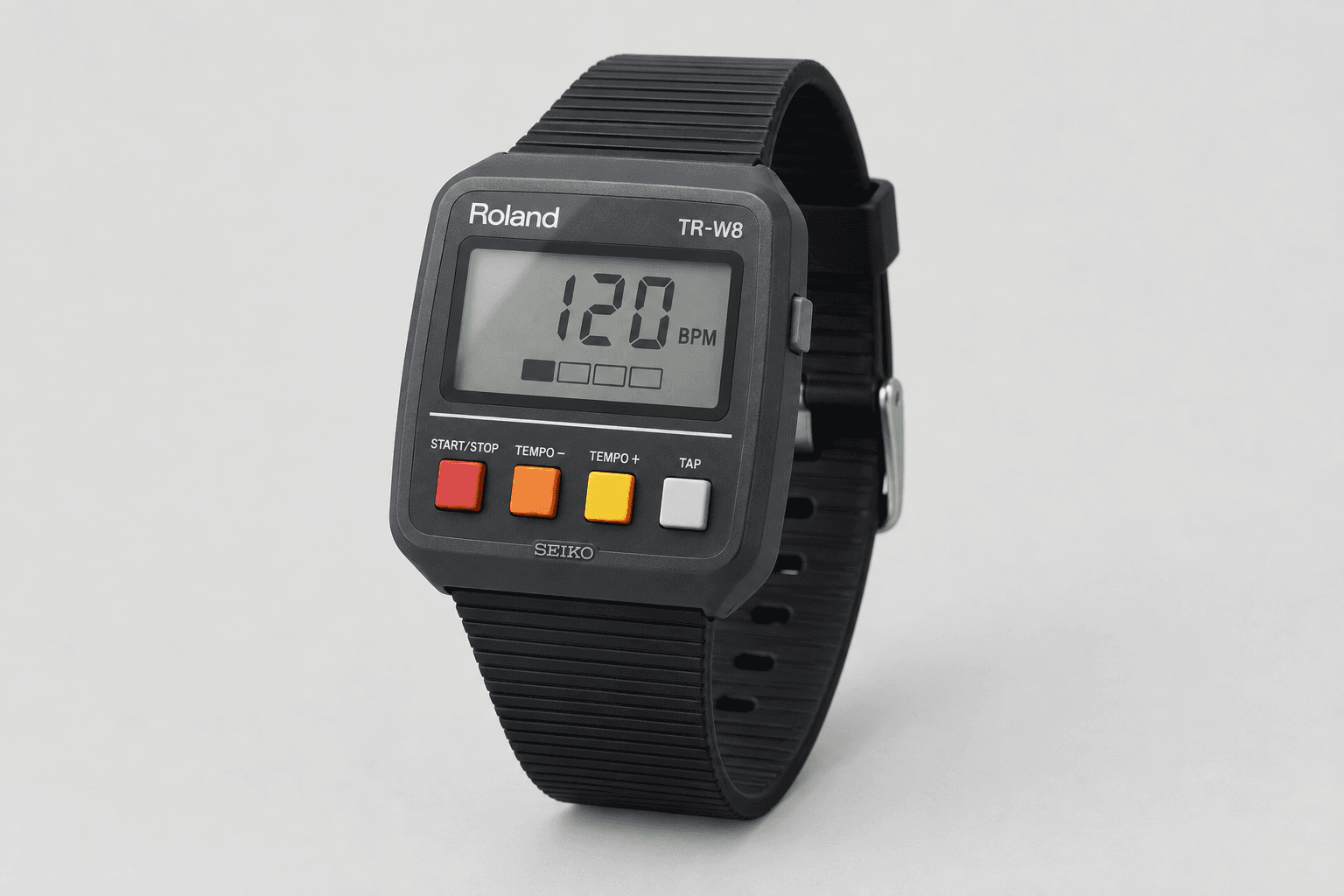
A wrist metronome with four step buttons in TR-808 colours, so the drummer, the bassist and the man with the drum machine could finally agree on 120.
Announced June 14, 1982, at Roland's offices in Osaka, the TR-W8 came out of a conversation between Ikutaro Kakehashi and Seiko's Suwa Seikosha division about why session players still carried clockwork metronomes in their bags. Seiko had the quartz movements and the LCD tooling; Roland had a drum machine that half of Japan's studios were starting to use as a click. The brief was a watch that kept time in both senses.
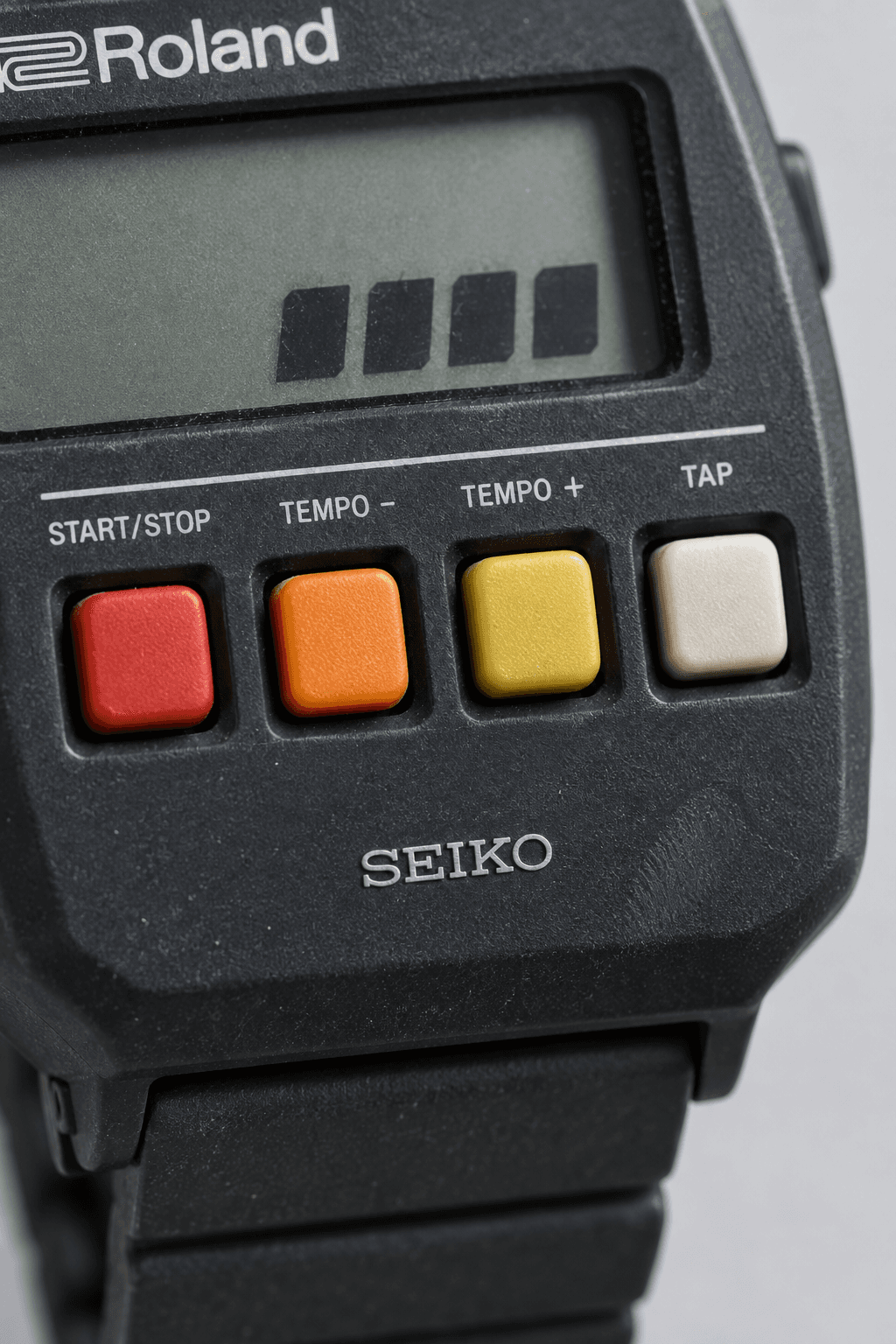
The case was drawn by Seiko industrial designer Makoto Hirano, with Roland's panel team supplying the colour logic straight from the TR-808: charcoal grey resin, a thin white rule under the display, and four square buttons in red, orange, yellow and off-white. Red started and stopped the click, orange and yellow nudged the tempo, off-white was tap tempo. Tadao Kikumoto, the engineer behind the 808's voices, insisted the piezo click be pitched close to the machine's rim shot so it would sit in the same place in a player's ear.
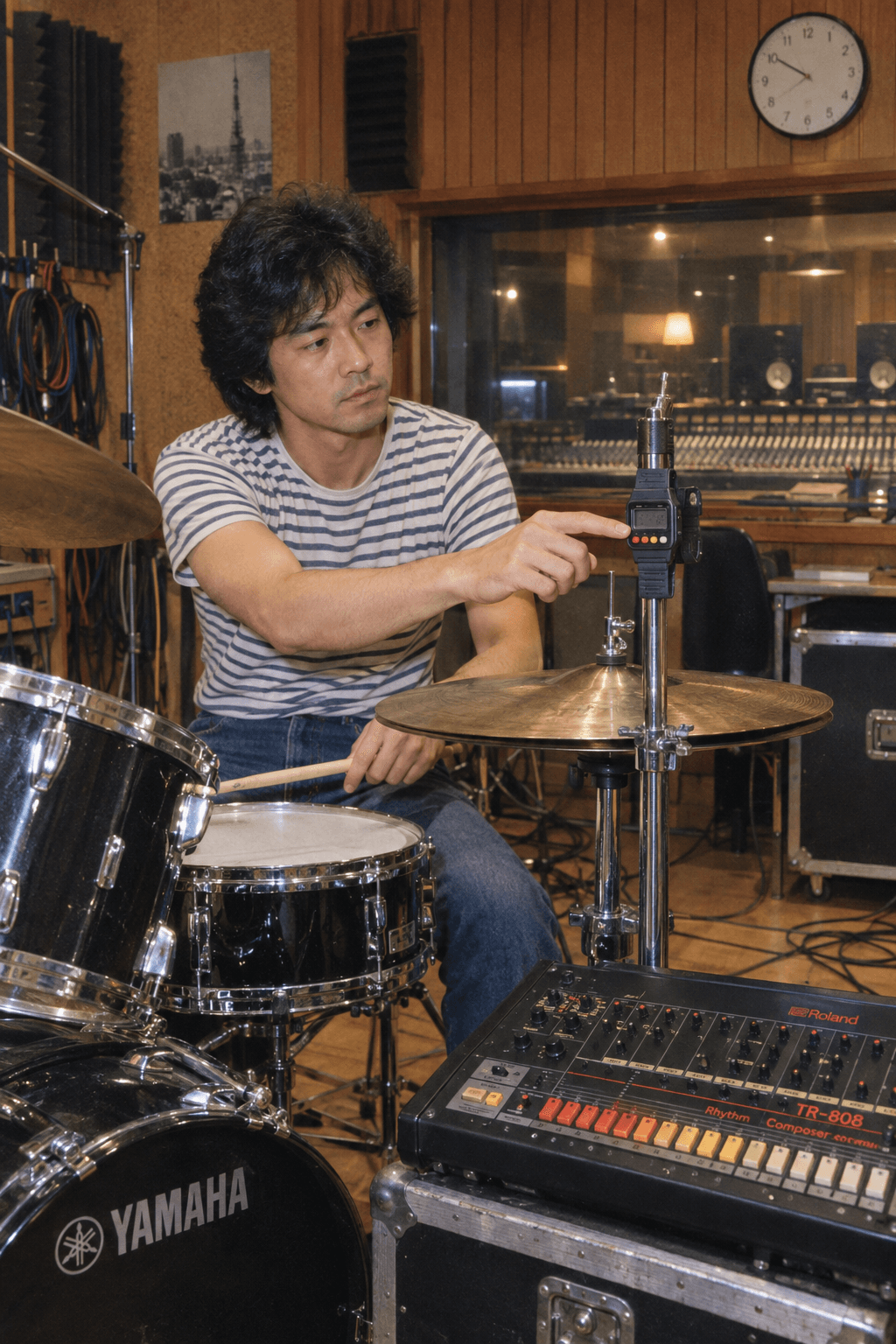
The display showed tempo from 40 to 208 BPM in large digits, a row of four segment blocks that stepped across the screen with each beat, and time of day when the metronome was off. An accent on beat one could be set to 2, 3, 4, 6 or 7 beats per bar. The strap had a moulded steel clip on the underside of the buckle so drummers could fix it to a hi-hat stand, which is how most of them ended up using it.
Reception in the Japanese music press was warm and slightly baffled. Keyboard Magazine in the US called it the most useful thing Roland had made that year that did not make a sound worth recording. Seiko's own retail staff reportedly struggled to explain it, and many were sold from music shops in Roland display cases rather than from watch counters.