No. 136 · 5 November 2026
Fredericia Stolefabrik × Barbour
Model 2241, folding riverbank lounge chair, 1965
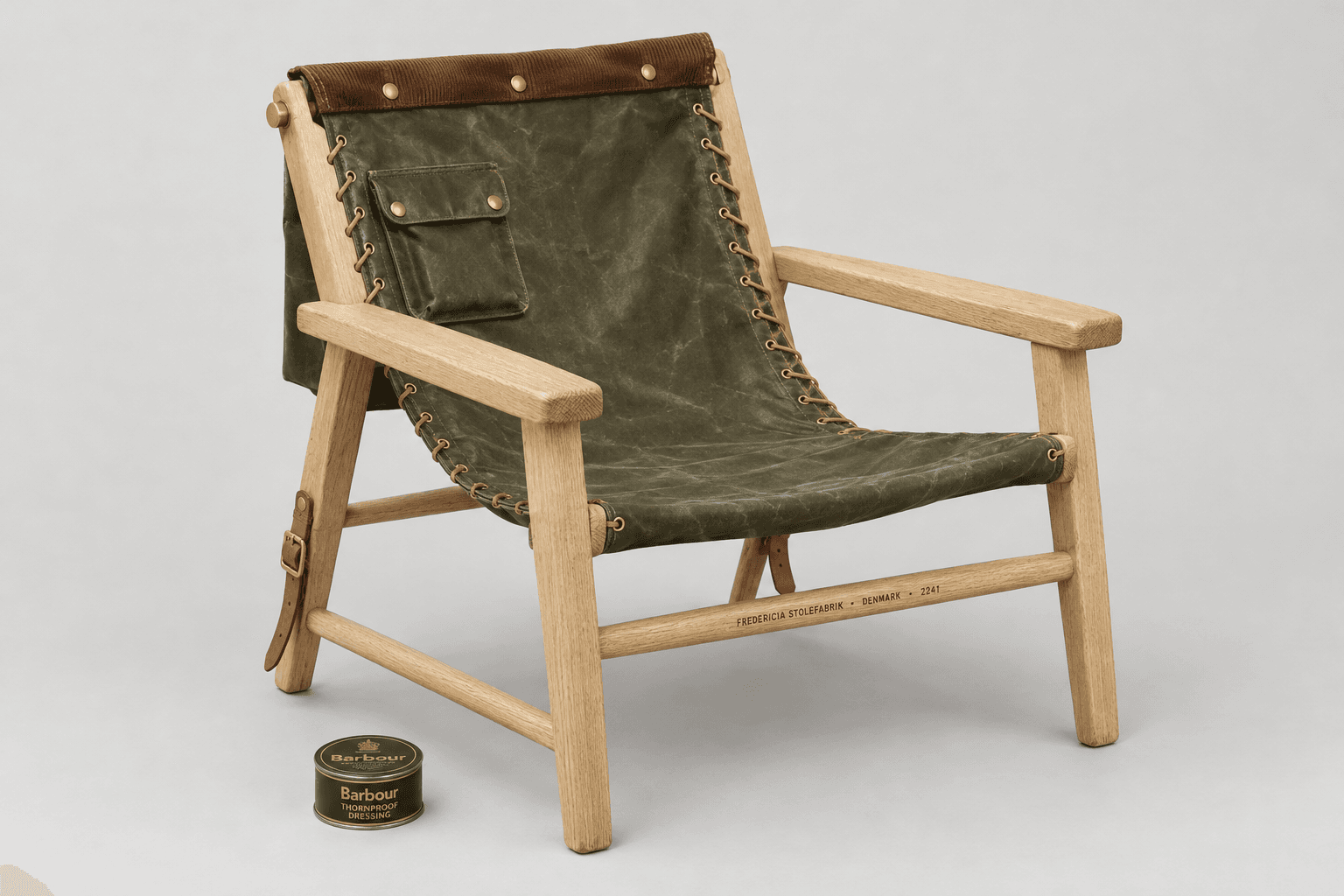
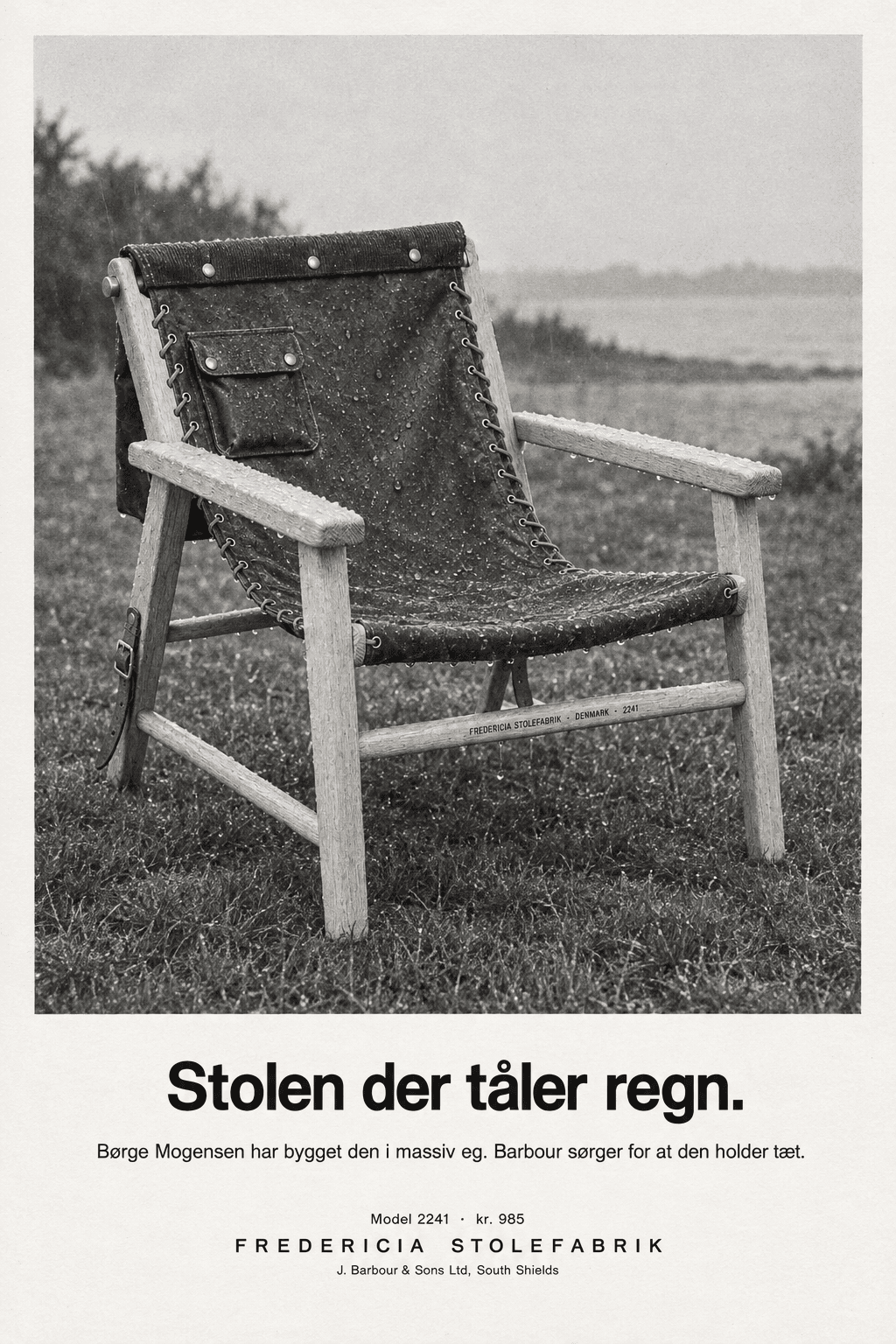
A Hunting Chair you can leave out in the rain, then post the seat to South Shields to be rewaxed.
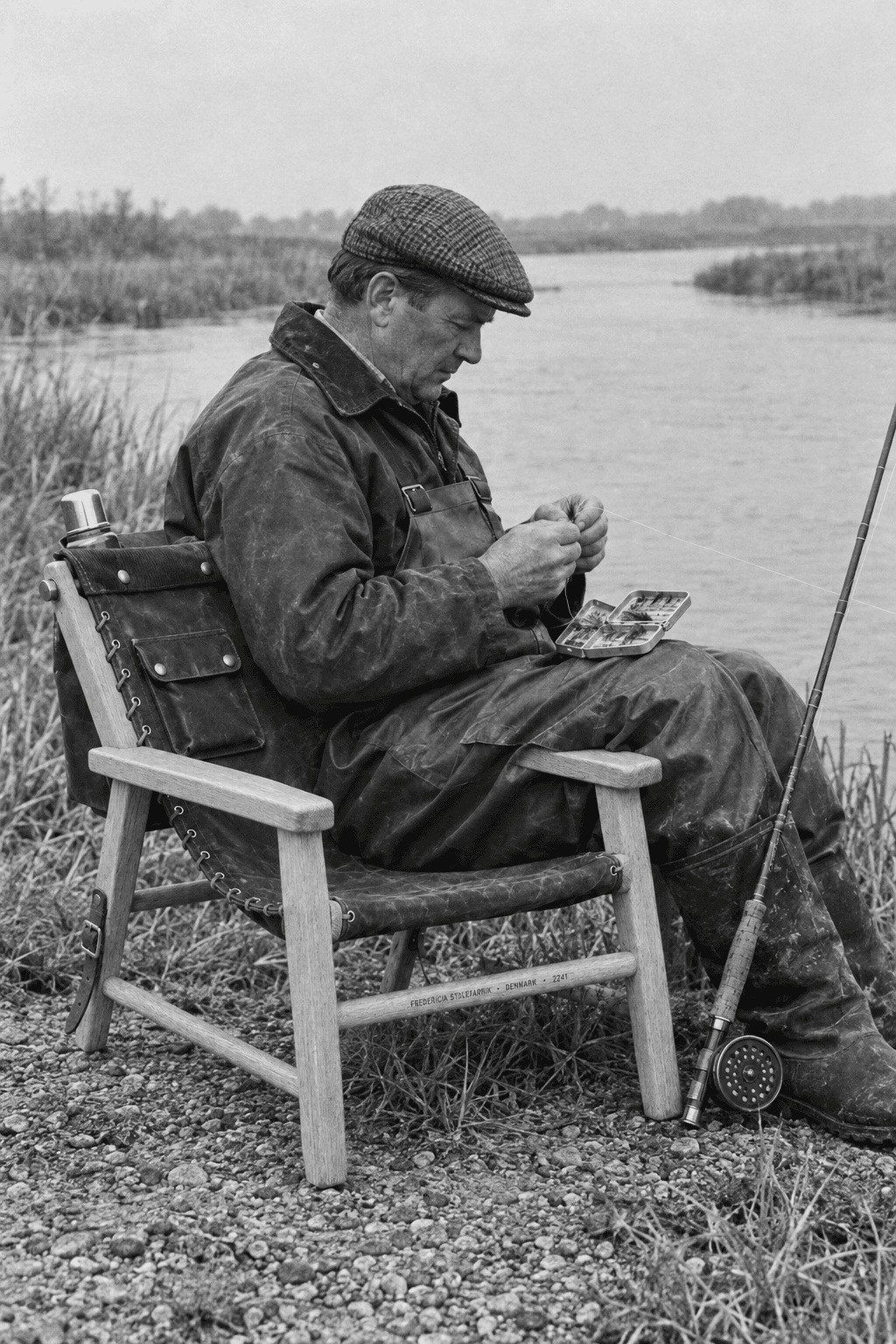
Announced April 8, 1965 at Den Permanente in Copenhagen, the 2241 began with Andreas Graversen's weekends on the Skjern Å. He wanted a Hunting Chair he could carry to the bank, and Mogensen refused to put leather anywhere it would sit in wet grass. Graversen wrote to South Shields asking for a length of Thornproof cloth. Margaret Barbour replied with a sample book and a question about pockets.
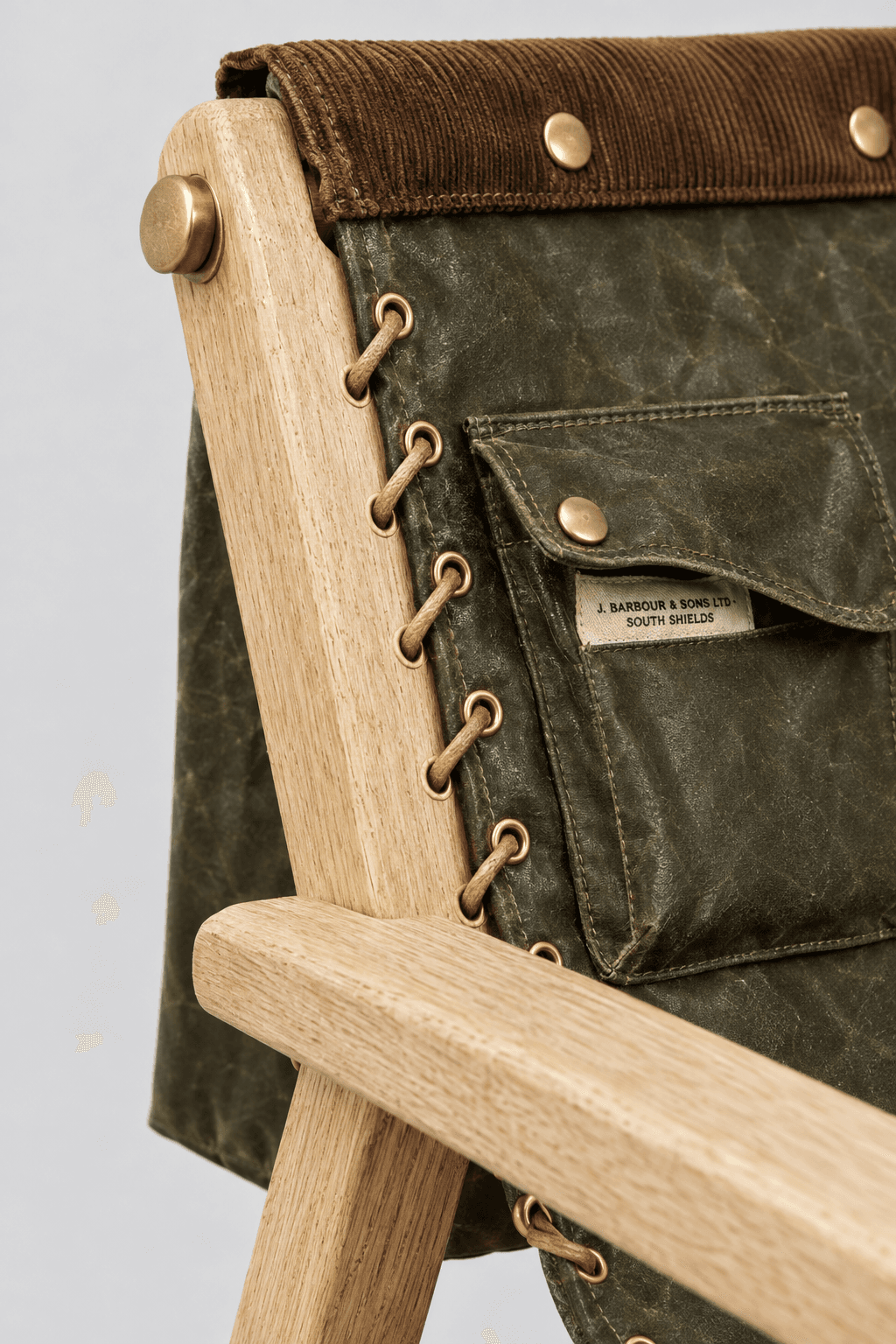
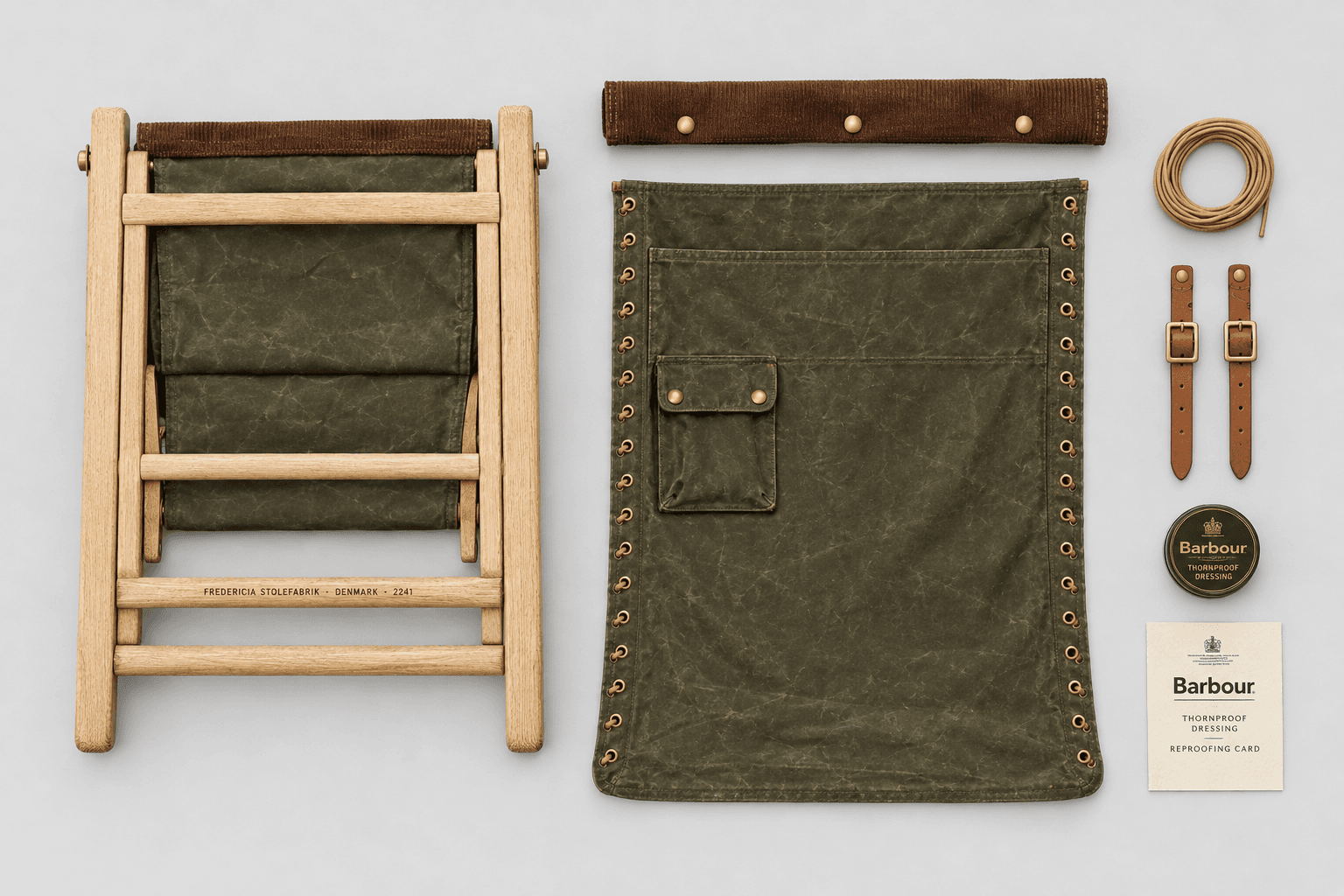
Mogensen changed his frame as little as he could bear: two solid oak side frames, three round stretchers, the seat held at 32 cm. The only new part is a brass pivot at each side that lets the back fold onto the seat. Leather survives only where it works, in two saddle straps that hold the chair shut and buckle into a shoulder sling. Seat and back are one sheet of olive waxed cotton, laced through brass eyelets so it comes off in about four minutes.
Barbour cut the sling as a coat, not a cover. It has twin-needle seams, a brown corduroy roll studded on where the collar would be, a bellows pocket on the left sized to a Hardy fly box, and across the back a full-width game pocket, lined, which in practice held lunch. Each chair shipped with a tin of Thornproof Dressing and a card giving the South Shields reproofing address, postage paid for five years.
Mobilia gave it four pages and called it the first Danish chair designed to get wet. Danish buyers kept it indoors; British buyers, through Liberty and country outfitters in the Borders, took it fishing and called it the Ghillie Chair, a name neither firm ever printed. The reproofing card insisted the seat be posted rolled, never folded, and Barbour kept a cardboard tube cut to its length in the packing room until 1974.