No. 134 · 3 November 2026
Artek × Fiskars
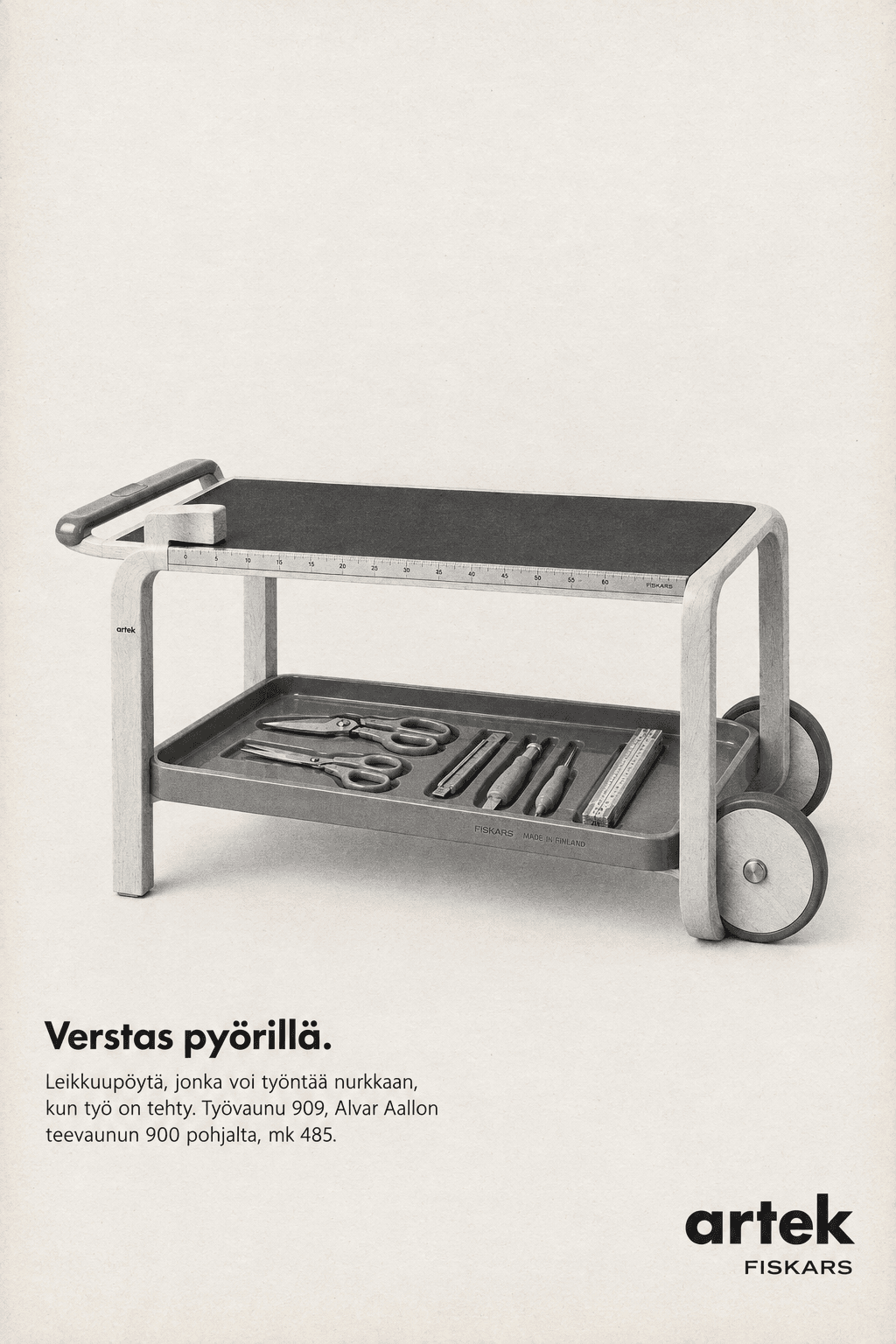
Trolley 909, cutting and work trolley, 1969
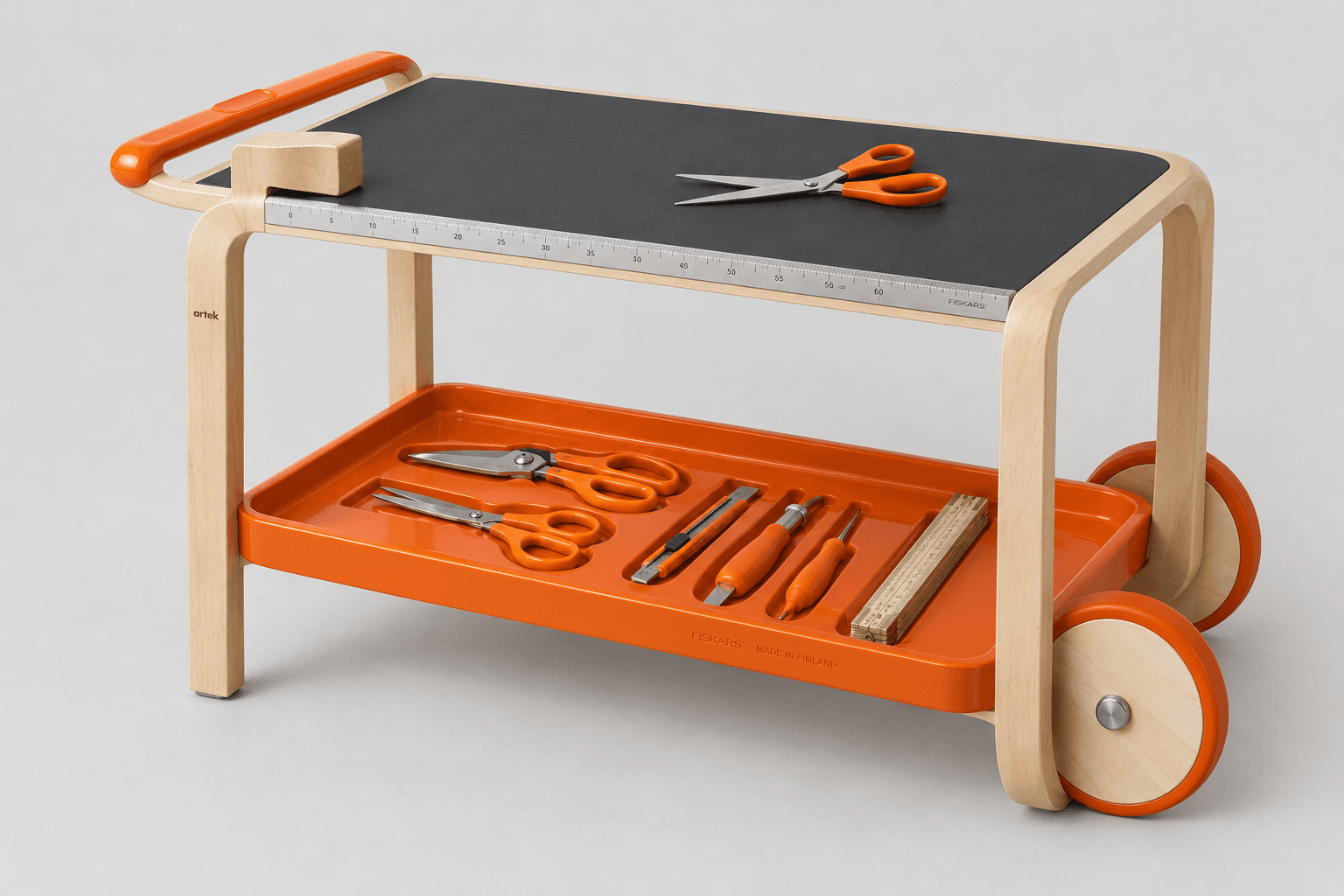
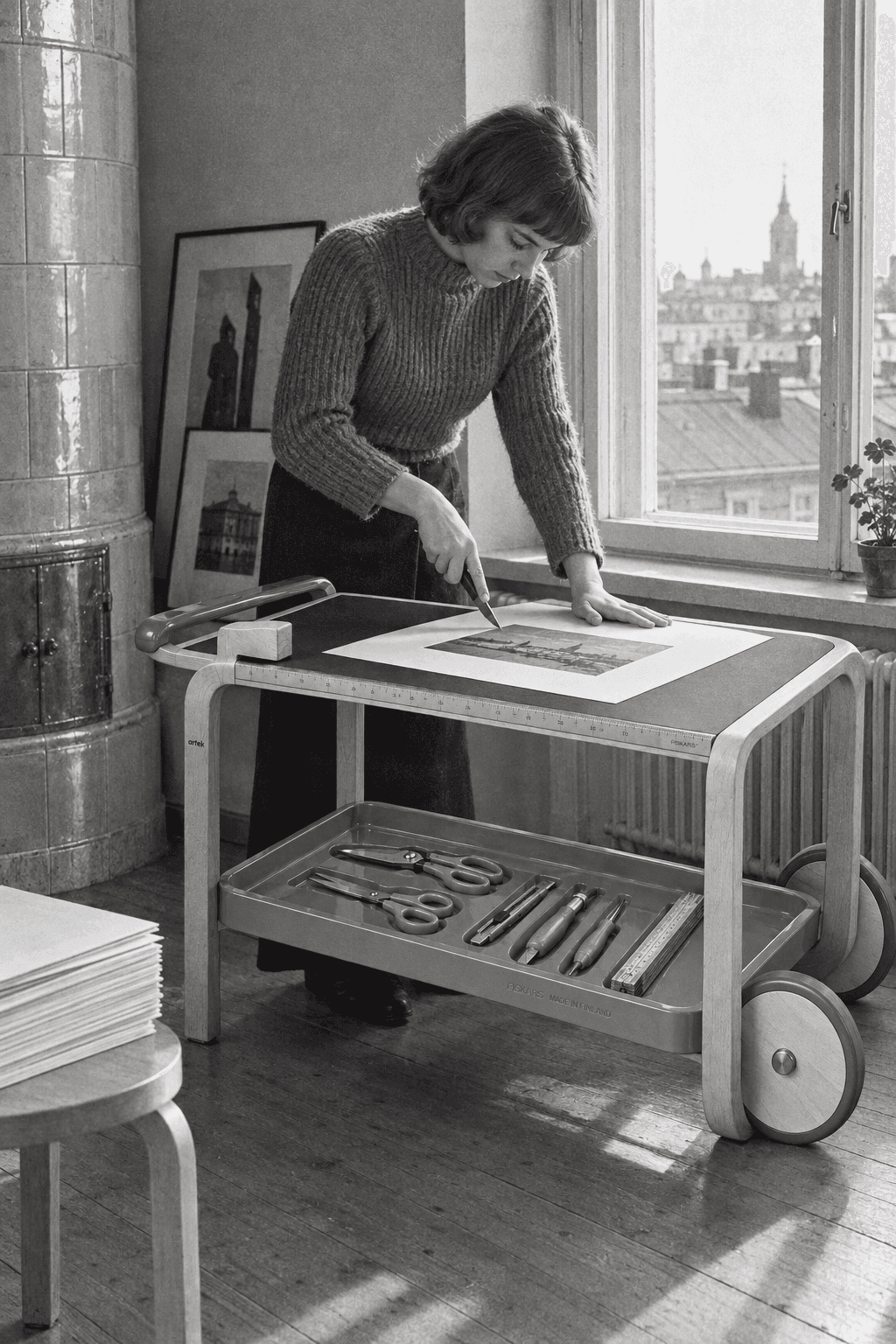
A Tea Trolley 900 that rolls out of the corner of a one-room Helsinki flat and becomes a cutting table, with a Fiskars steel edge along its front and its push bar moulded like a pair of scissors.
Announced October 14, 1969, at the Artek shop at Keskuskatu 3, the Trolley 909 was aimed at people in one- and two-room flats in Töölö and Kallio who cut paper, cloth and card on the dining table and apologised for it afterwards. Elissa Aalto started from the 1936 Tea Trolley 900. She kept the bent laminated birch side frames and the two big wheels, raised the top to 72 cm so it worked as a table with an ordinary chair, and widened the stance so it stayed put under a knife.
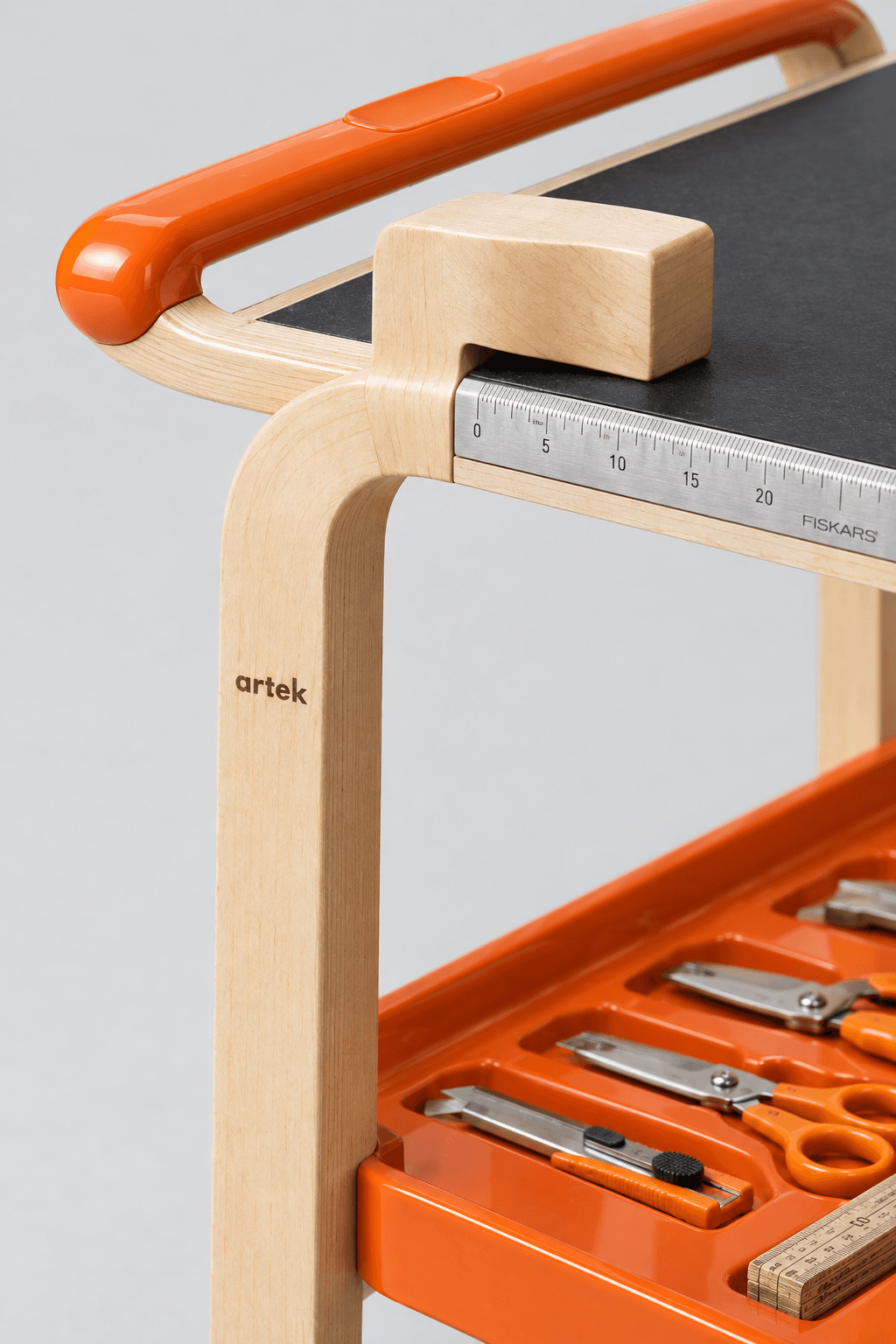
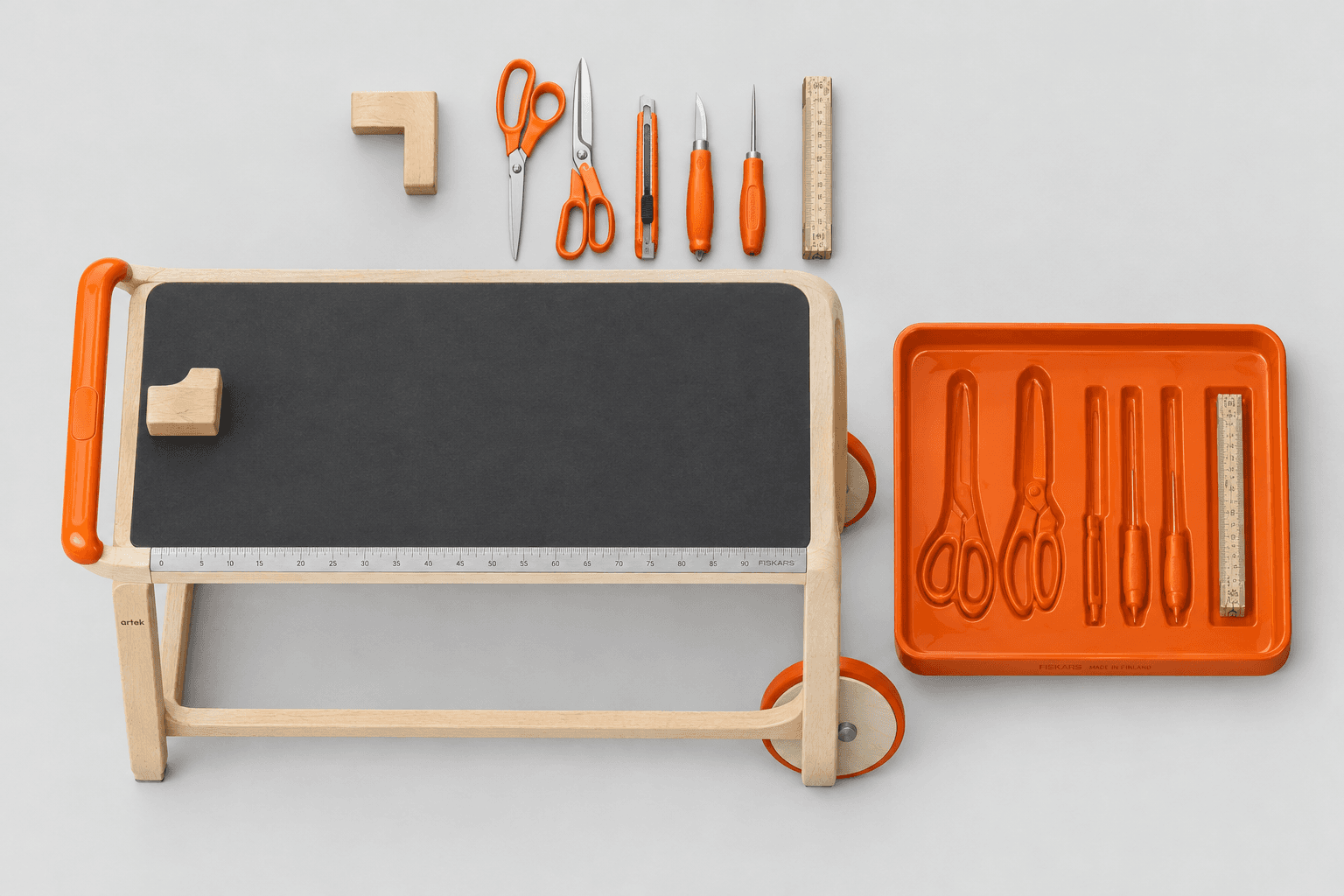
Olof Bäckström did the parts that touch the hand. The push bar is a single orange ABS moulding with the thumb flat of the O-Series scissors, so the trolley is steered the way the scissors are held. Along the front of the black linoleum top runs a strip of stamped Fiskars steel, etched in centimetres, against which a knife can be drawn without chewing the birch. The lower tier is a lift-out orange tray with fitted recesses for six tools, its corners drawn to the same radius as Korhonen's bends. The only thing in it not made at Fiskars is the birch folding rule.
Arkkitehti called it well resolved and too handsome to cut on. Kotiliesi readers bought it as a sewing trolley at least as often as a workbench, which Artek noted and did not discourage. It was the first Artek product sold with a leaflet on sharpening.
The tyres are orange rubber rather than black because Bäckström argued that black tyres mark floors. Nobody checked whether orange ones did. They do, faintly. A production run was halted in 1970 when Fiskars ran short of the orange and offered grey trays instead. Artek declined, and waited six weeks.