No. 015 · 13 September 2026
Apple × NASA
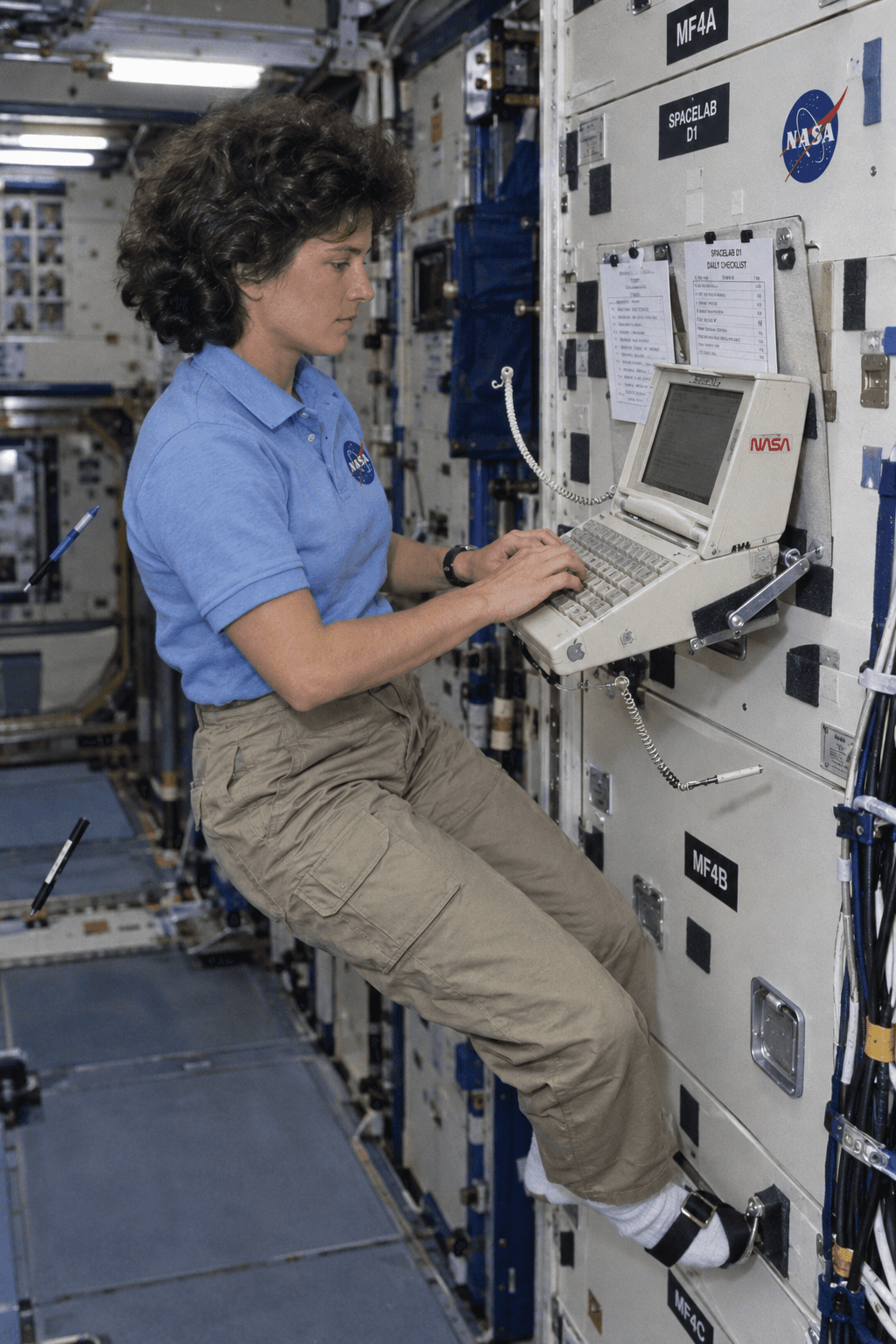
Apple //c Orbiter, spaceflight portable computer, 1985
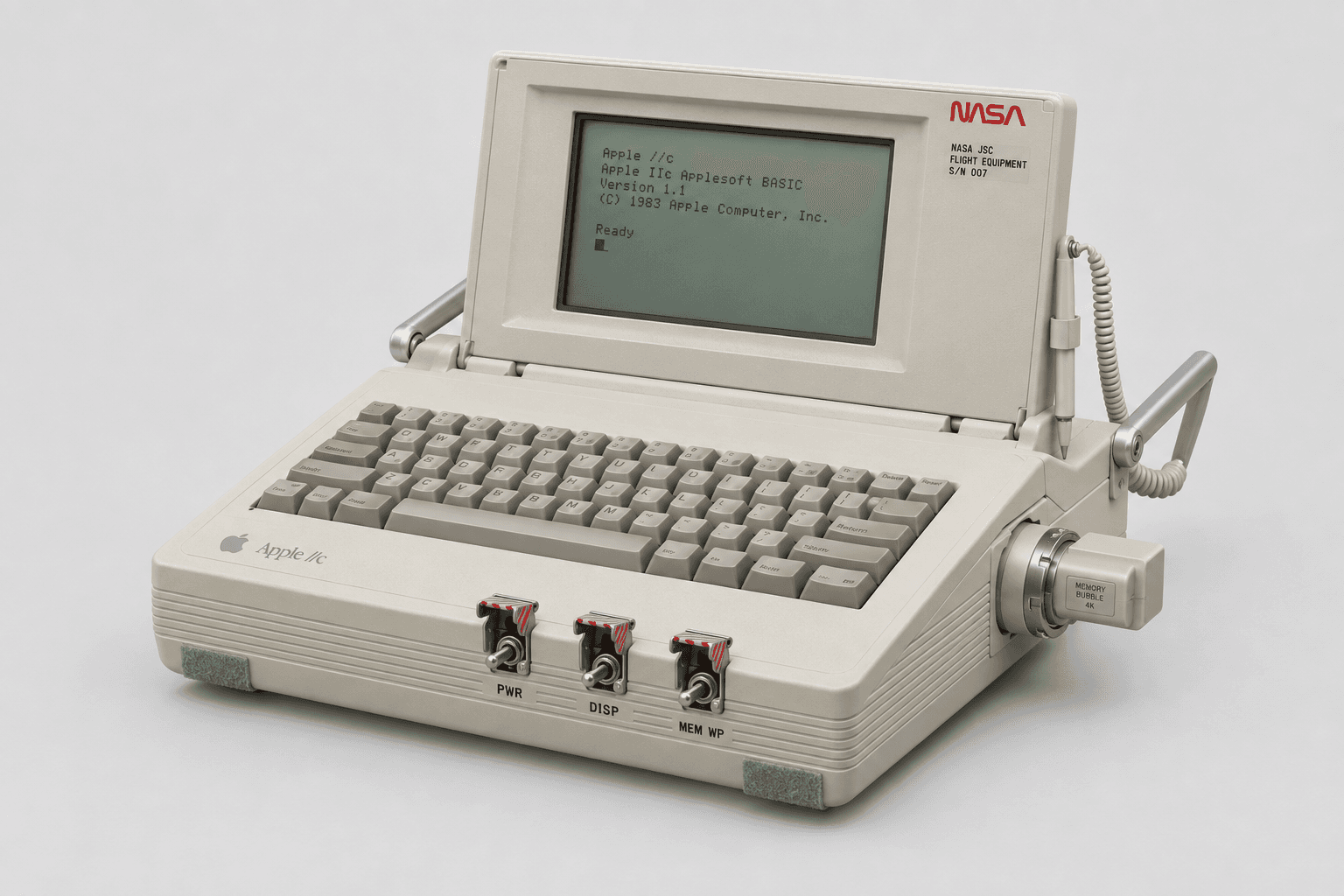
A beige Apple //c, rebuilt by people who had to worry about it floating into a crewmate's eye at three in the morning.
Announced June 11, 1985, at the Johnson Space Center in Houston, the Apple //c Orbiter was the result of a fourteen-month study by NASA's Crew Systems Division into whether an off-the-shelf home computer could be made fit for the Shuttle middeck. Apple's answer was to keep the //c's logic board almost untouched and rebuild everything around it. The enclosure work was handled by frogdesign under Hartmut Esslinger, with Apple engineer Rob Gemmell as liaison, while NASA human factors specialist Dr. Lynn Carter set the rules: nothing smaller than a gloved thumb, nothing that could come loose, nothing that relied on gravity.
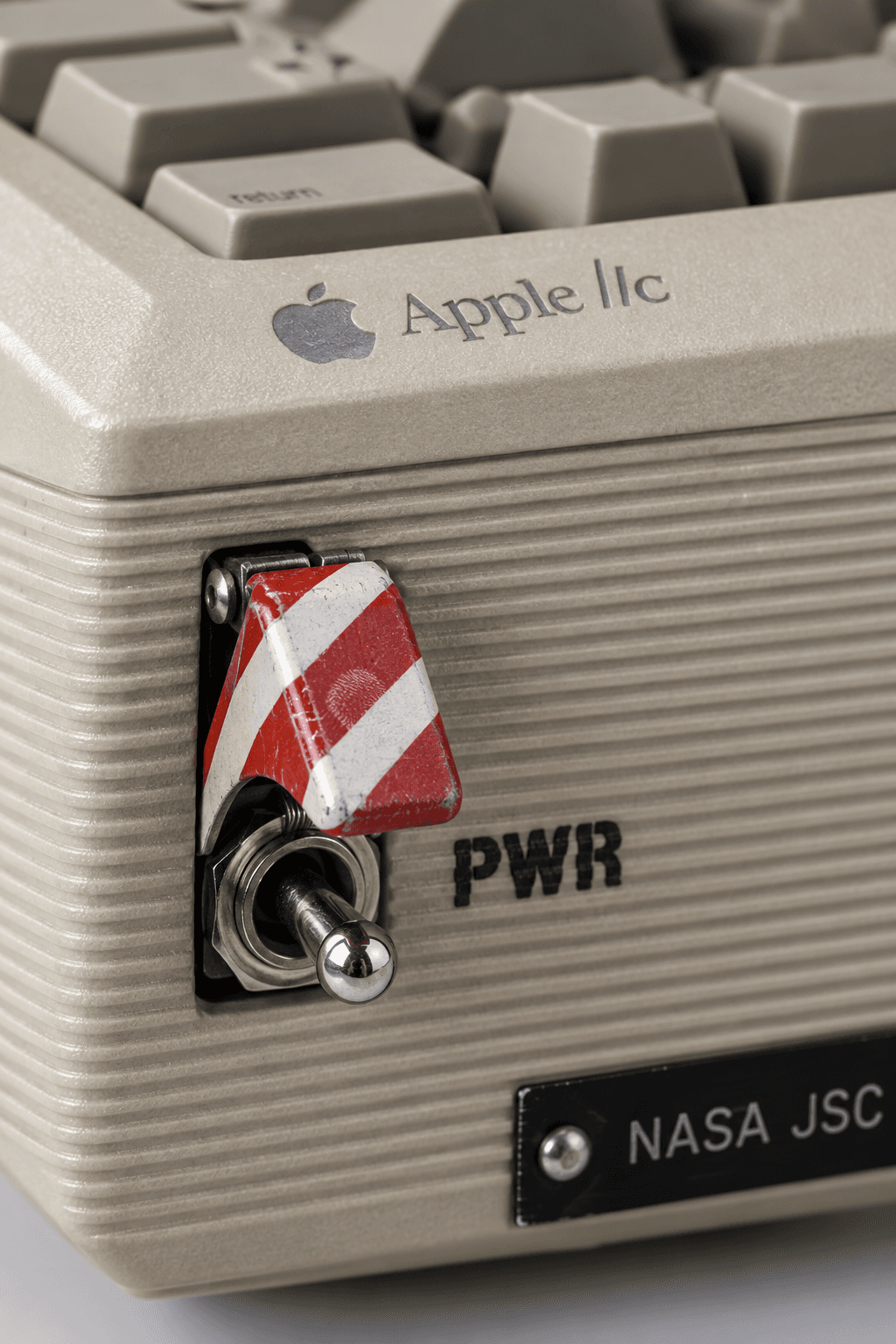
The result kept the Snow White language of the //c: fog-beige ABS, the fine horizontal ribbing, the rounded corners. But the floppy drive was gone, replaced by a sealed 256 KB bubble memory cartridge that slotted into the right flank with a quarter-turn bayonet. Two tubular aluminium handles folded out from the rear corners, a fixed-hinge monochrome LCD sat on top, and every switch that mattered was a large guarded toggle rated for the orbiter's own control panels. The underside carried four hook-side Velcro pads positioned to match the loop strips already fitted to the middeck lockers.
The keyboard was the most argued-over part. Frogdesign wanted the //c's slim keys; NASA wanted something a crew member in a sleep restraint could type on without looking. The compromise was a full-size keyboard with a raised ridge between every row and deeper, slightly concave caps. Apple's rainbow logo was printed in single-colour grey at NASA's request, because the six-colour version failed a colour-contrast check under the middeck's fluorescent lighting. It is the only Apple product of the period to ship without it.
Two units flew on STS-61-A, the German Spacelab D1 mission, in October 1985, running experiment timelines and a crew inventory program written in Applesoft BASIC. Astronaut Bonnie Dunbar later recalled that the Orbiter's most useful feature was a 60 cm tether cord for the stylus, which crews used to pin checklists to the lid. A third unit flew on STS-61-B that November, where Sherwood Spring reportedly logged EVA timings on it between spacewalks.