No. 137 · 6 November 2026
IBM × Tumi
ThinkPad Case 700, laptop travel case, 1992
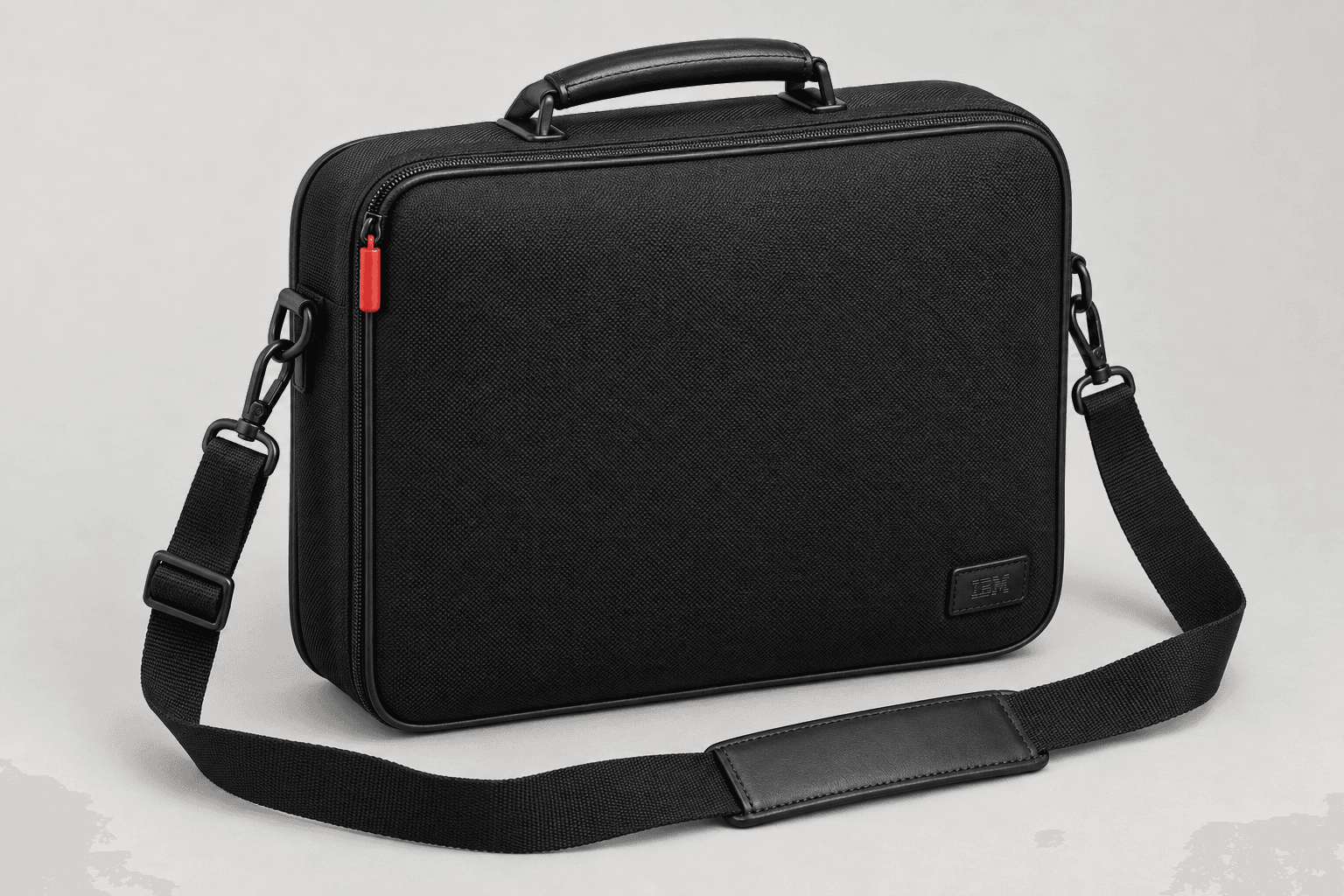
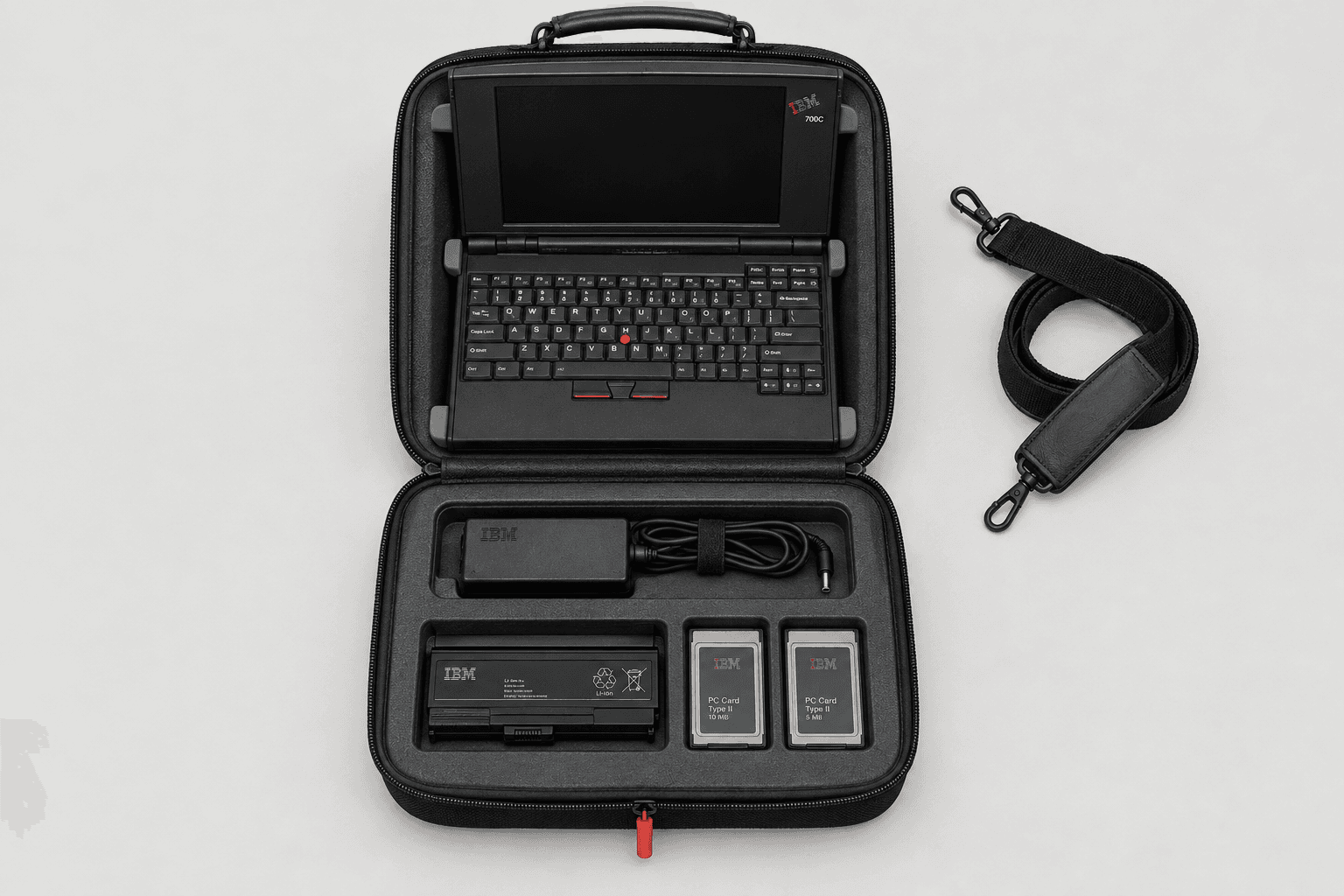
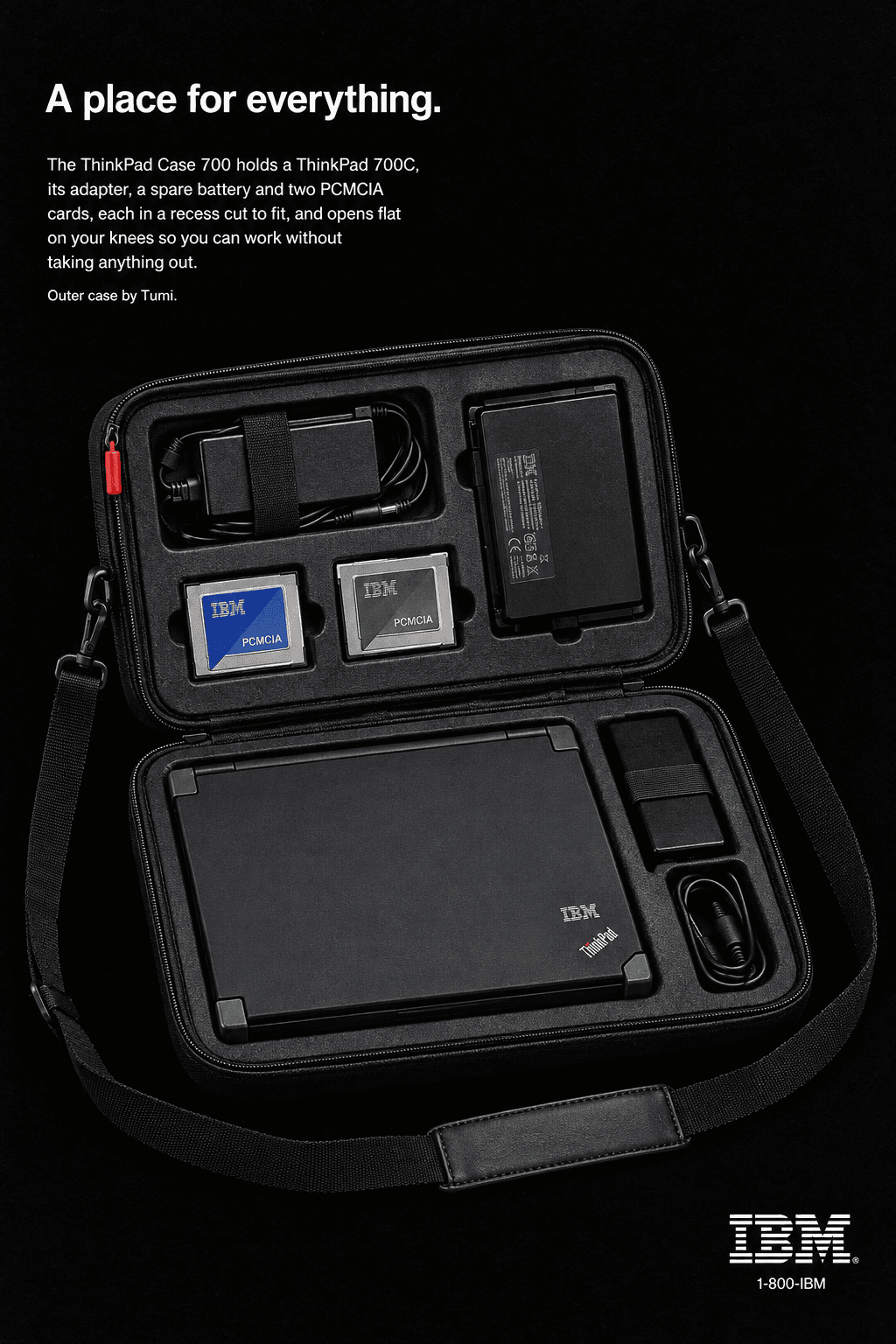
A ballistic nylon briefcase that unzips into two ThinkPad-black trays, so the computer can be opened and used on your knees without being taken out.
Announced November 16, 1992, on the first day of Comdex in Las Vegas, the ThinkPad Case 700 arrived six weeks after the 700C and was shown open beside it on a black plinth. Sapper had complained that a machine he had designed as a bento box was being carried about in holdalls. IBM's options group in Boca Raton went to Tumi, whose ballistic nylon briefs were already standard issue among American consultants.
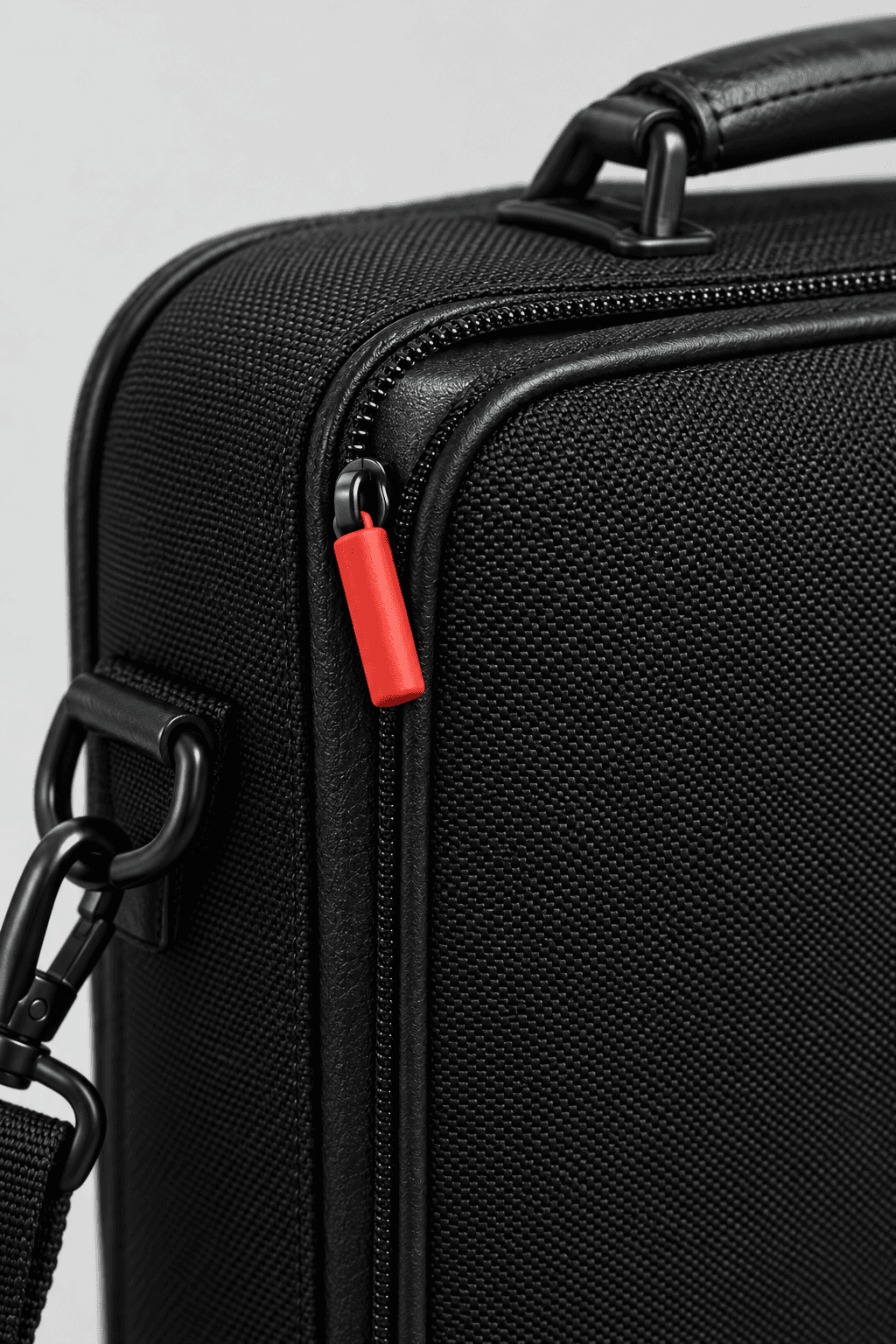
The division of labour follows the zip. Tumi made the outside: 1680-denier ballistic nylon, black leather piping on every edge, its own heavy coil zip and a matte black logo plate. IBM made the inside: two rigid trays moulded at Yamato in the same textured charcoal ABS as the 700C, so that opening the case feels like opening a larger ThinkPad. The machine sits in the deeper rear tray on four grey rubber corner cradles and opens where it sits. The front tray folds down over the user's knees as a wrist rest, its recesses holding the AC adapter, a spare battery and two PCMCIA cards, each cut to the size of its occupant. Yamazaki laid them out on squared paper and left a margin of exactly 3 mm round each.
The only colour on the outside is the main zip pull, a moulded rubber cylinder in the red of the TrackPoint. Clifford wanted it in black leather to match the pulls on the side pockets. Sapper insisted on red, on the grounds that a tired person in an airport should always know which zip to open first. The IBM eight-bar logo is debossed, uncoloured, on a small leather tab; the Tumi name appears only on the metal plate beneath the handle.
PC Magazine called it the first case that understood what was inside it, while noting that at 1.3 kg it added more than a third to the weight of a 3.5 kg computer. It became a fixture of business-class cabins and was briefly issued to IBM's own sales force, who were reminded in a 1993 internal bulletin that the battery recess was not designed to hold a sandwich.