No. 017 · 15 September 2026
Nintendo × Bang & Olufsen
Beocenter 7700 NES, hi-fi games console, 1989
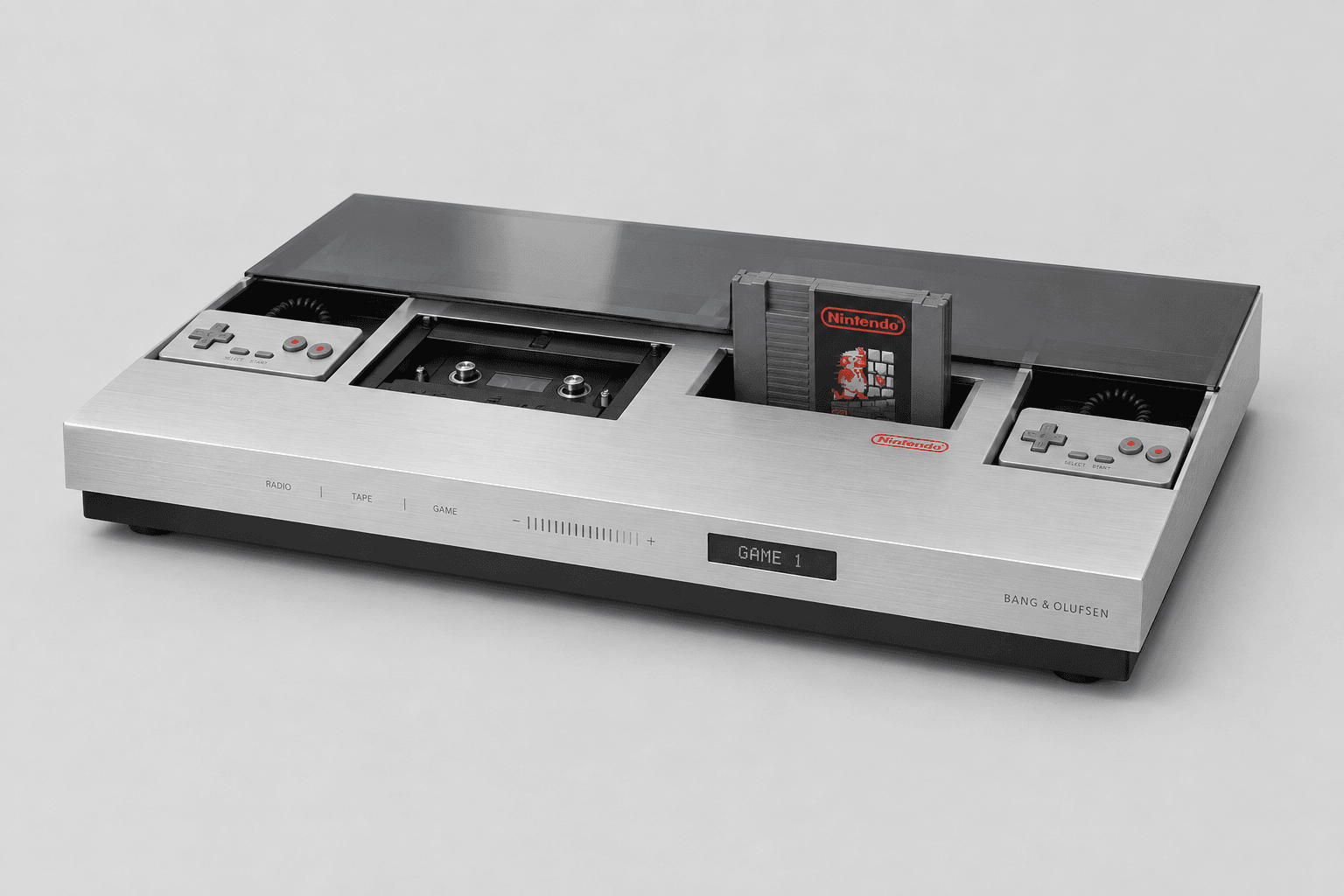
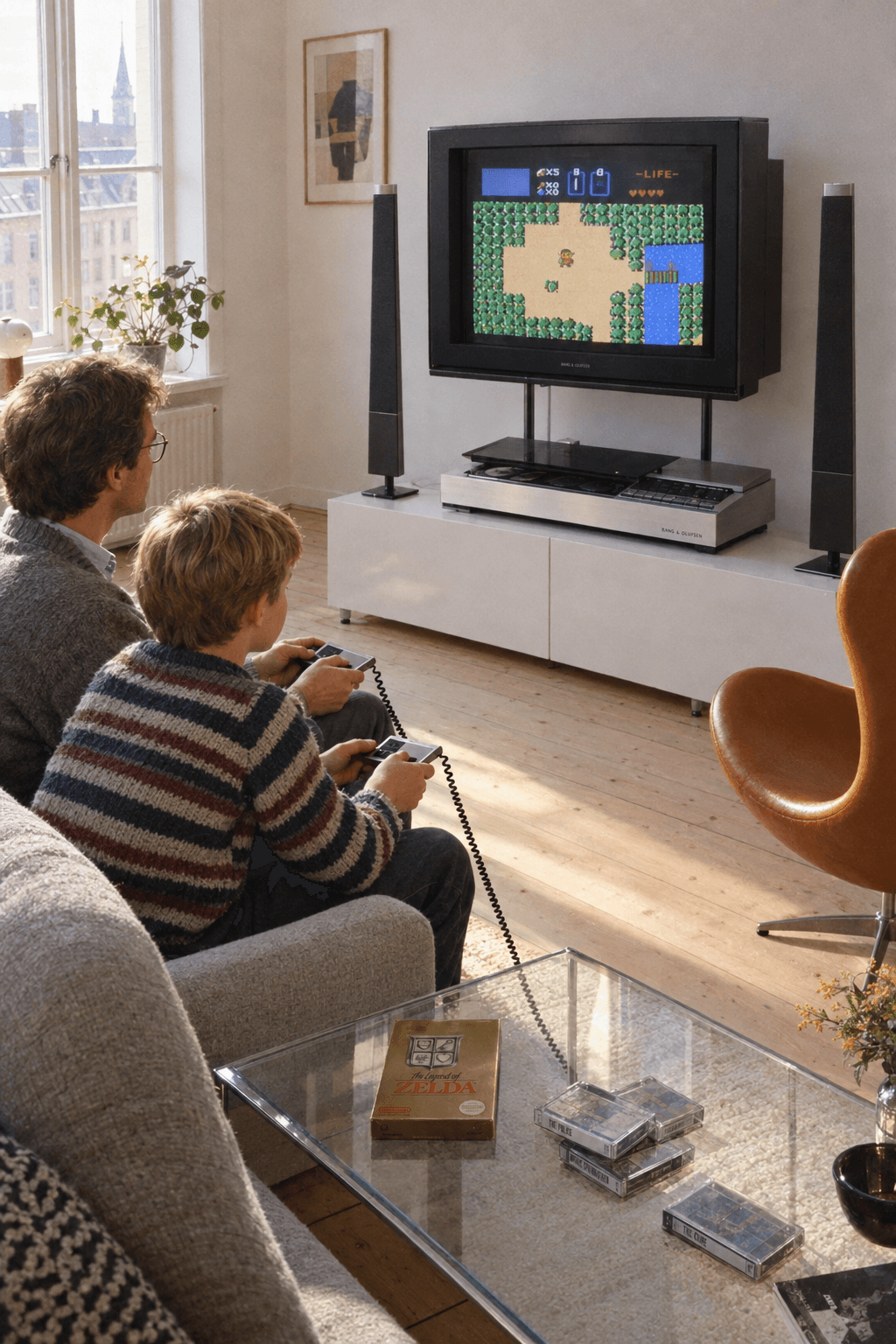
A Danish music centre with a motorised glass lid that opens on a cassette deck on the left and a Zelda cartridge on the right, both played through the same very good amplifier.
Announced September 14, 1989, at Bang & Olufsen's headquarters in Struer, the Beocenter 7700 NES was the result of eighteen months of letters, faxes and three long visits between Struer and Kyoto. Nintendo of Europe, newly confident after the NES reached West Germany and Scandinavia, wanted a machine that could sit in a living room without apology. Bang & Olufsen wanted younger buyers who did not yet own a Beocenter. Both got roughly what they asked for.
The industrial design was led by David Lewis, fresh from the Beocenter 9000, with Nintendo's Masayuki Uemura supervising the electronics and controllers. The body is a single low slab of brushed, anodised aluminium with a smoked glass panel that slides back on a motor when the Beolink remote or the top-mounted touch strip is pressed. Beneath it the cassette well sits on the left and a vertical, top-loading cartridge slot on the right, so a game stands upright like a record in a rack. The NES board inside is a standard PAL unit, but its sound is routed through the Beocenter's amplifier and a simple matrix that spreads the mono chip across both speakers.
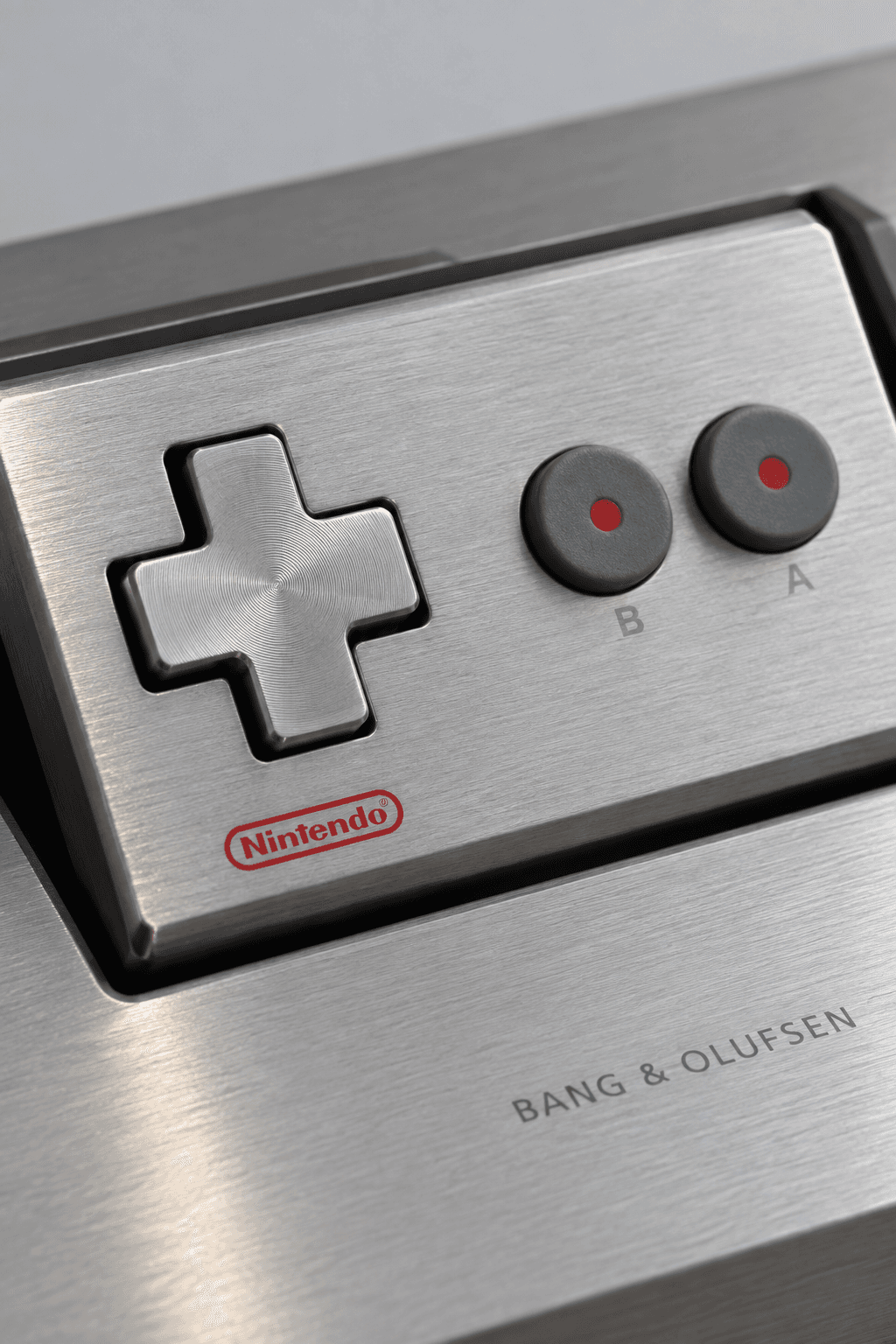
The two controllers were the argument of the project. Lewis wanted them entirely grey; Uemura's team insisted the A and B buttons stay red so children could find them without looking. The compromise was grey rubber buttons with a single red dot inset in each, and a D-pad machined from solid aluminium that clicks into a rubber dome. The controllers dock magnetically into shallow recesses at the rear corners of the top deck, their coiled cables disappearing into the body.
Reviewers at High Fidelity in Copenhagen praised the cassette deck, which used Dolby HX Pro, a system Bang & Olufsen had co-developed, and described the gaming side as 'suspiciously well behaved'. Nintendo's own magazine in Germany was less sure, noting that the glass lid took 2.4 seconds to open, which was exactly long enough to lose patience after a Game Over. A firmware change in spring 1990 cut it to 1.6 seconds.