No. 139 · 8 November 2026
Acorn × Kartell
Electron KC, stacking home computer, 1984
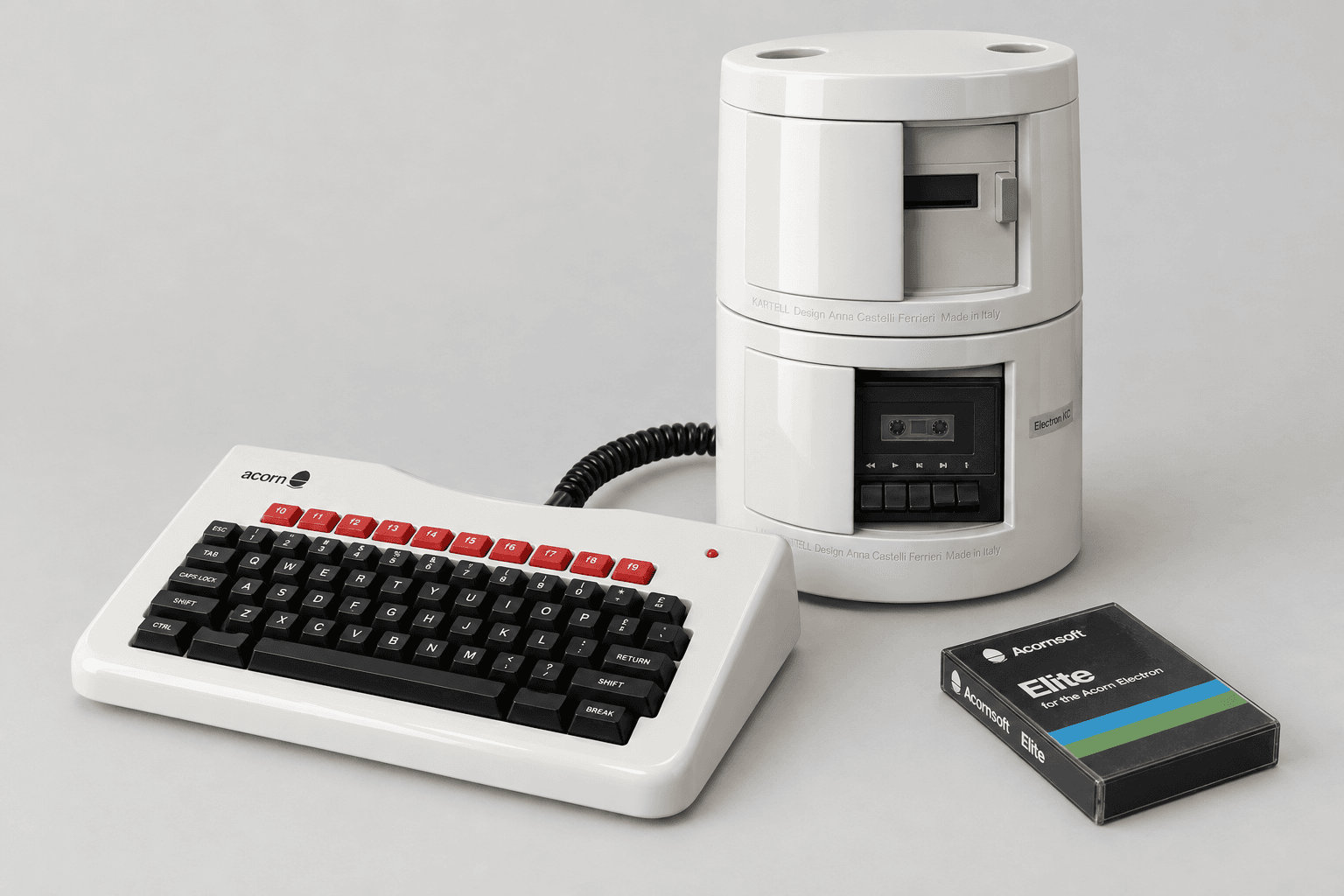
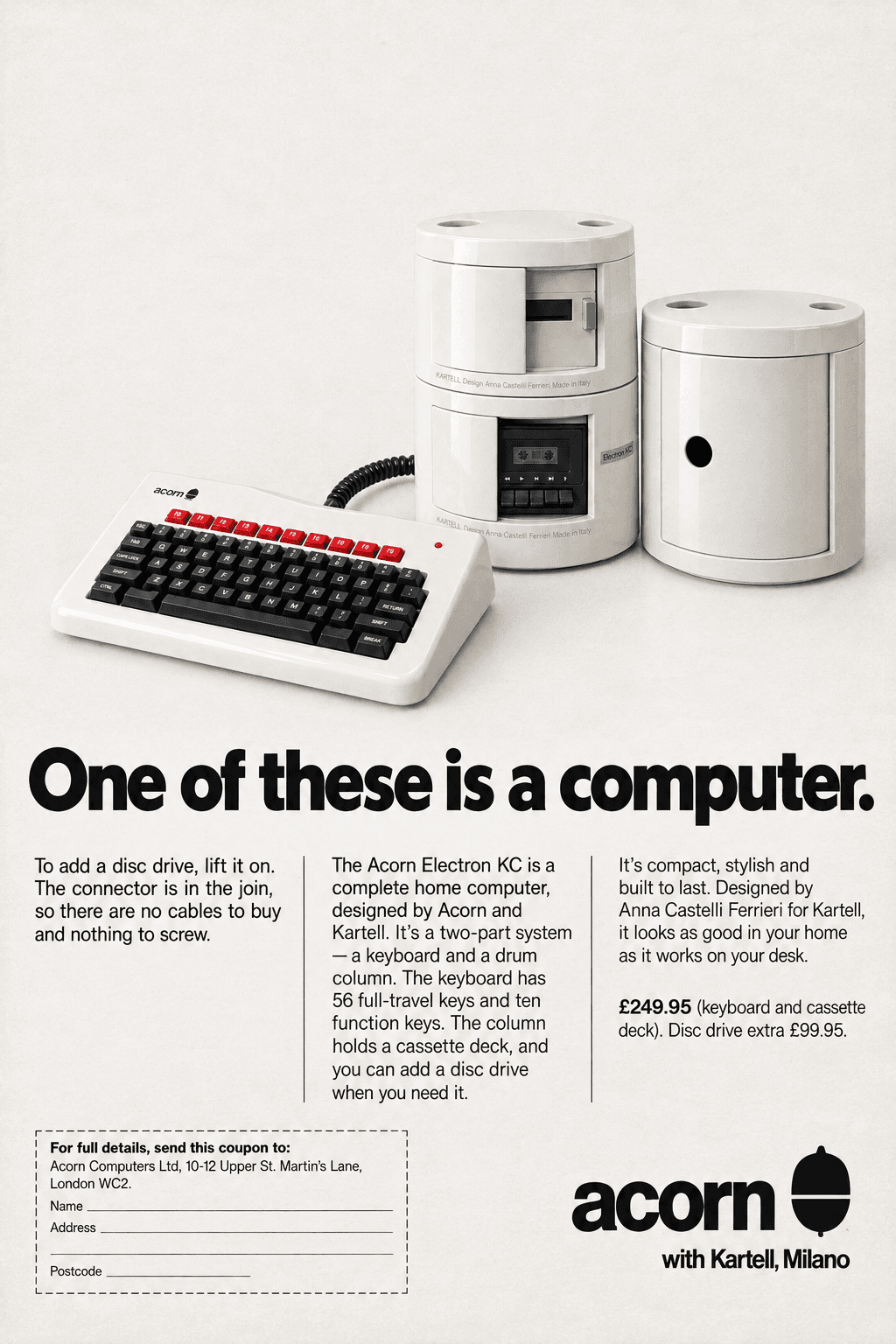
A home computer you expand the way you add a Componibili tier: lift a drum, set it on top, and a moulded key lines up the edge connector for you.
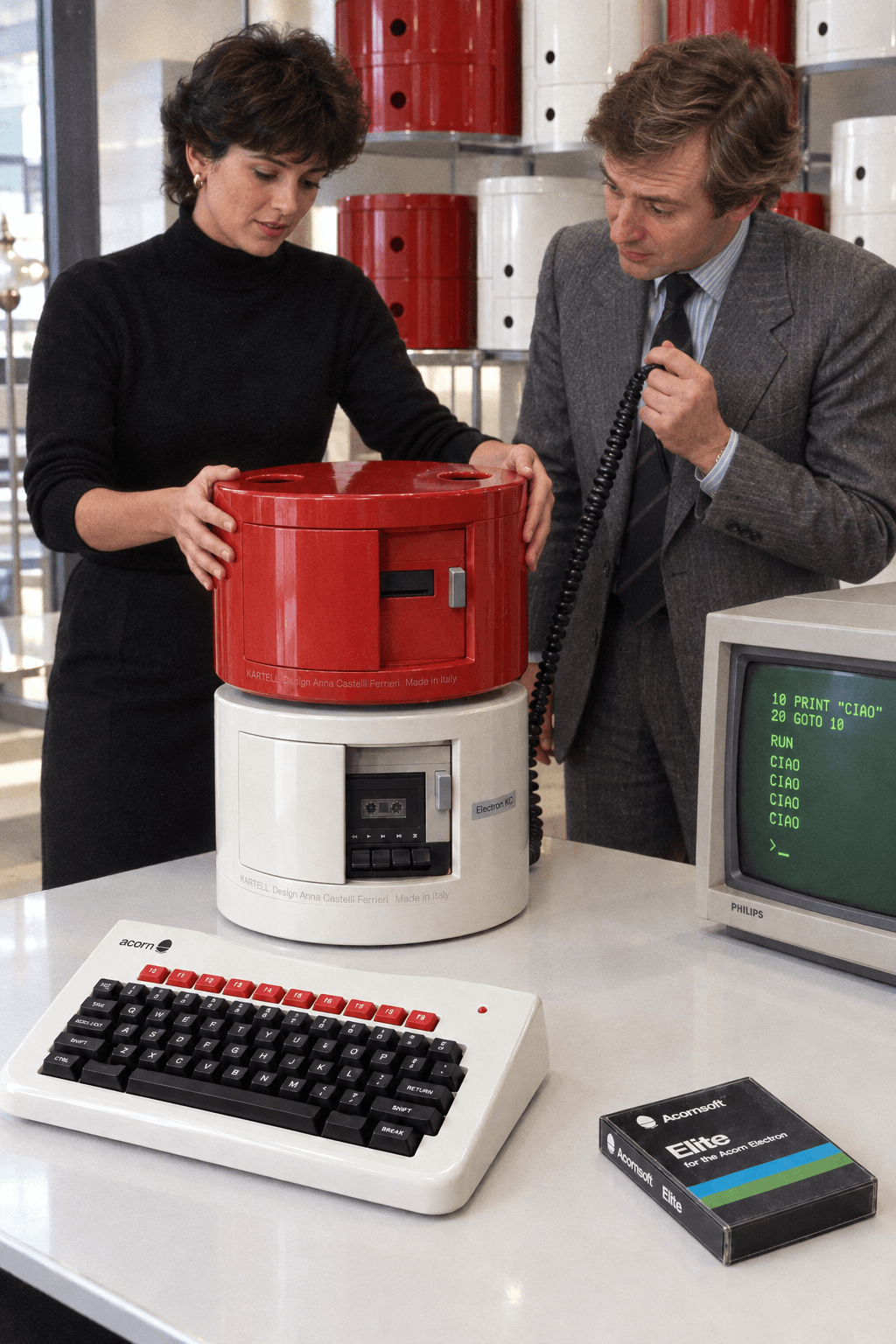
Announced September 20, 1984, at the Salone del Mobile in Milan rather than at the Acorn User Show, which told the British computing press most of what it needed to know. The Electron KC was a keyboard and a column of drums at the 320 mm diameter of the round Componibili. The electronics were a standard Electron's: a 6502A sold as 2 MHz that slowed to 1 MHz whenever it touched RAM, 32 KB of RAM and BBC BASIC II in ROM, all moved off the keyboard and into the bottom drum.
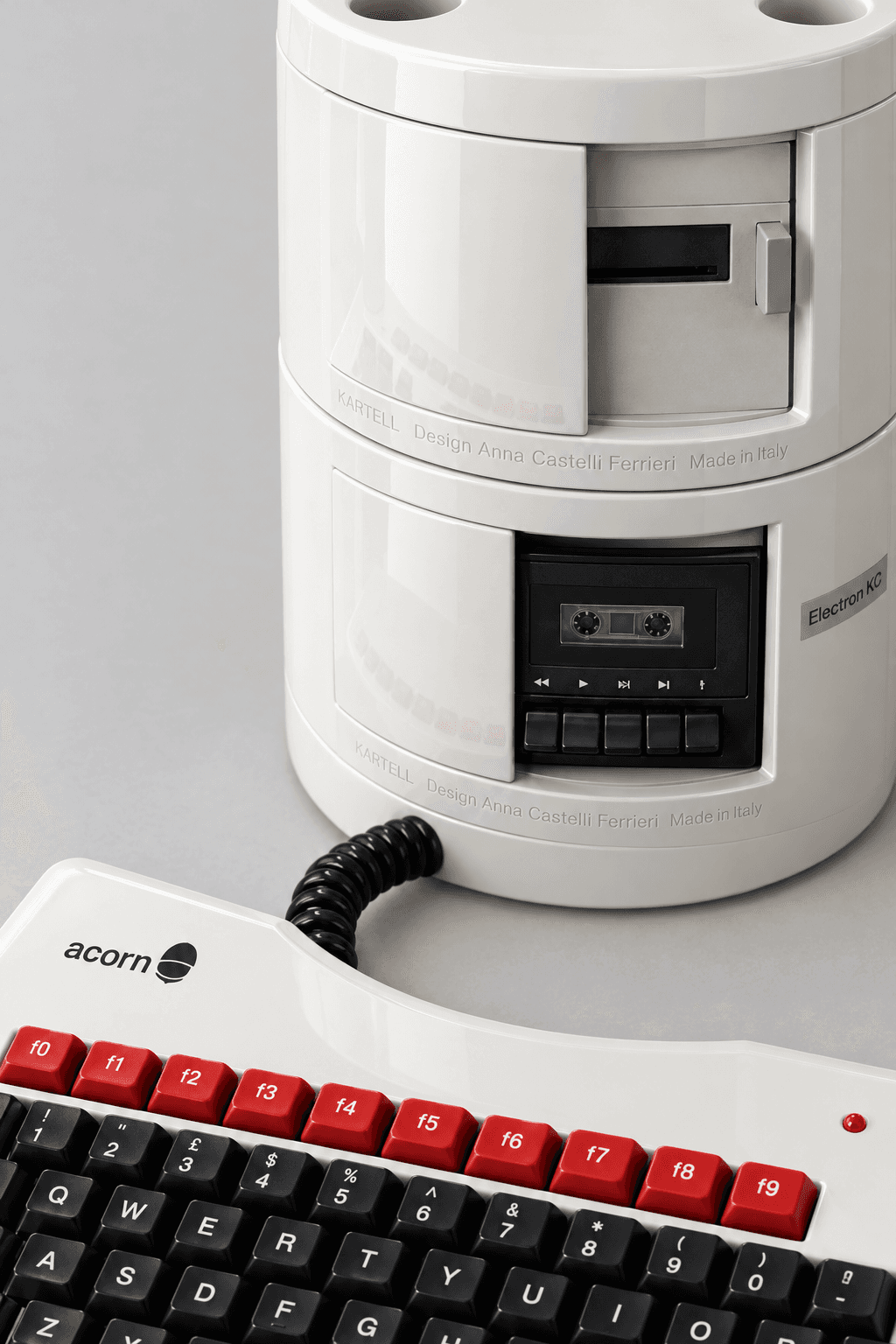
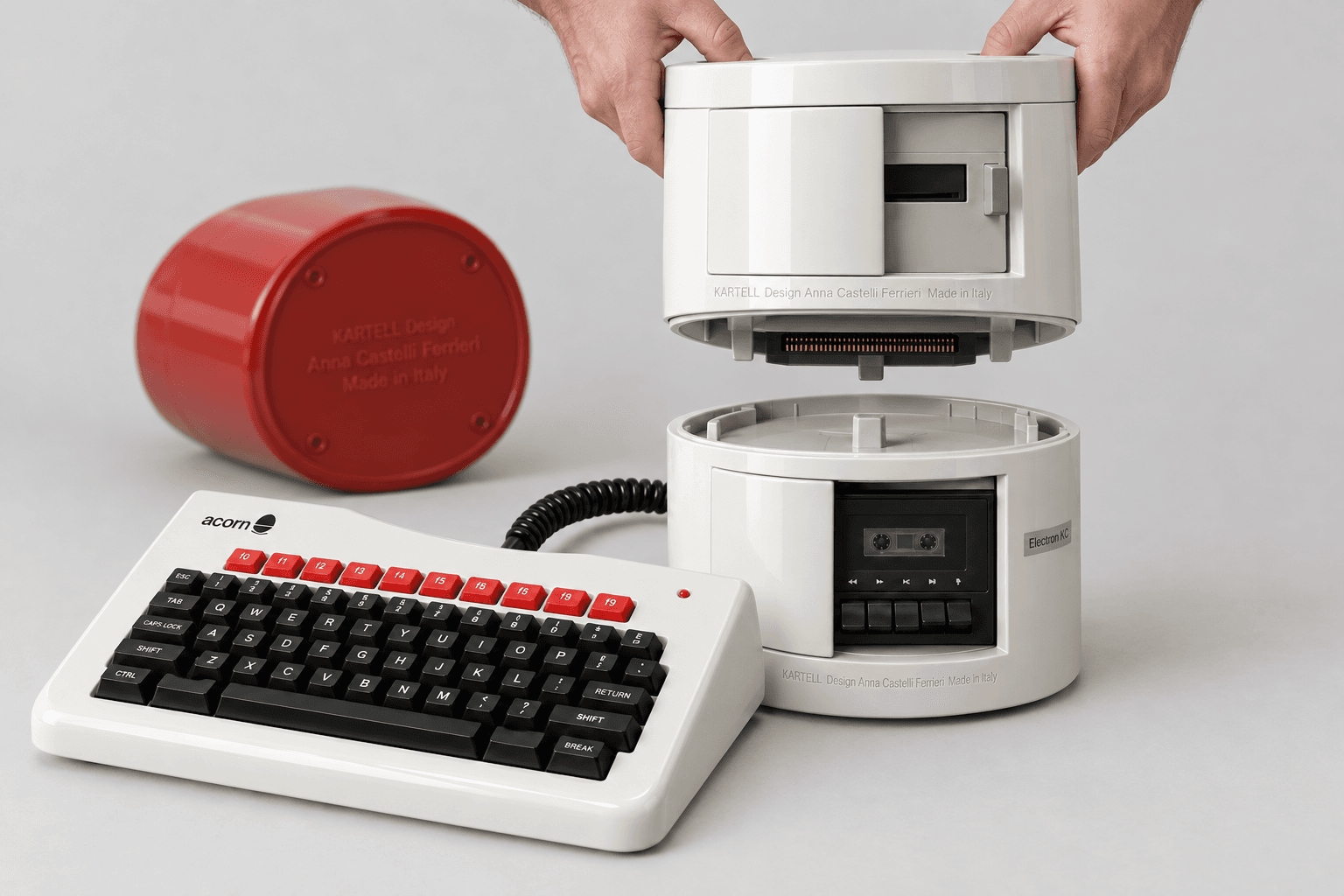
The idea was Allen Boothroyd's. He had spent a year watching Electron owners hang Plus 1 boxes, cassette recorders and disc interfaces off the back of the machine and sent sketches to Noviglio in late 1983. Anna Castelli Ferrieri moved the expansion bus into the stacking joint: a gold-plated 50-way edge connector rises from each drum's lid and seats in a slot in the floor of the drum above, guided by a moulded key so it can only go on one way. Nothing screws together. The keyboard joins the column by a single coiled cable, and its back edge is cut as a concave 160 mm arc so it tucks against the base drum.
Kartell moulded every shell in 3 mm gloss ABS from Componibili-grade tooling, and kept the curved sliding doors and the twin finger holes in the top cap. To pass British interference rules each drum was sprayed inside with nickel paint, a step Kartell's Noviglio line had never needed for a laundry basket. The keyboard kept the Electron's 56 black keys and added the BBC Micro's ten red function keys, wired to send FUNC plus a number so the Electron ROM would never know.
Acorn User admired the build and asked who it was for. Design ran it on its November cover. Kartell insisted on its habit of moulding credits underneath, so every drum carries 'KARTELL Design Anna Castelli Ferrieri Made in Italy' in relief on its base, which most owners found only when they lifted the stack to dust behind it.