No. 149 · 18 November 2026
Tendo Mokko × Yakult
T-6850, delivery cold case, 1968
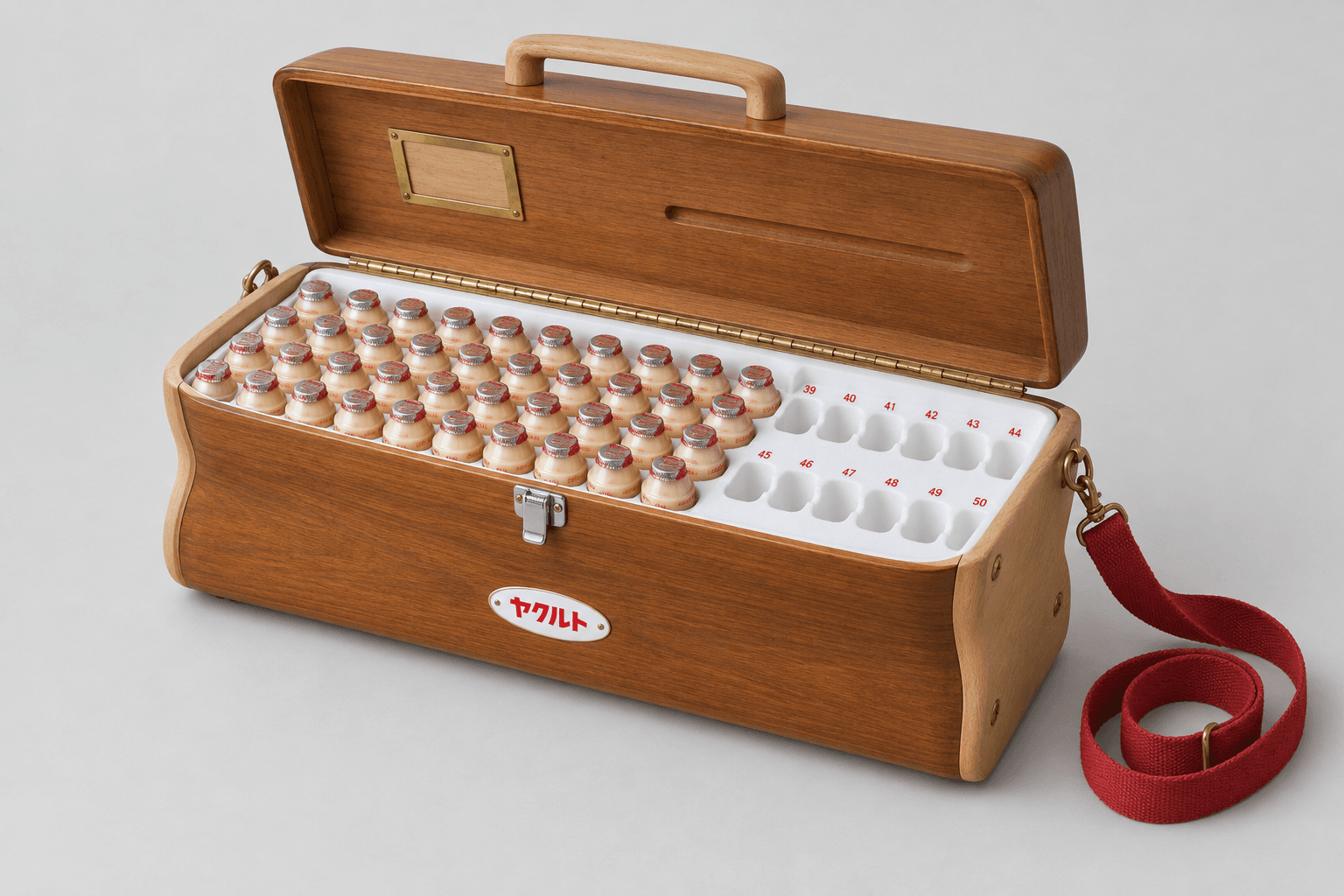
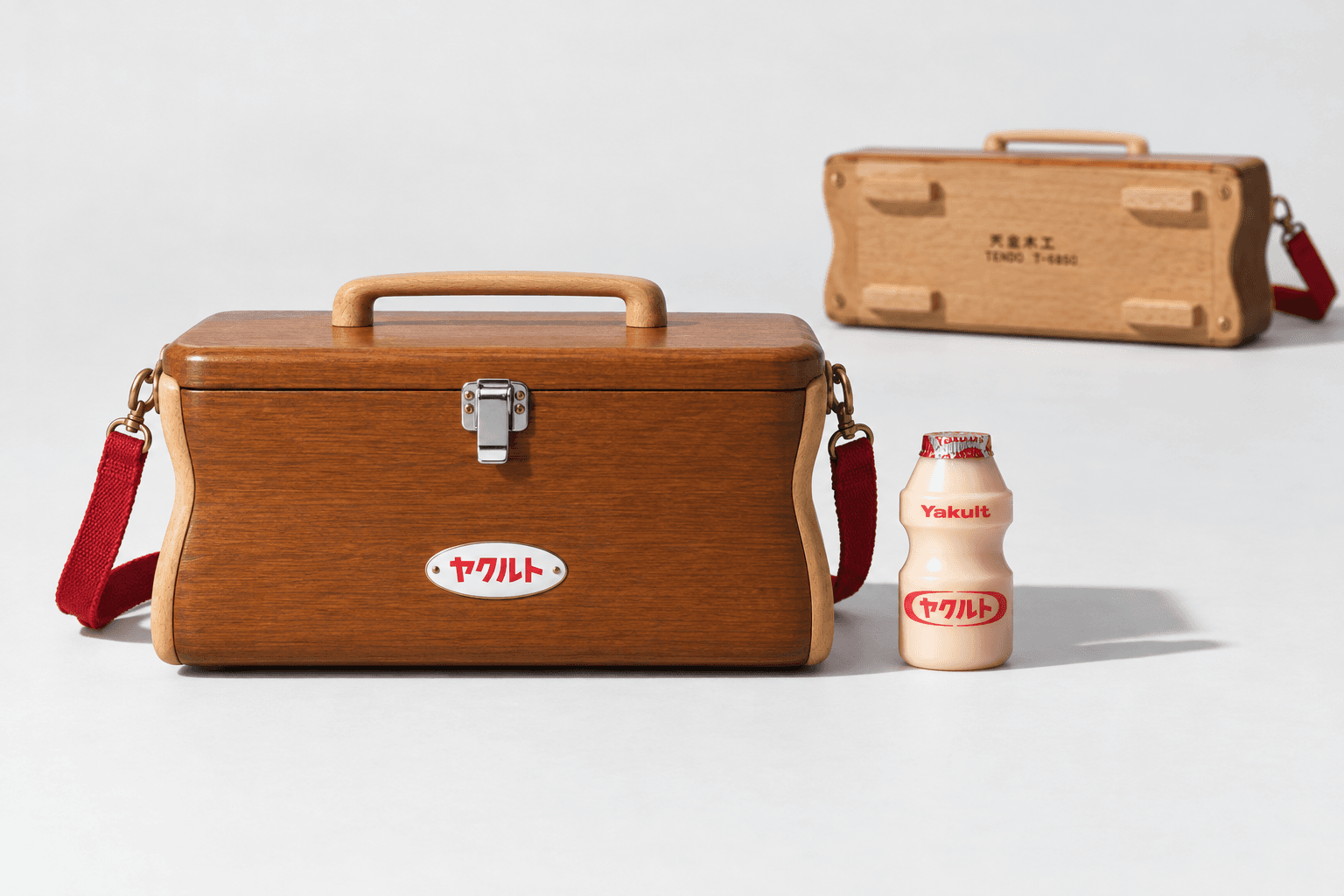
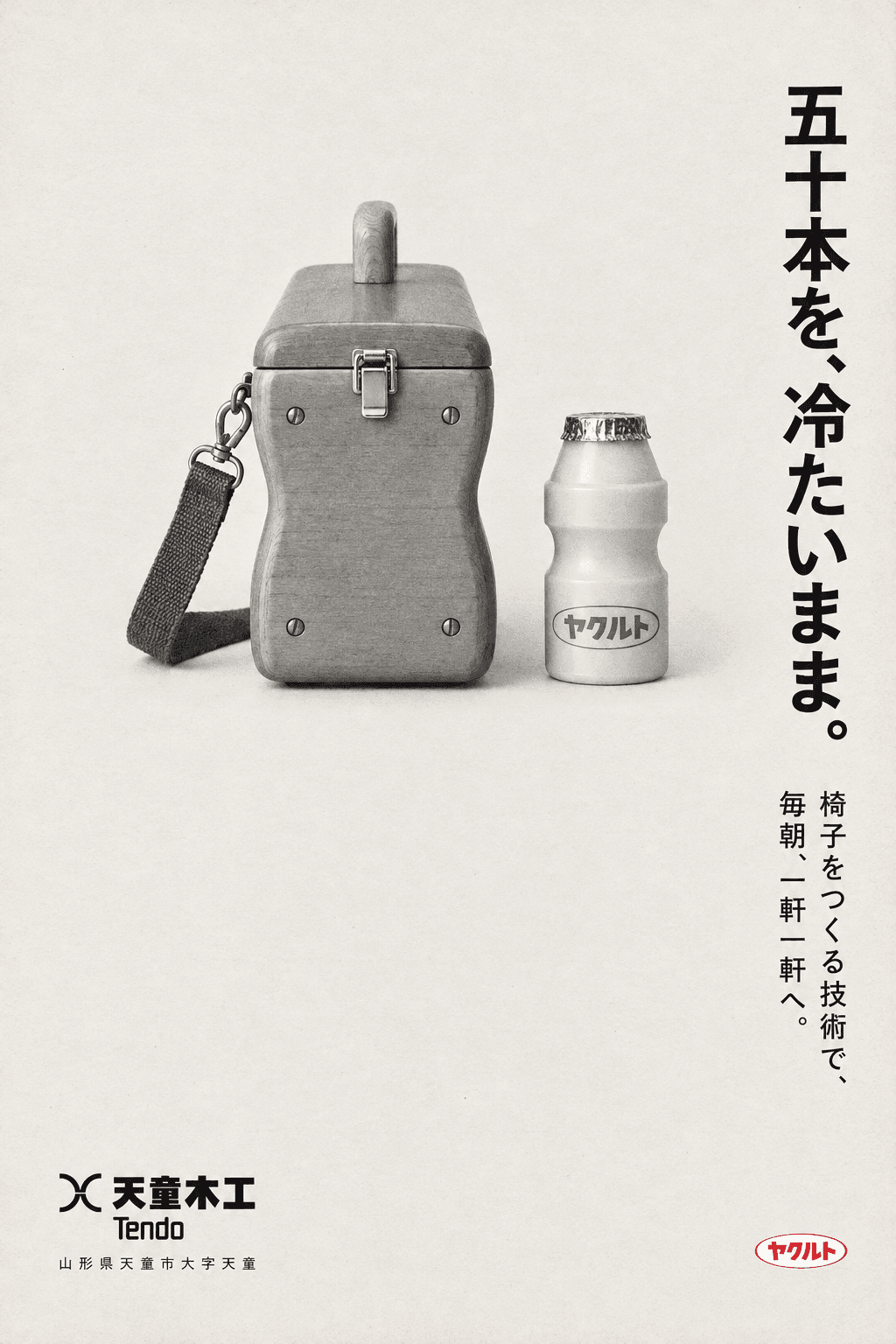
A Yakult Lady's cold box pressed by the workshop that made the Butterfly Stool, its sides pinched to the same waist as the bottle and its fifty hollows numbered so nobody loses count.
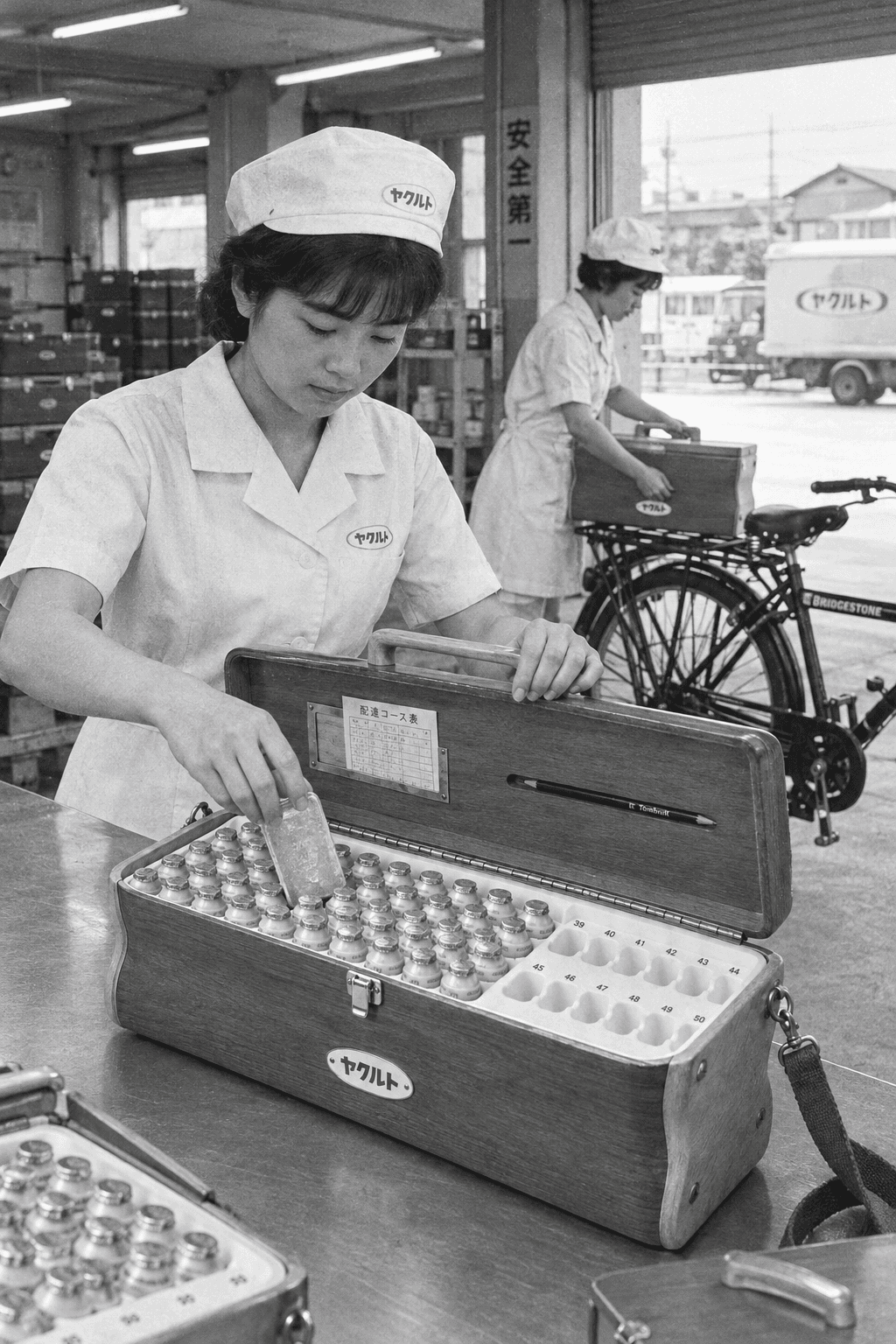
Announced April 15, 1968, at Yakult Honsha's Tokyo head office, the T-6850 was the second thing Isamu Kenmochi designed for the company that year. Having just given Yakult its waisted polystyrene bottle, he was asked what the women delivering it should carry it in. Most Yakult Ladies were using tin-lined crates knocked up by local carpenters, which were heavy, leaked meltwater and, in the words of one branch manager, looked like they were for mackerel. Kenmochi took the problem to Tendo Mokko in Yamagata, where he had been working in formed plywood since the 1950s.
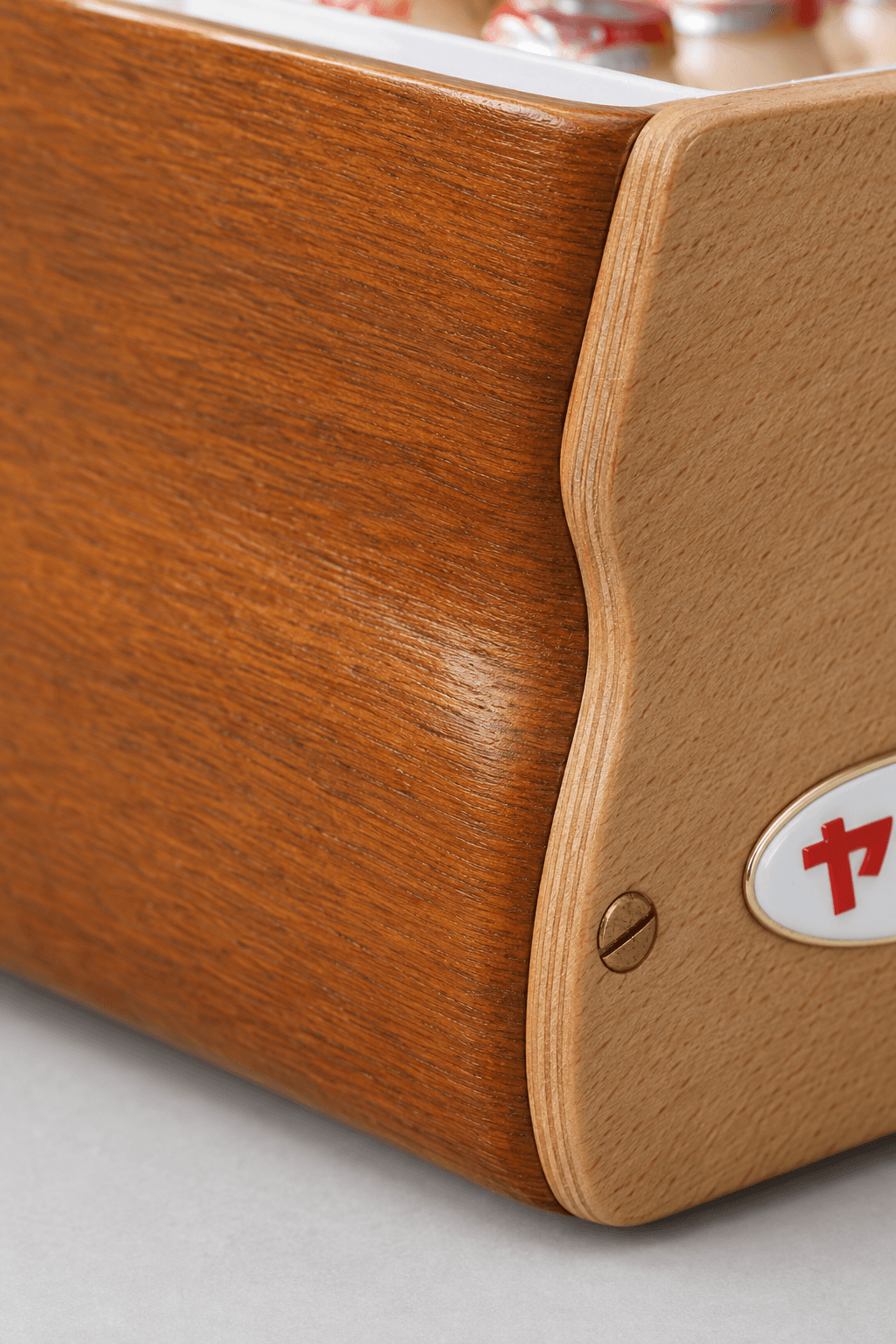
The body is a single pressed shell of nine teak-faced plies, bent in one sweep that forms the base and both long sides. Kenmochi gave the sides the bottle's profile: each one pinches in at two-thirds height and flares back out to the rim, so the case has a waist along its full length that a hand finds without looking. Because the curve runs in one direction only, Tendo could press it on its existing chair-seat moulds with a new pair of forms. Solid beech ends are cut to the same profile and fixed with four brass screws each. Inside, a white polystyrene tray holds fifty bottles in waisted hollows, ten by five, gripping each at the point a child's fingers would, so nothing rattles over cobbles.
Yakult's one request was that a full tray should equal one standard round. Kenmochi went further and had every hollow numbered 1 to 50 in small red figures, so a Yakult Lady could read what was left at a glance rather than count. Tendo's own mark is burnt into the underside, where only the woman refilling the tray would see it. Beneath the tray, a zinc-lined well takes two flat tin cold packs frozen overnight in the depot chest freezer, and two notched beech runners drop over the rear rack of a Bridgestone or Miyata bicycle, held by a rubber cord.
The case received a Good Design selection that autumn and was issued across the Kanto region from June. Riders reported that the shell flexed slightly over potholes instead of cracking, which Tendo had not intended but quoted in its literature by 1969. The detail most often remarked on sits inside the lid: a narrow brass frame for the day's route card and, below it, a pencil groove routed 7.5 mm wide, exactly the width across the flats of a Tombow 8900.