No. 156 · 25 November 2026
ISSEY MIYAKE × Mizuno
A-POC Wave, cut-to-length running shoe, 1999
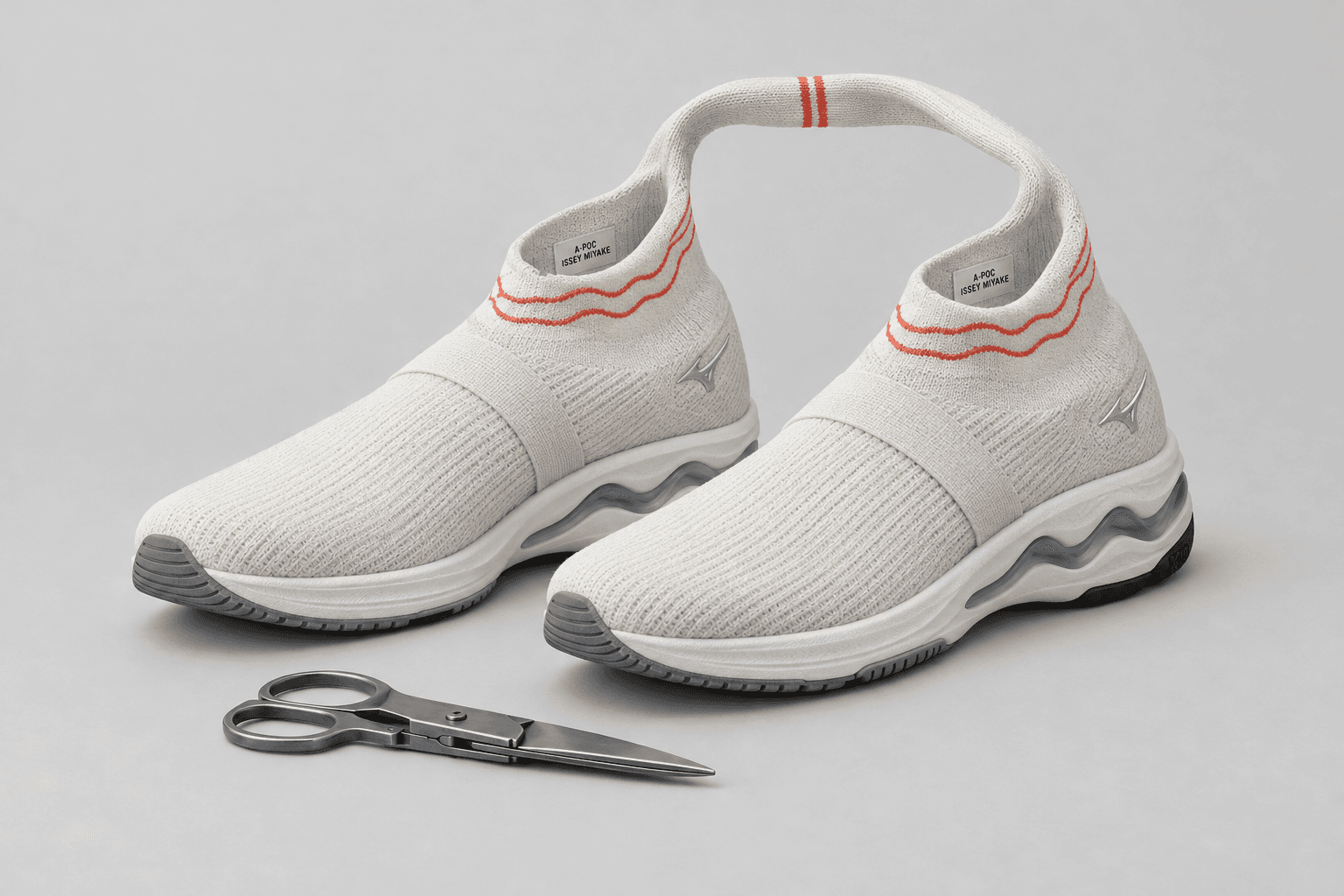
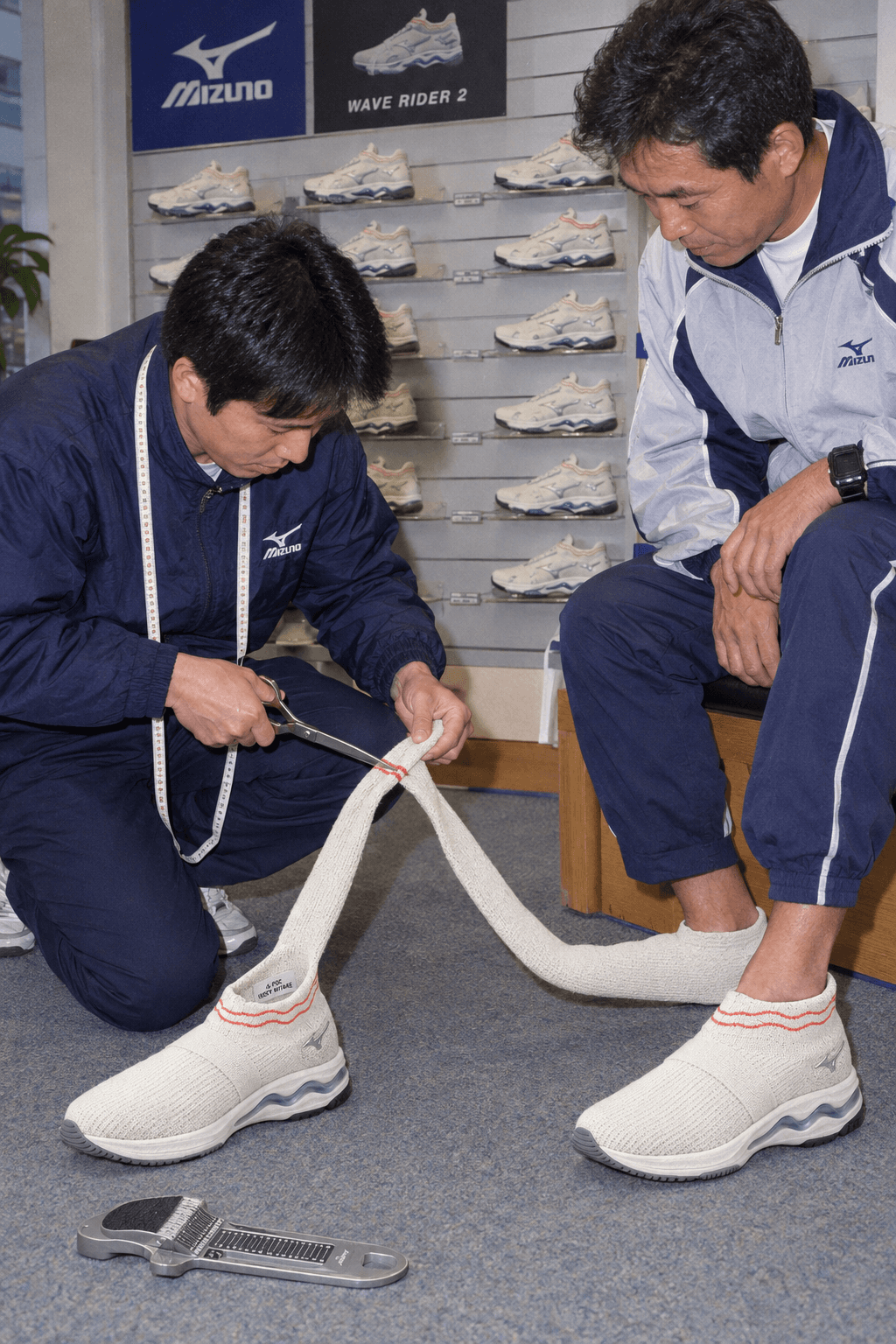
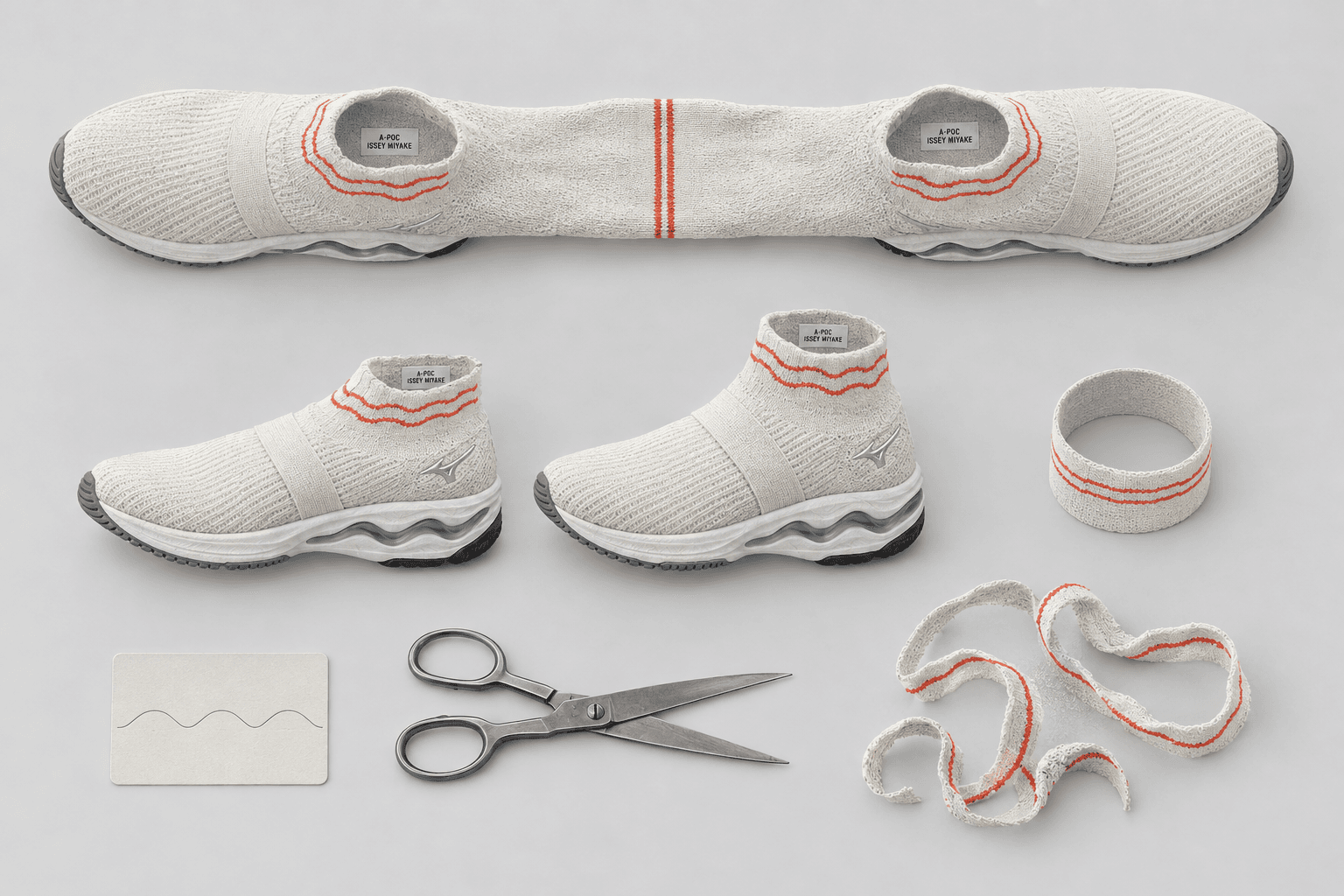
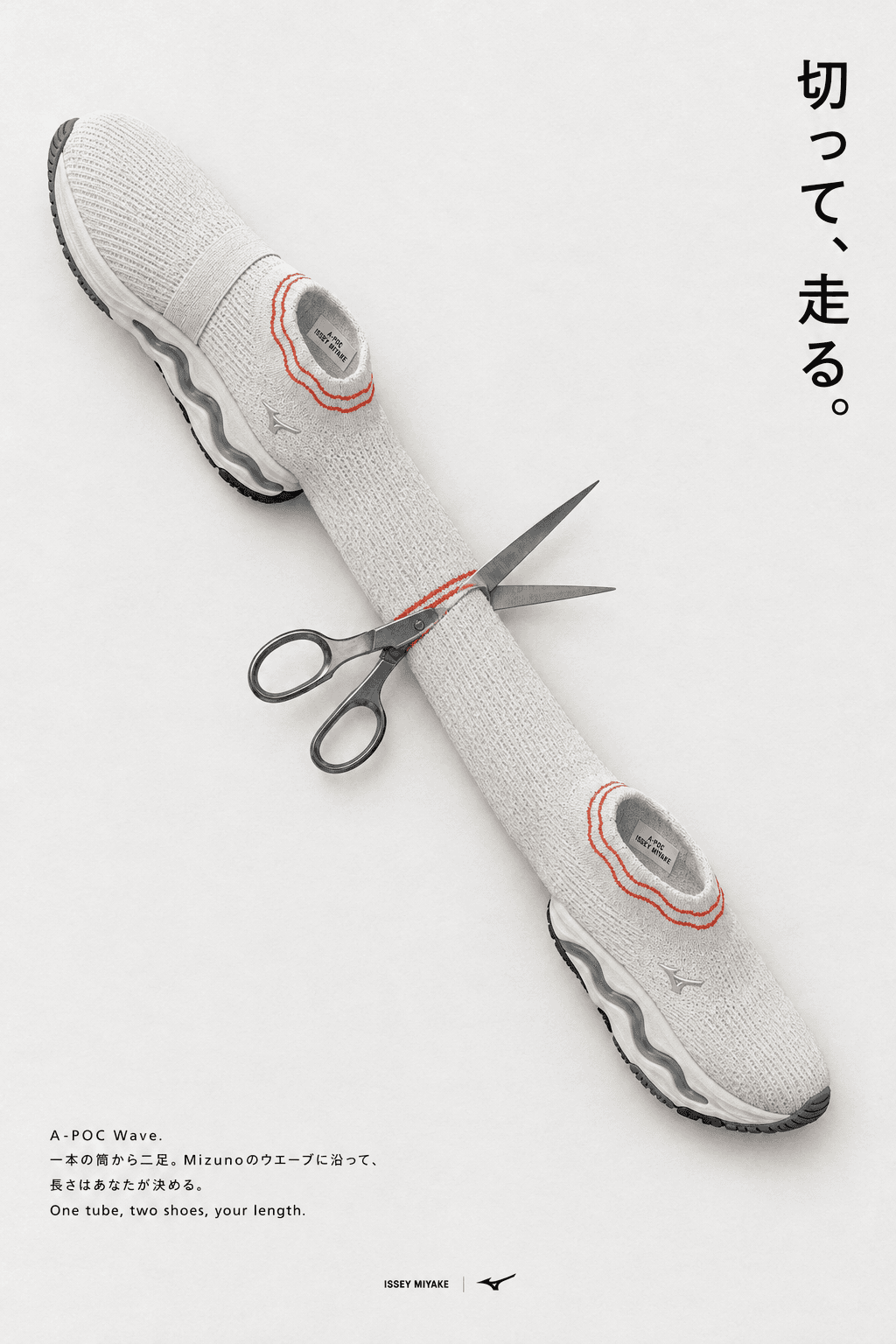
A pair of running shoes delivered as one knitted tube with a sole at each end, which the owner cuts in two and then cuts to height along a line drawn from the Wave plate.
Announced October 7, 1999 at the ISSEY MIYAKE shop in Minami-Aoyama, the A-POC Wave was the first A-POC piece that was not clothing. Fujiwara had been running sock-weight tubes through the studio's knitting machine since the spring, trying to find a shoe upper that could be lasted straight off the roll. Mizuno, a year into the Wave Rider 2, supplied the sole unit and the method for bonding raw knit directly to EVA without a strobel board.
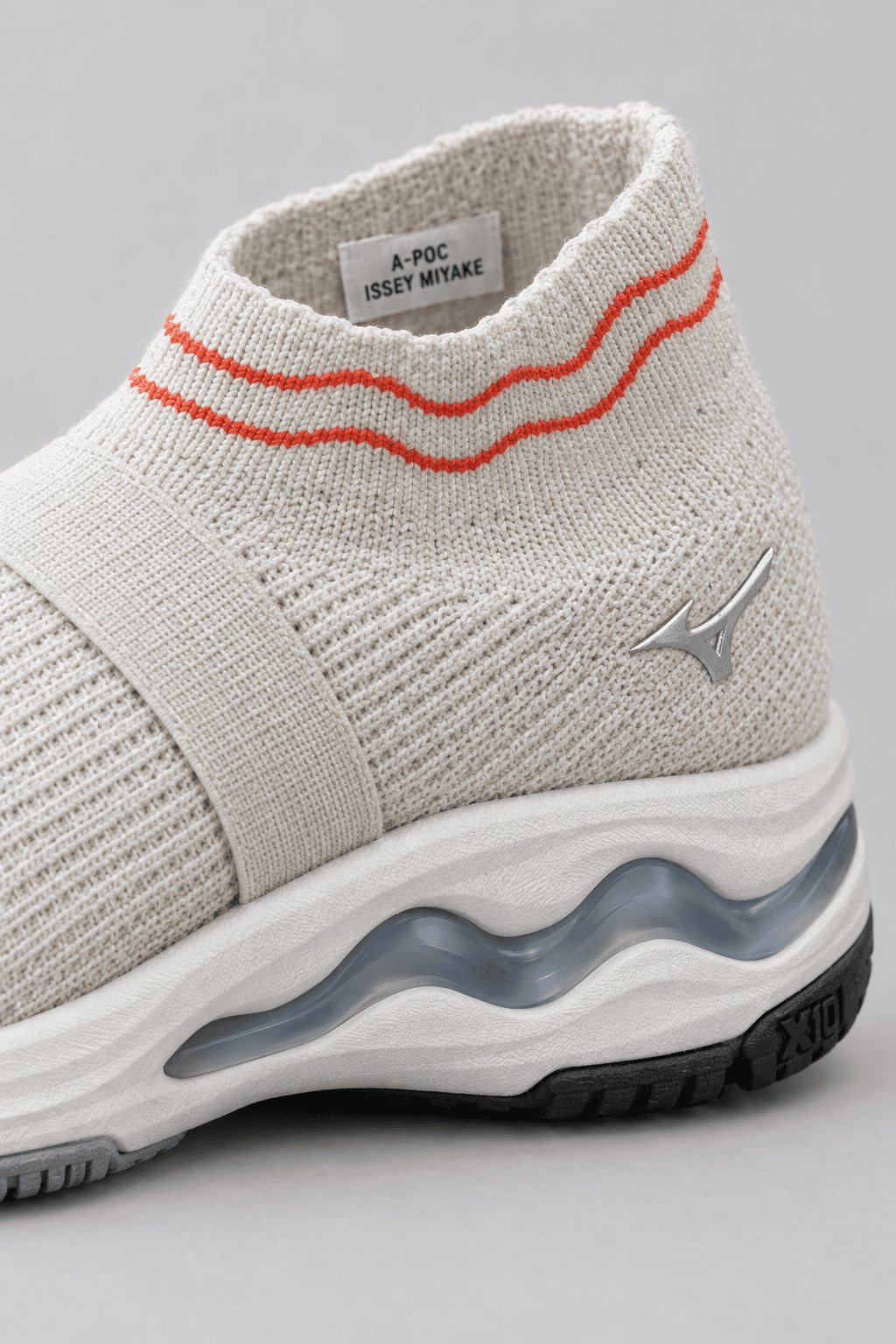
The pair arrives as a single off-white tube 90 cm long, closed at each end into a toe, with a finished sole bonded to each end. A double vermilion line knitted around the middle says where to separate them. Each collar then carries three further vermilion lines at 4, 9 and 14 cm, and each line rises and falls in the same profile as the Wave plate in the midsole beneath it, three crests from heel to toe. Cut low and the collar edge echoes the sole; cut high and it echoes it more slowly. A pair of folding steel scissors comes in the bag. Fujiwara's position was that a runner knows their own ankle better than any pattern cutter in Tokyo.
Mizuno left the Wave plate in smoke-blue translucent thermoplastic rather than its usual opaque colours, so that it reads as a thin line of colour between two whites. Testing at Mizuno's Osaka facility put the shoe at 255 g, around 60 g under the Wave Rider 2, mostly because there is no tongue, no eyelets and no heel counter beyond a moulded EVA cup. The 12 cm ring left over from separating the pair was intended, according to the cutting card, as a wristband. Most owners used it to wipe their glasses.
Reception split neatly along the two shops. Fashion magazines photographed the pair uncut, as a draught excluder with ambitions; running magazines reported that the knit relaxed after about 200 km in rain. Fujiwara's own pair, kept in the studio archive, is cut at 9 cm on the left and 14 cm on the right, because he said he could not decide.