No. 155 · 24 November 2026
Necchi × Emilio Pucci
Fiorenza, portable sewing machine, 1962
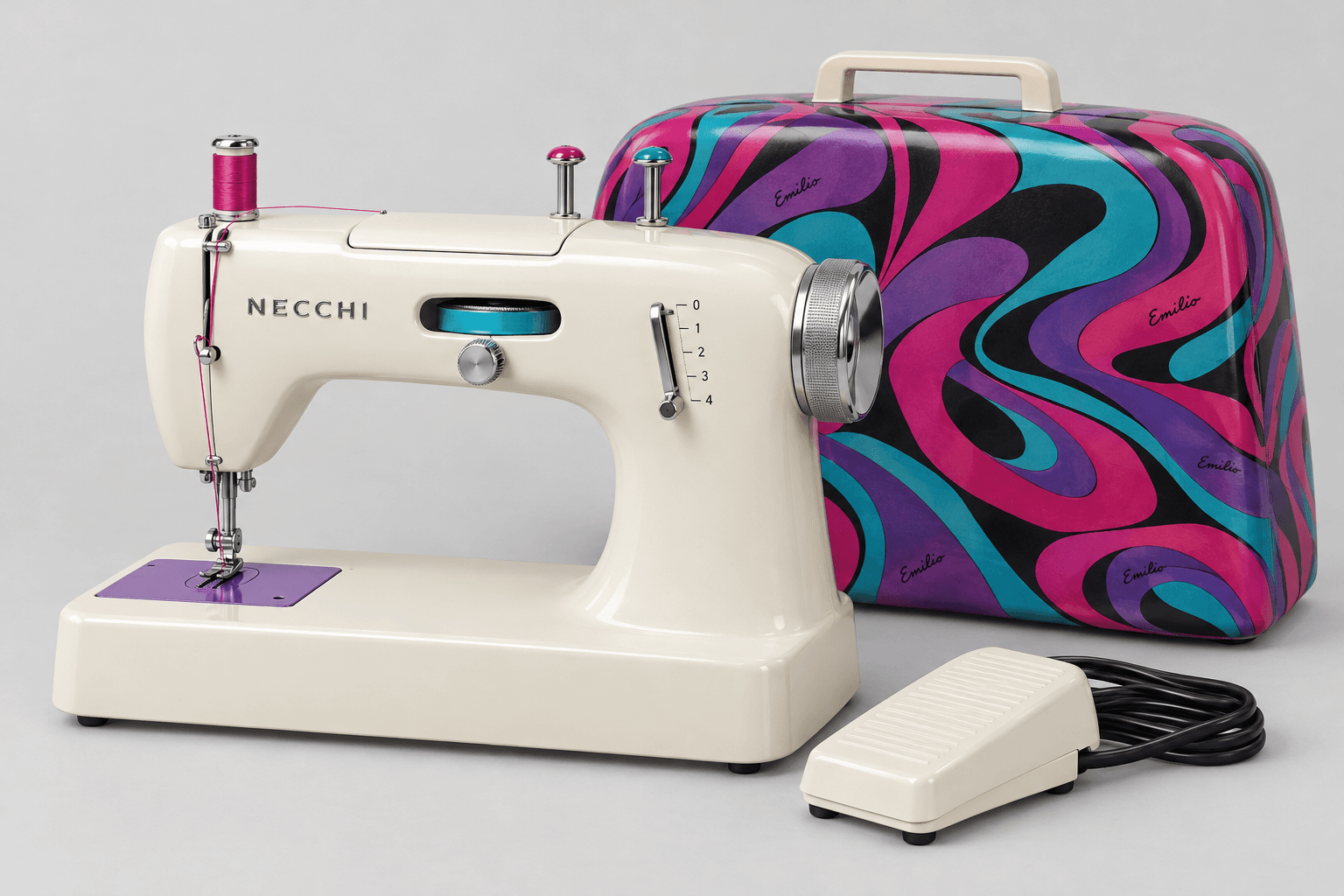
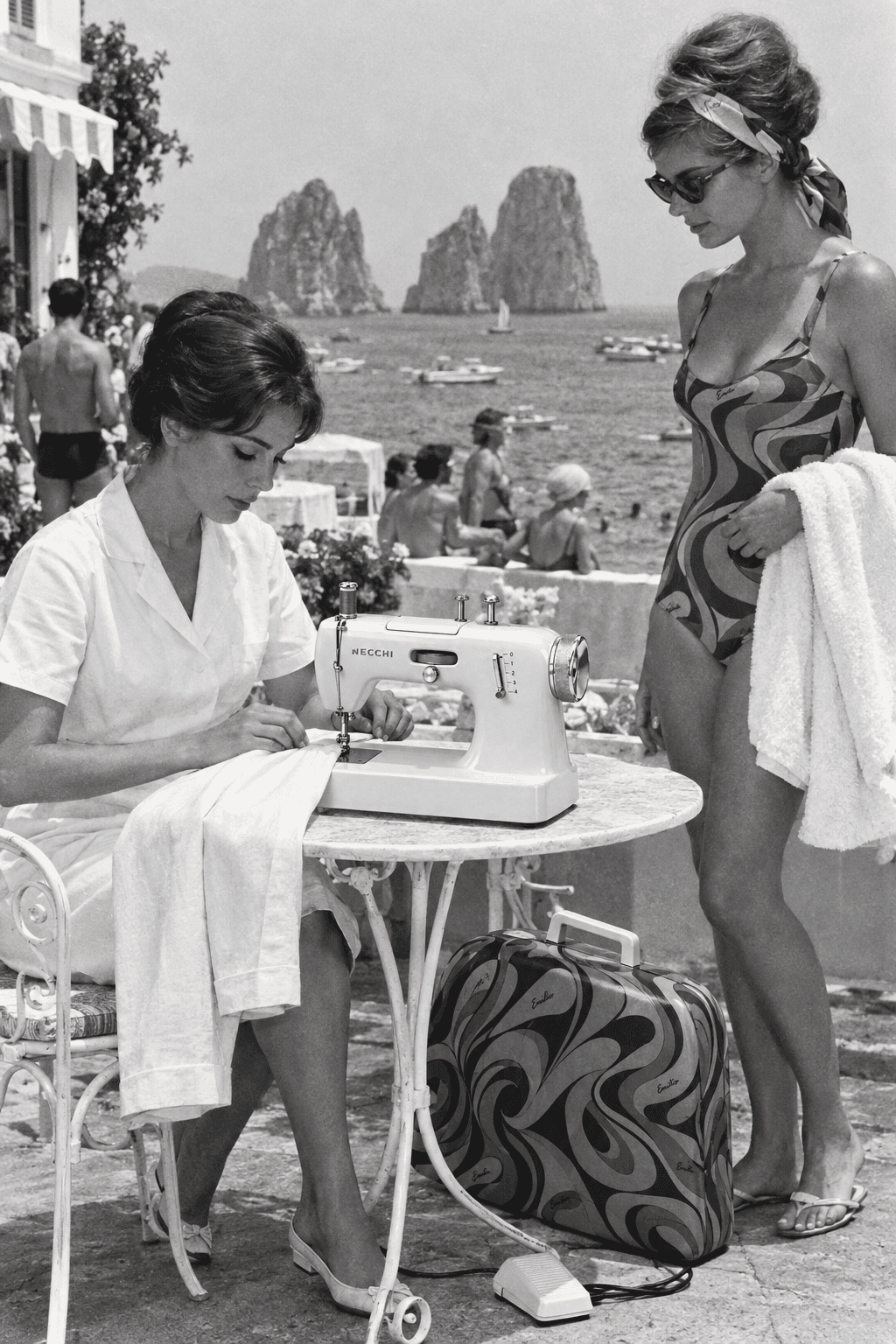
A sewing machine light enough to take to Capri, with twelve stitches drawn by Pucci and a lid covered in the same silk jersey as the dress you are hemming.
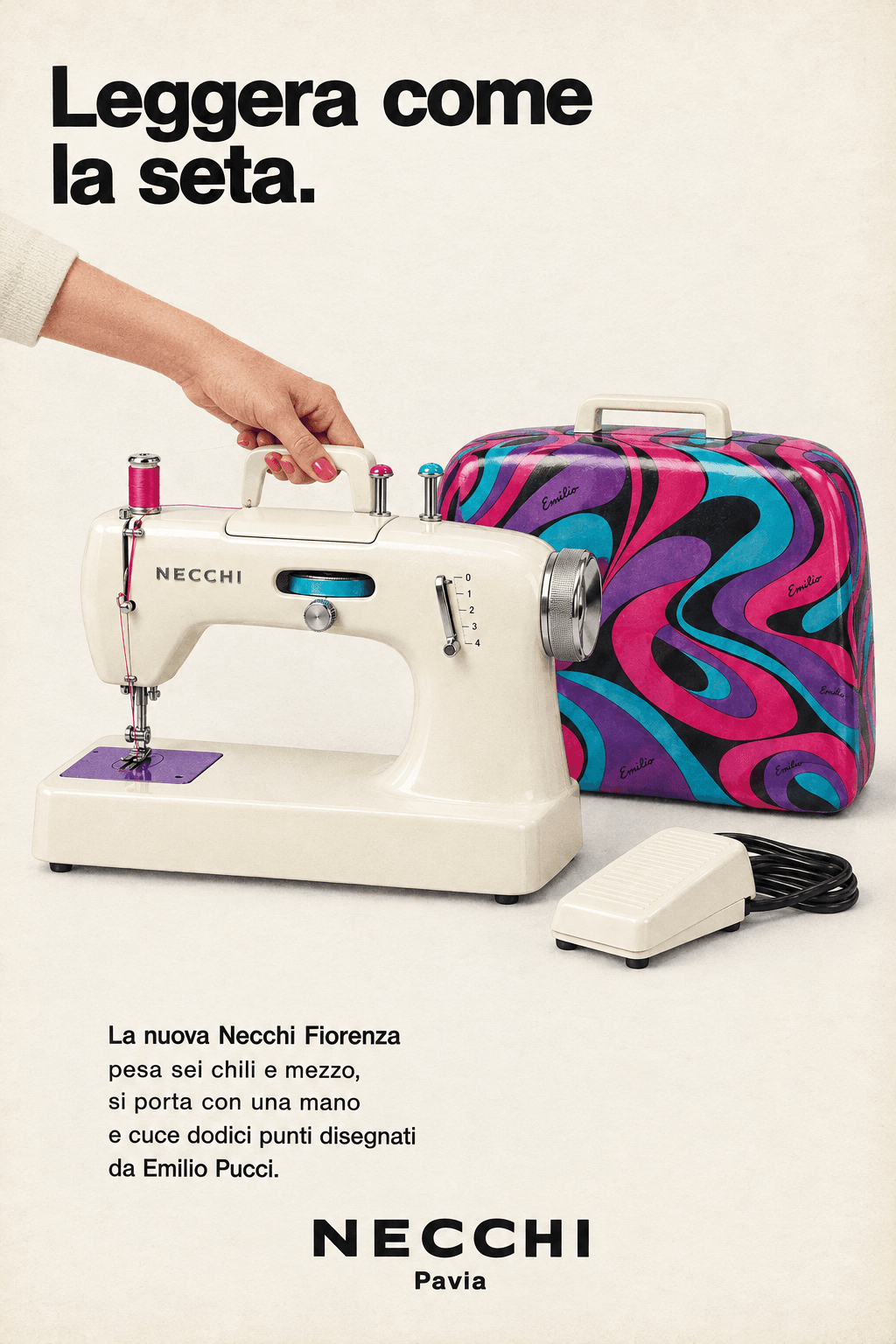
Announced April 12, 1962 at the Fiera Campionaria in Milan, the Fiorenza began with a complaint. Emilio Pucci told Vittorio Necchi that his clients carried their whole summer to Capri in one handbag but could not take up a hem once they arrived. Necchi passed the problem to Marcello Nizzoli with a single instruction: a woman must be able to lift it with one hand while holding a drink in the other.
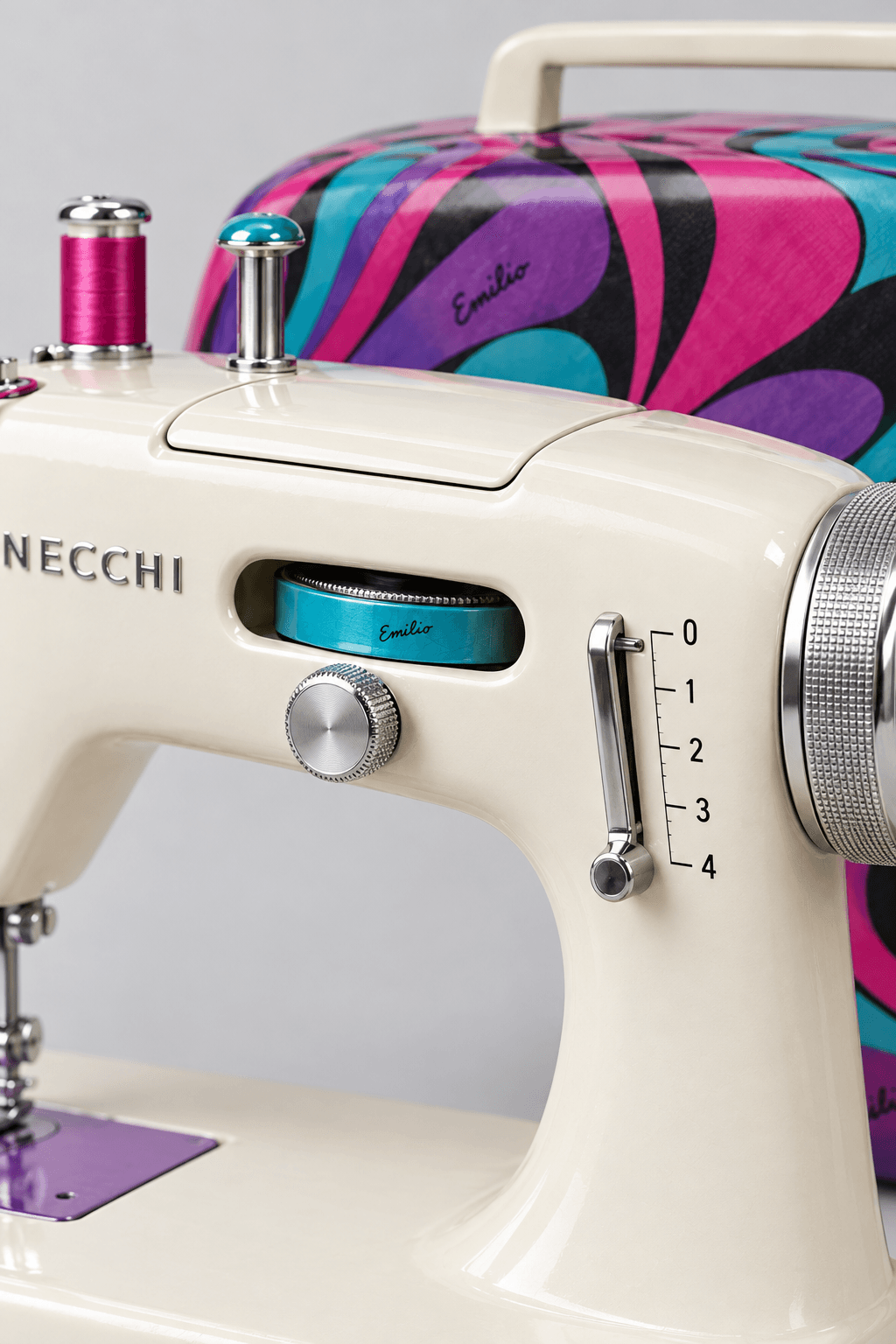
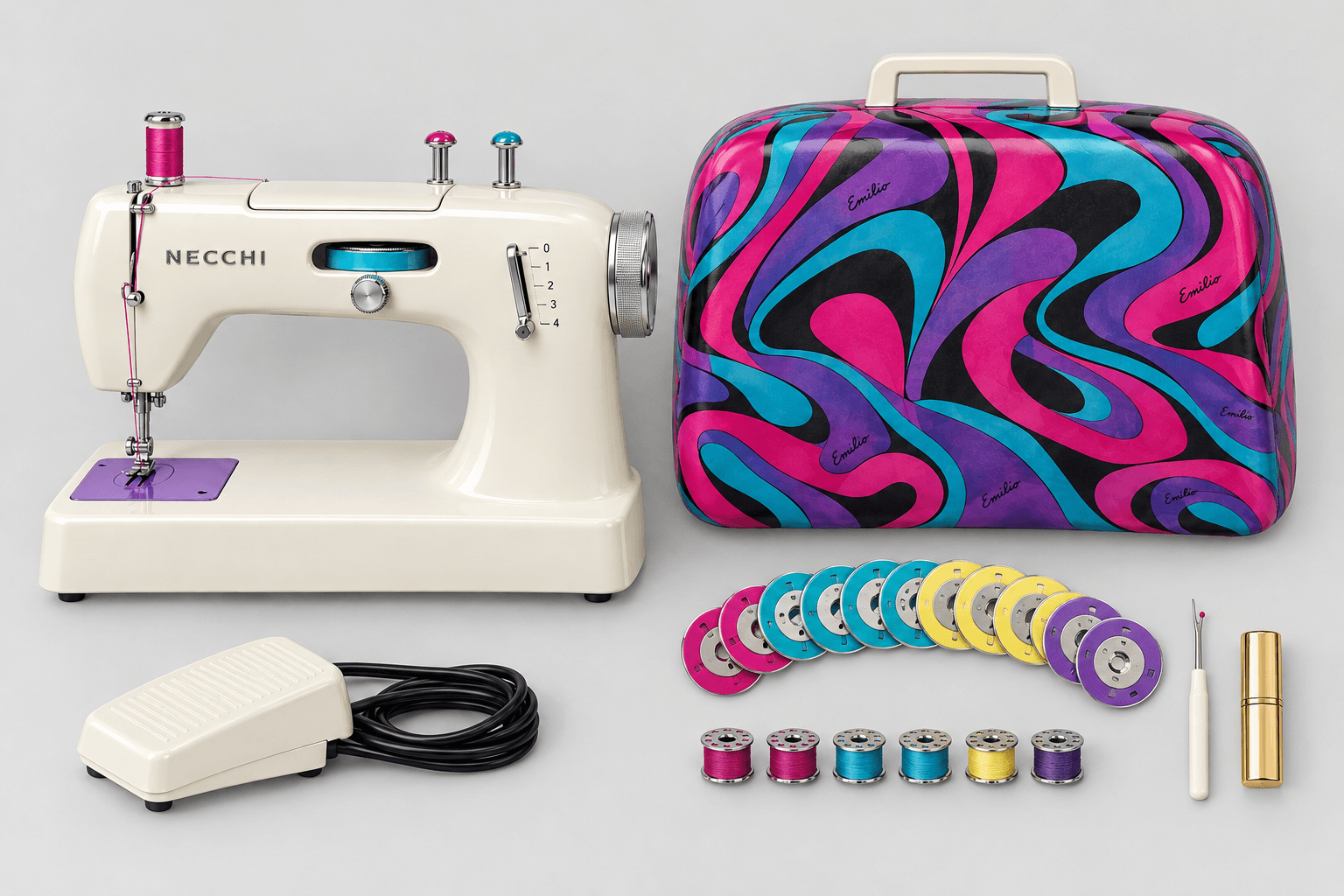
Nizzoli kept the Mirella's unbroken line but thinned the casting walls and shortened the arm by 40 mm, which brought the machine and lid to 6.5 kg. Pucci's studio at Palazzo Pucci redrew the twelve decorative stitches from details of his prints, and each drop-in cam disc has its rim enamelled in the colour of the print it came from, so the oval window on the arm shows a stripe of fuchsia, turquoise or lemon depending on which disc is loaded. The spool caps and the bed's slide plate follow the same palette. Everything else stays ivory, on Nizzoli's insistence. The lid is a moulded fibreglass shell faced in Pucci silk jersey under five coats of clear lacquer, offered in two prints.
Domus gave it two pages in June and called it the first sewing machine meant to be seen on a terrace. Dealers in Turin were less lyrical: customers chose the lid print first and asked about the stitches afterwards. Pucci allowed his signature on the lid, as on any of his fabrics, but only once on the machine itself, drawn into the rim of cam disc eleven, where it can be read only while that stitch is in use.
The accessories travel in a flat silk jersey pouch that clips inside the lid. Pucci set its size by asking that it hold the twelve cams, six bobbins, a seam ripper and a lipstick, and nothing else.