No. 152 · 21 November 2026
PORTER × CASIO
TANKER-G 622-84501, shock-resistant shoulder bag, 1984
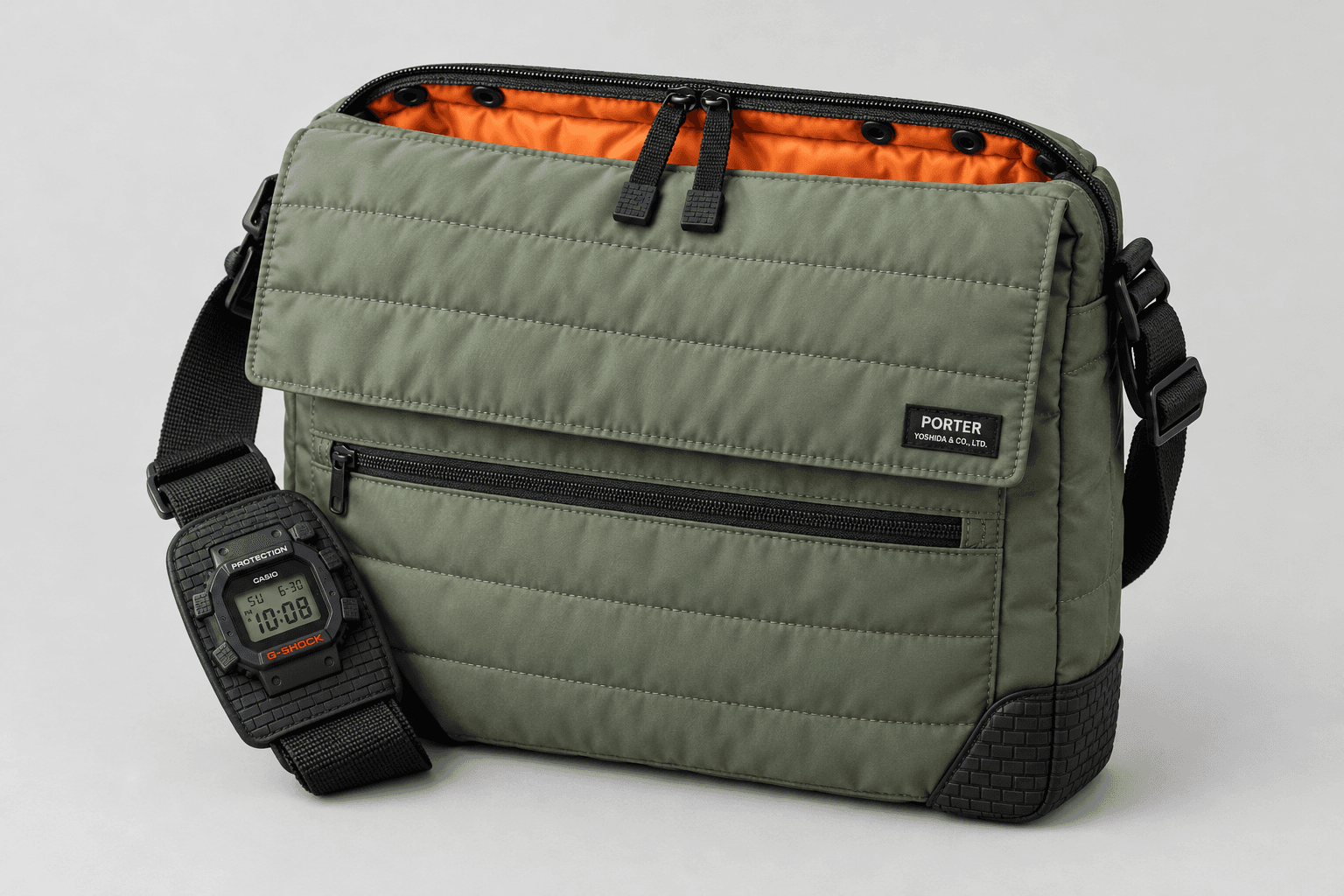
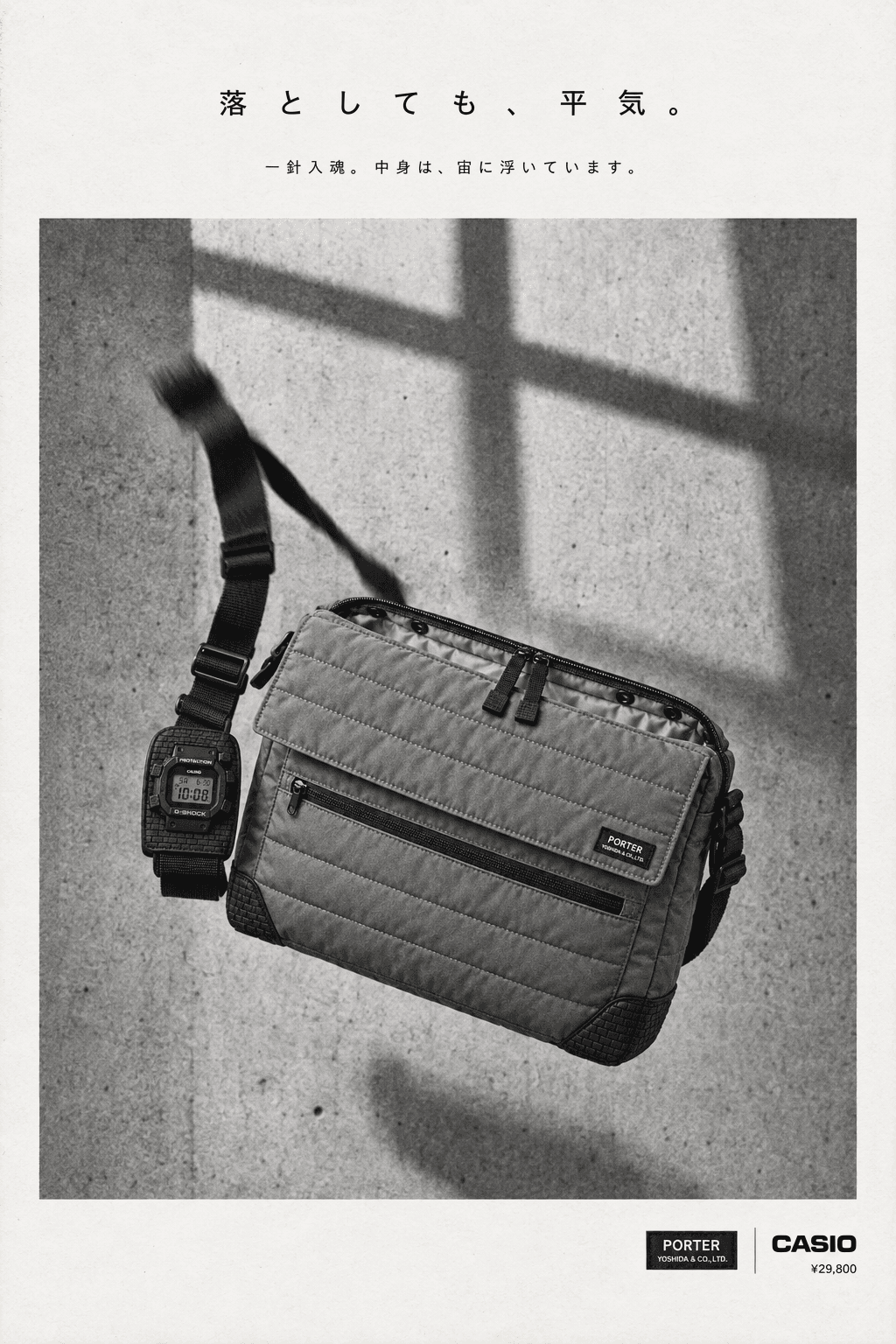
A TANKER shoulder bag whose main compartment hangs on rubber the way a G-SHOCK module hangs in its case, with the watch that proved the idea built into the strap.
Announced September 12, 1984, at Yoshida & Co.'s offices in Higashi-Kanda, the TANKER-G began over lunch between Katsuo Yoshida and Kikuo Ibe. Ibe had spent 1981 and 1982 dropping watch prototypes from a third-floor lavatory window at Casio's Hamura R&D Centre. Yoshida had just put a flight jacket's fabric onto a bag. Each recognised his own problem in the other's answer.
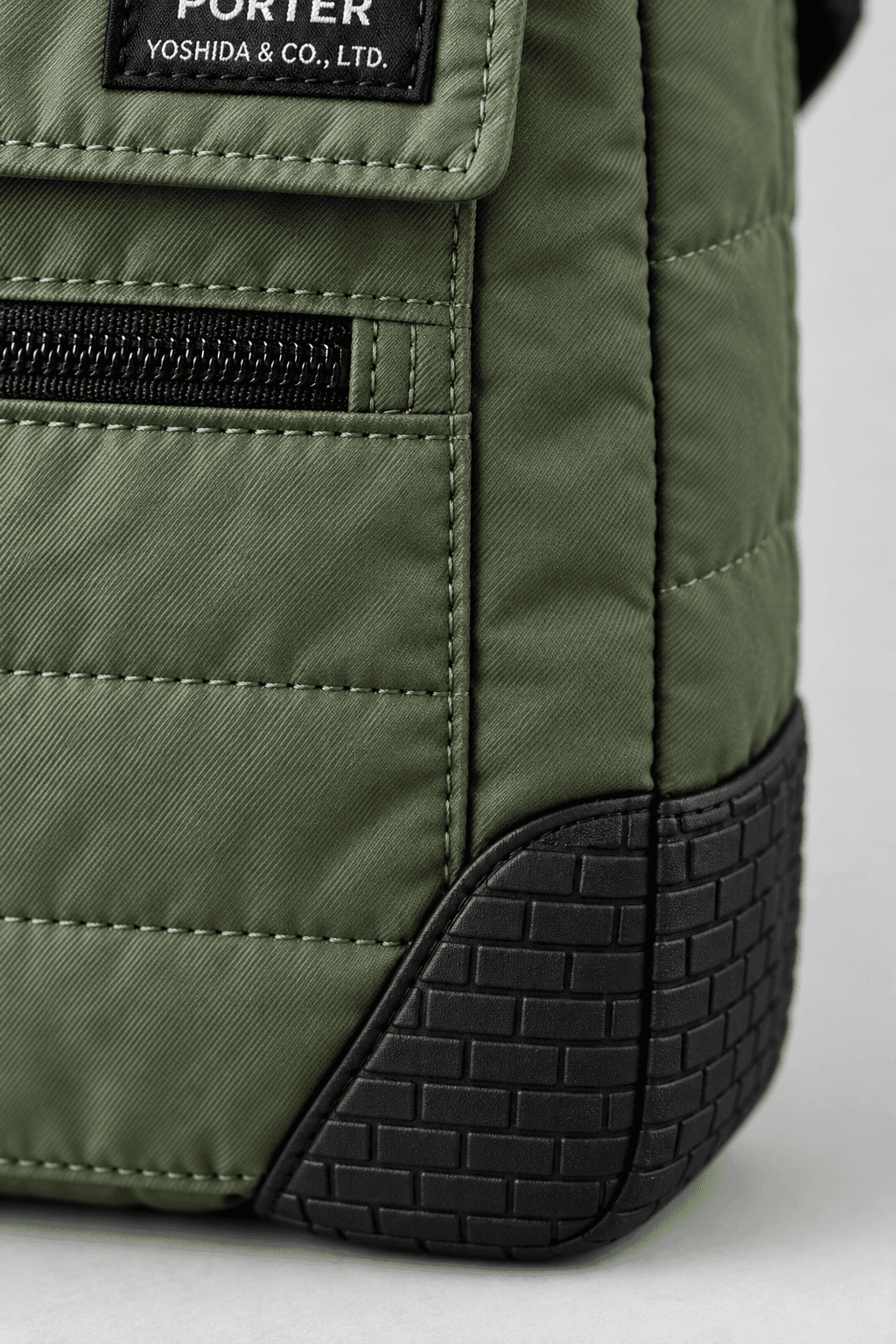
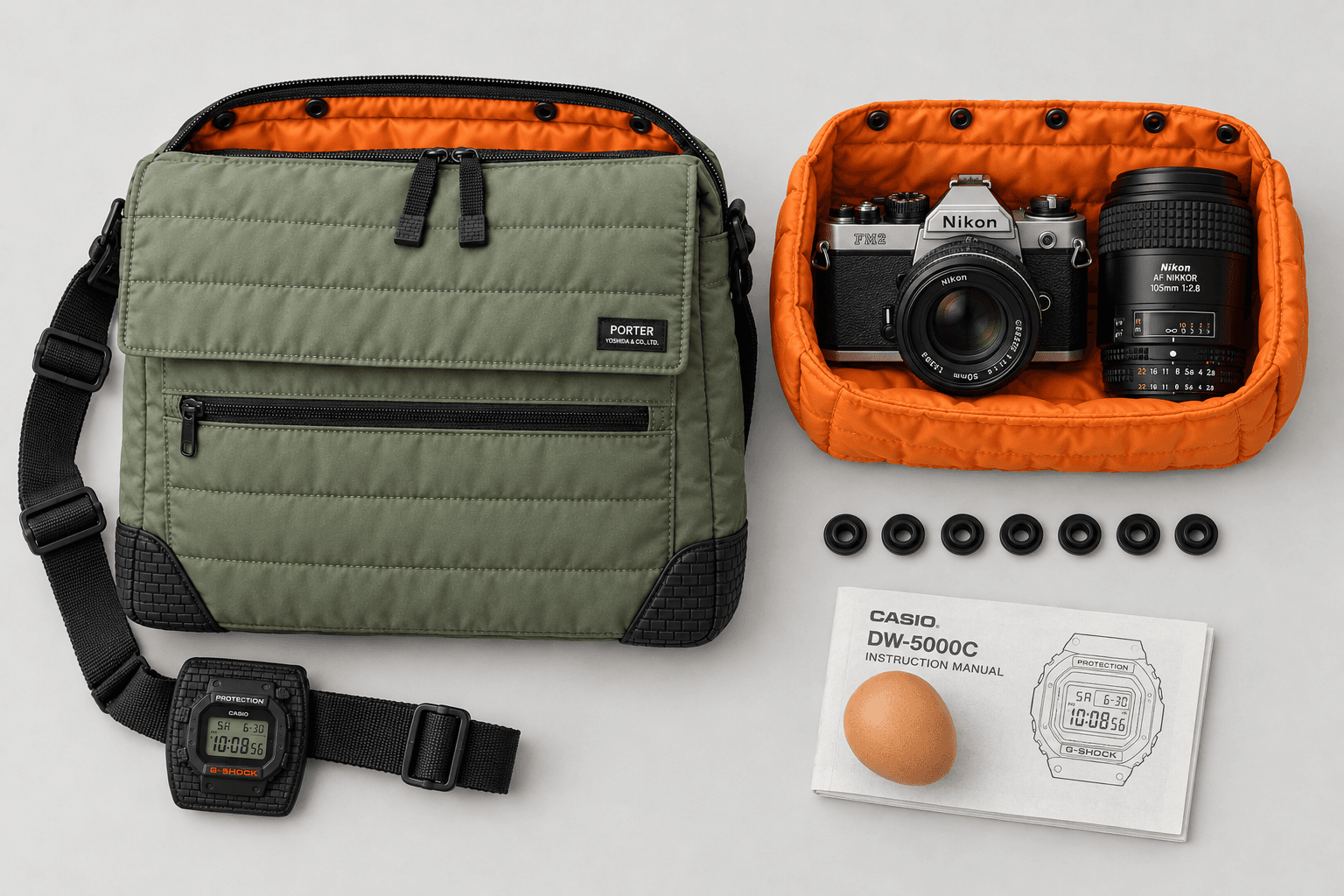
Casio supplied the principle and Yoshida supplied the cloth. The main compartment is not stitched to the shell. It is a separate quilted pod in orange taffeta, hung from the shell's binding on eight black urethane bushes, two to a side, scaled up from the points that suspend a module 240 inside a DW-5000C. The four bottom corners, where a dropped bag lands, are capped in urethane moulded with the G-SHOCK brick pattern, and the same texture appears on the zip tabs so they can be found with a gloved thumb. The strap pad carries a complete DW-5000C module, angled so it reads upright when the bag sits at the hip.
Acceptance testing followed Ibe's method. One bag from every production lot went out of the same Hamura window, packed with a raw hen's egg wrapped in a DW-5000C instruction leaflet. The test log records eleven broken eggs, all from the first lot, and a twelfth entry crossed out with the note 'dropped by hand on stairs, not counted'. The Asakusa workshop that sewed the pods called them 'the yolk'.
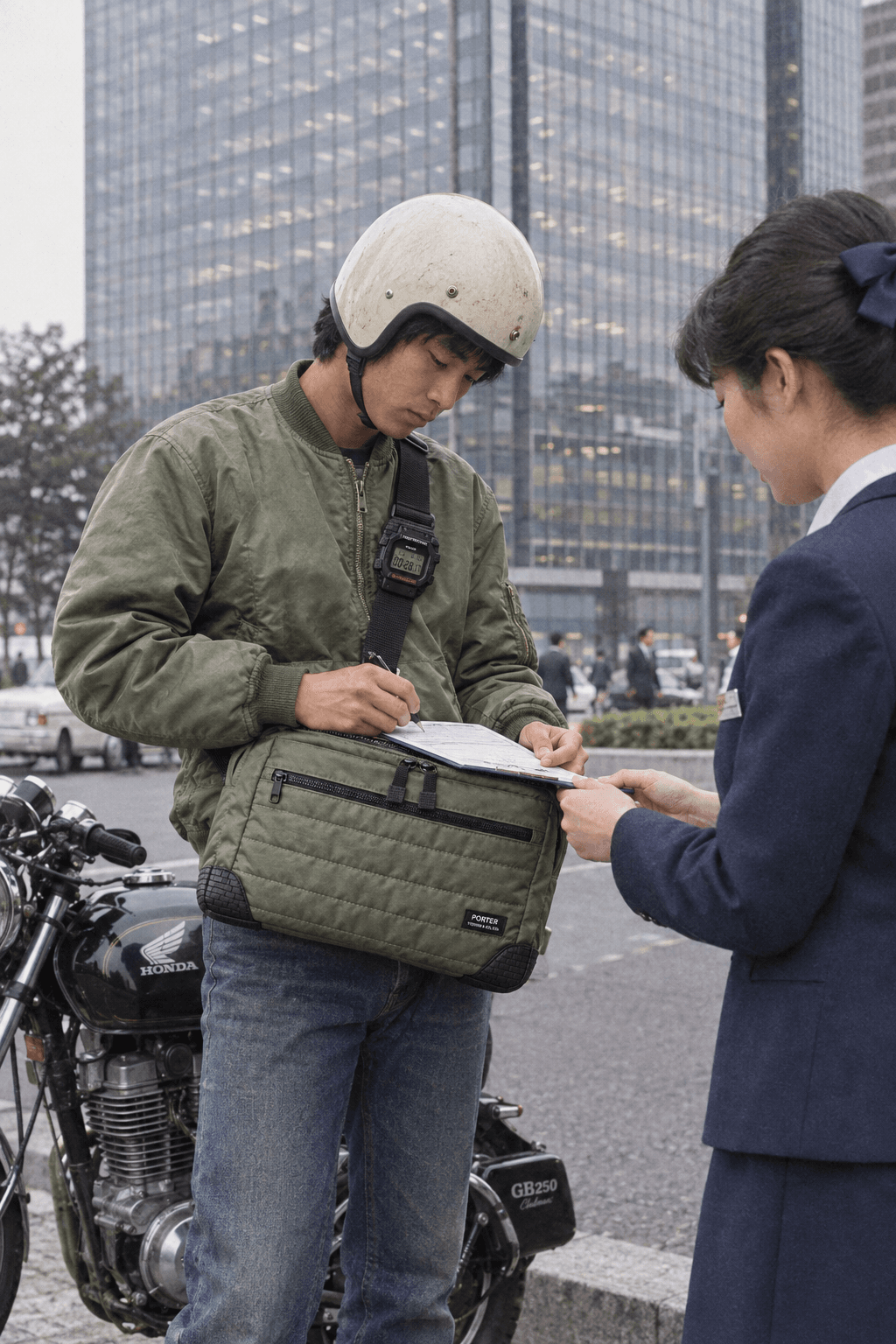
Brutus gave it a single paragraph. Its real buyers were Tokyo's new bike-bin couriers, who carried film, contracts and layouts across Shinjuku and liked a bag that could be thrown at a receptionist. Press photographers followed once they found the pod held a Nikon FM2 and two lenses with the egg's worth of room to spare.