No. 150 · 19 November 2026
Ravensburger × Paco Rabanne
memory Métal, aluminium memory game, 1968
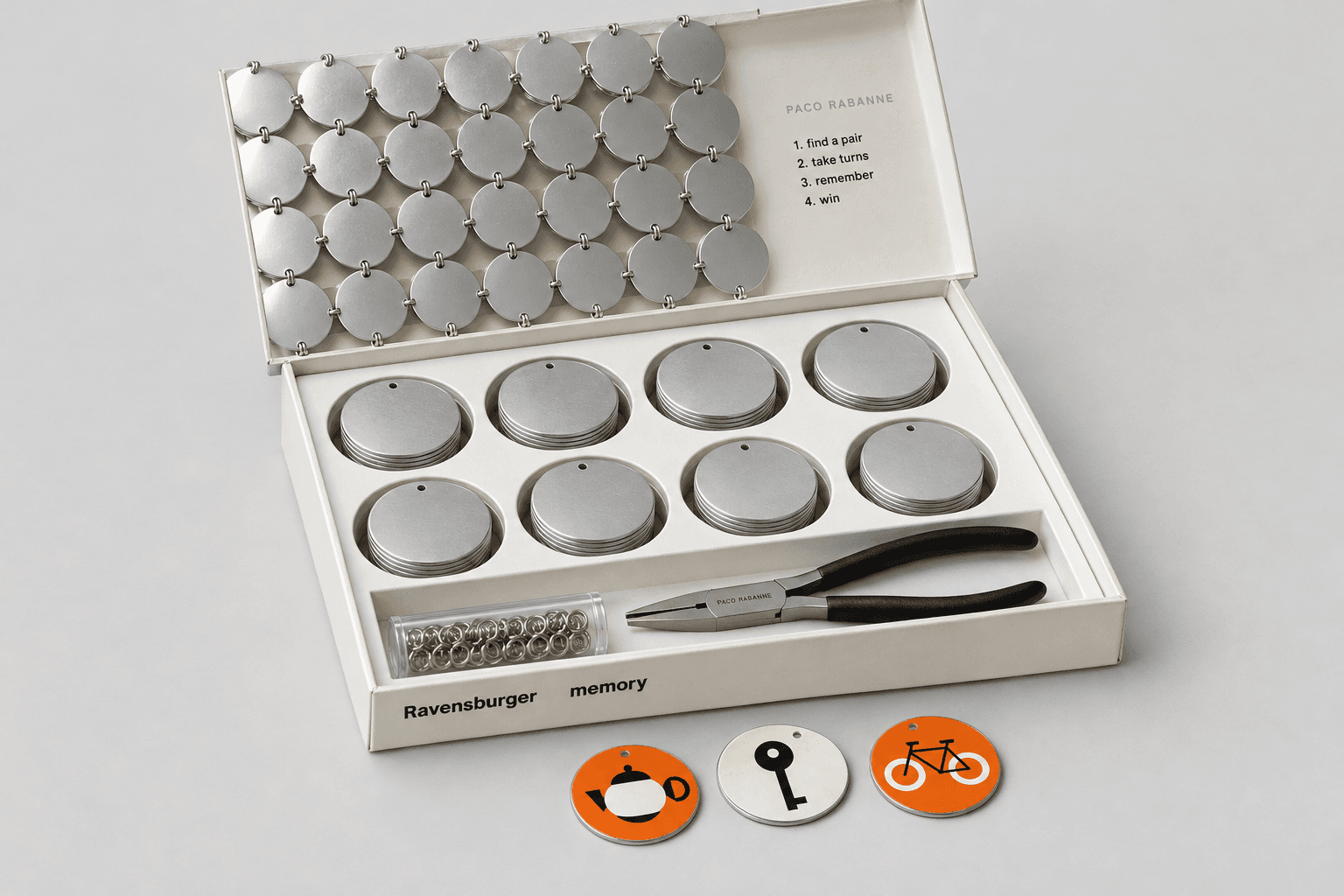
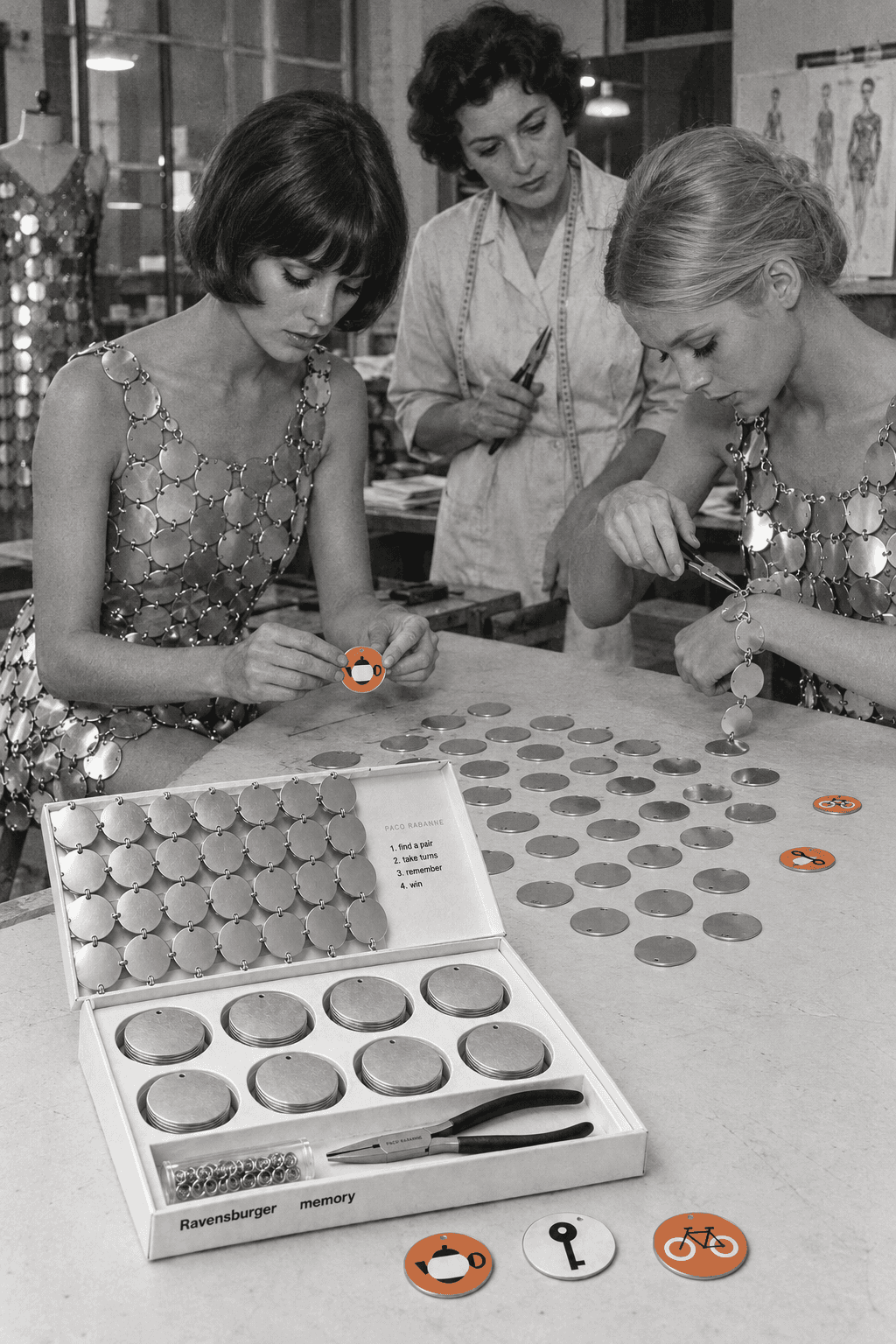
A game of memory in anodised aluminium in which the winner spends the last ten minutes of the evening ringing their pairs into a necklace.
Announced February 8, 1968 at the Nürnberg Spielwarenmesse, memory Métal began with a letter from Erwin Glonnegger to 33 rue Bergère. Glonnegger had seen photographs of the 1966 disc dresses in a German magazine and noticed that every plaque was the same size and pierced in the same place, which he wrote was exactly what a memory card is supposed to be.
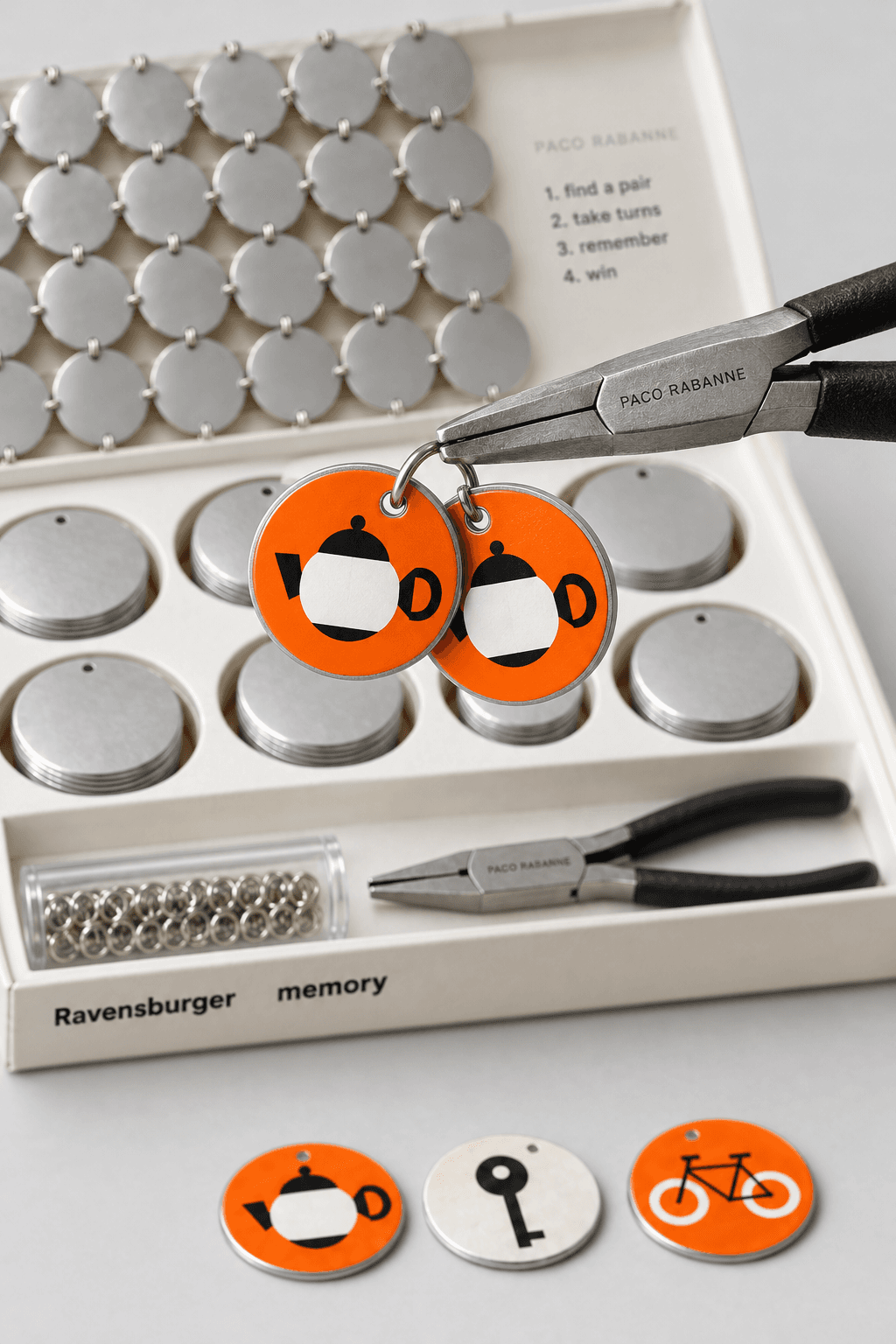
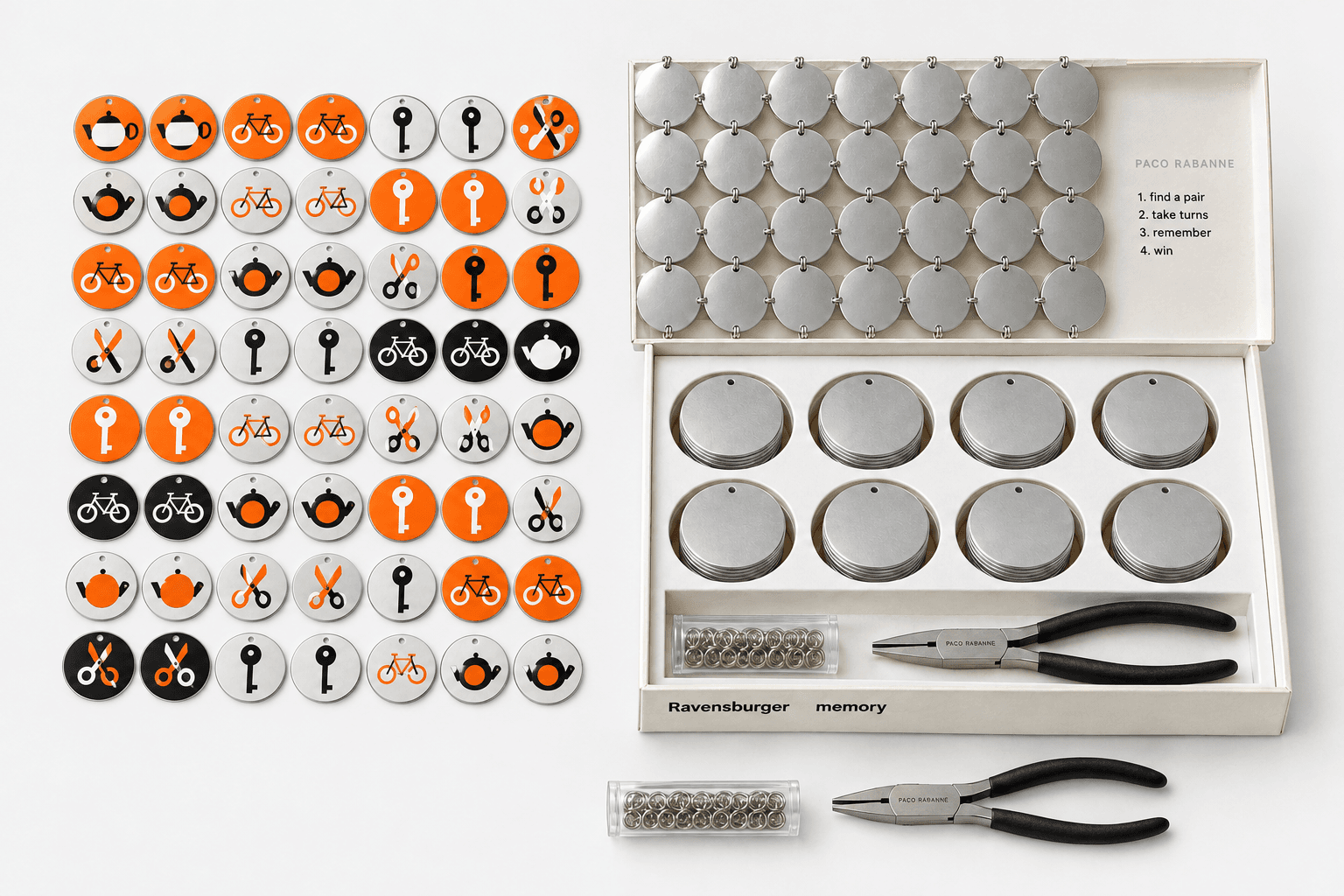
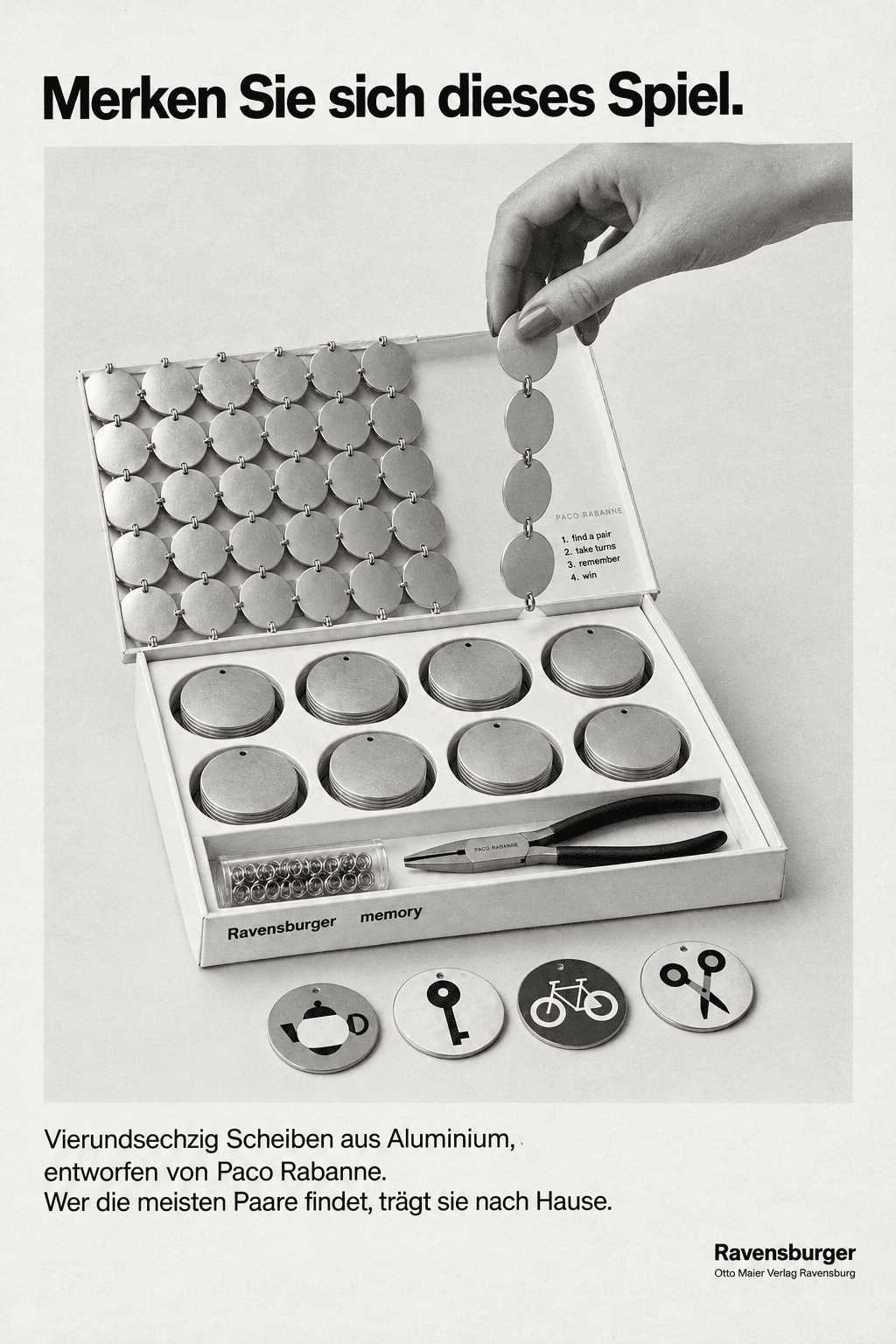
Rabanne kept the Ravensburger rules and changed the matter. The card tiles became 64 discs of 0.8 mm aluminium, 45 mm across, anodised silver and brushed on the back so that face down they are indistinguishable. Glonnegger insisted the faces stay memory faces, one ordinary object each, so Rabanne drew thirty-two household things, a teapot, a key, a bicycle, a pair of scissors, built entirely from circles, half-discs and small rectangles, as if each had been assembled from his own offcuts. They were screen-printed in gloss black, white and fluorescent orange.
The ending was Rabanne's. The set includes flat-nosed pliers and two hundred jump rings, and the four-line rules allow the winner to link their pairs into a chain. Rabanne wanted the evening to finish with an object rather than a score. The lid is faced with twenty-five blank discs already ringed together, a palm-sized swatch of a 1966 dress, which makes the box audible when carried.
Toy buyers at the fair thought it absurdly expensive; fashion editors ordered it for their own flats, and Brigitte called it the only game a guest could leave wearing. Regular players soon learned to tell discs apart by their scratches, so from the second run Ravensburger packed each disc in its own grey felt sleeve, which added eleven minutes to setting up and none to the fun.