No. 154 · 23 November 2026
OLYMPUS × TAMIYA
PEN EE-K, self-assembly half-frame camera, 1980
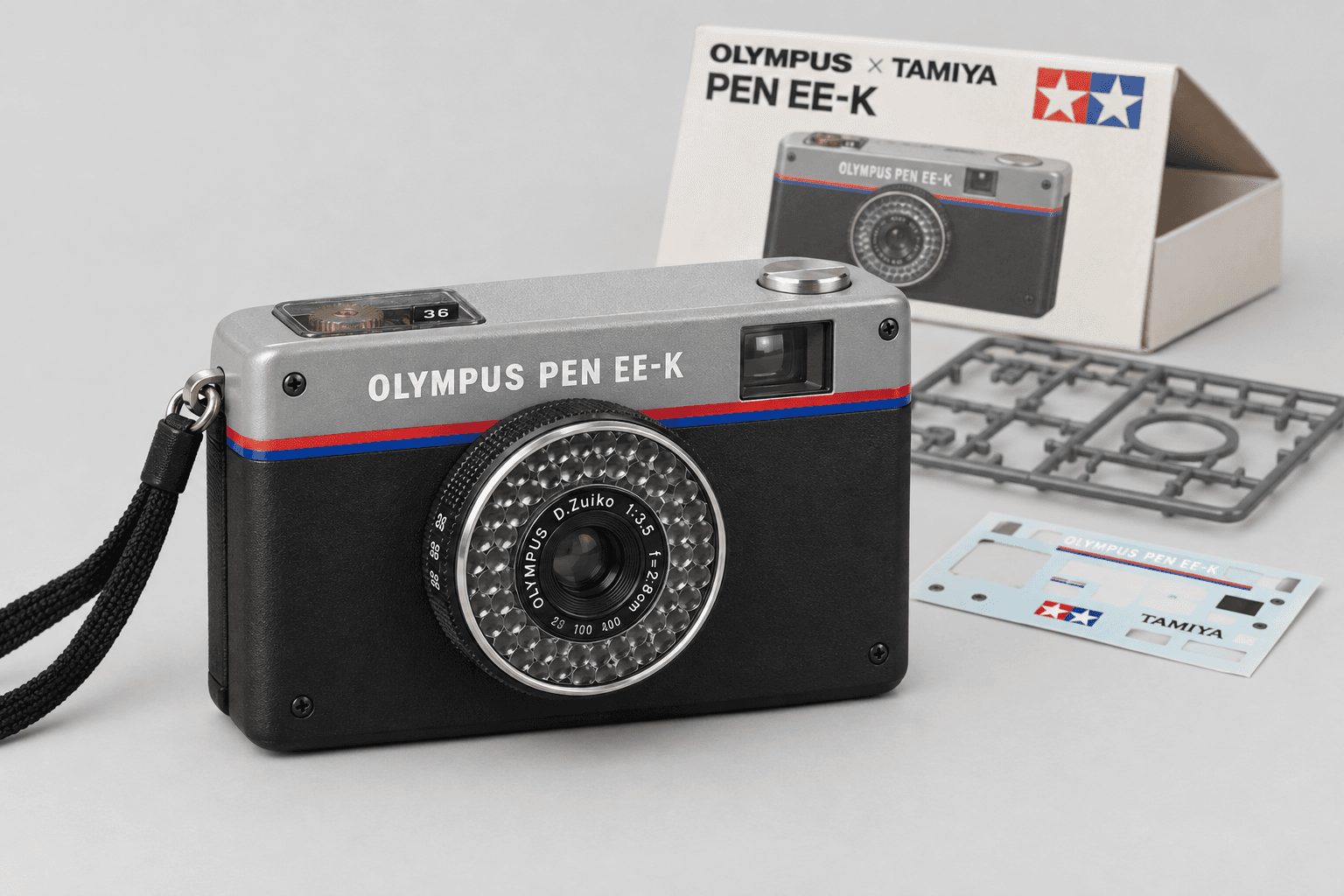
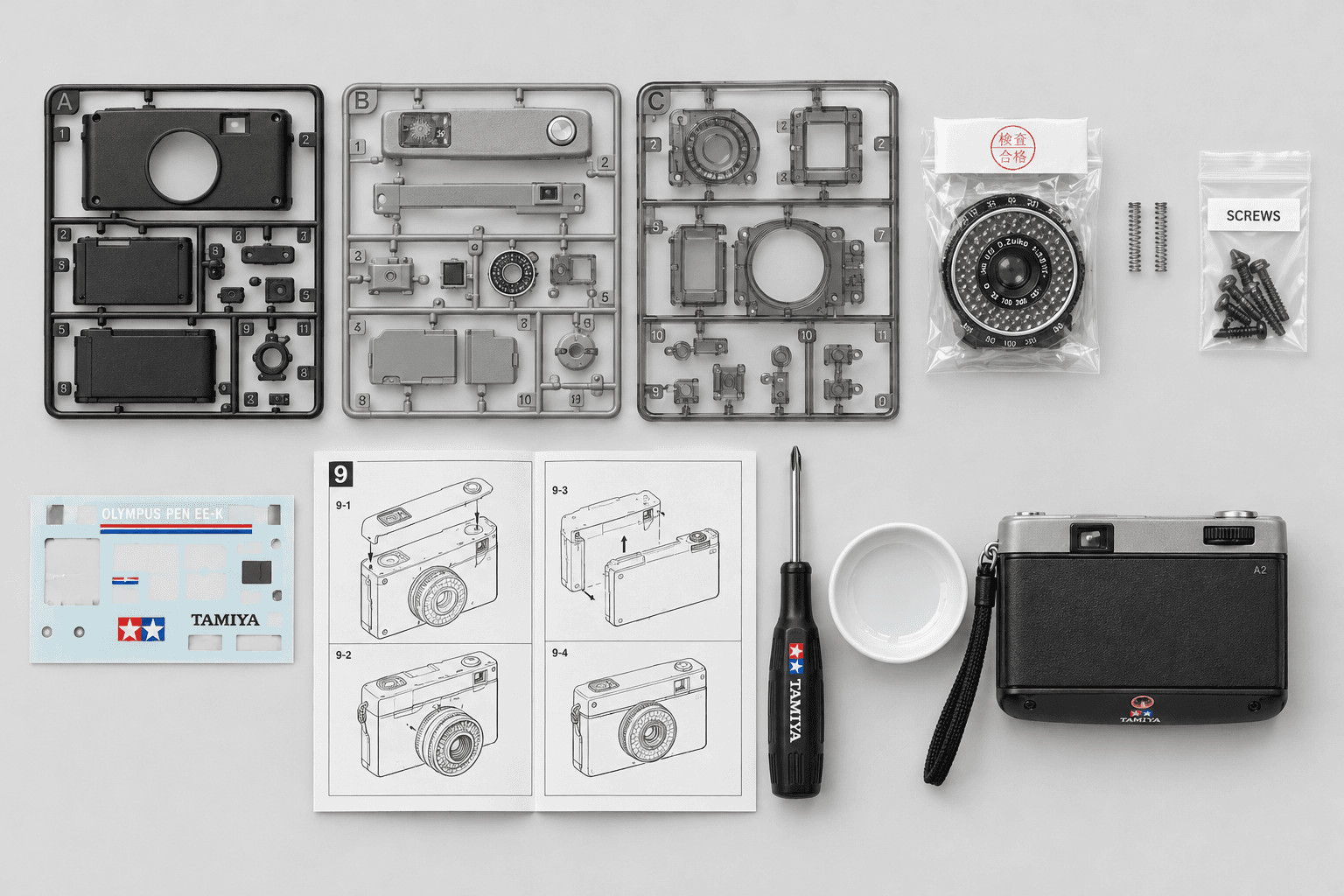
A working Olympus Pen that arrives as 46 parts on three sprues and a sealed lens, and is finished with a screwdriver and a saucer of warm water for the decals.
Announced May 15, 1980 at the Shizuoka Hobby Show, the PEN EE-K began with a letter. In 1978 Shunsaku Tamiya wrote to Olympus asking whether the Pen EE, then seventeen years old and still selling, could be taught the way Tamiya taught a Porsche 934 or a Honda CB750: by building it. Yoshihisa Maitani replied that it could, on one condition. Anything that touched light, focus or exposure would be assembled and tested at Olympus's Tatsuno works in Nagano and delivered as one sealed module. Everything else was Tamiya's problem.
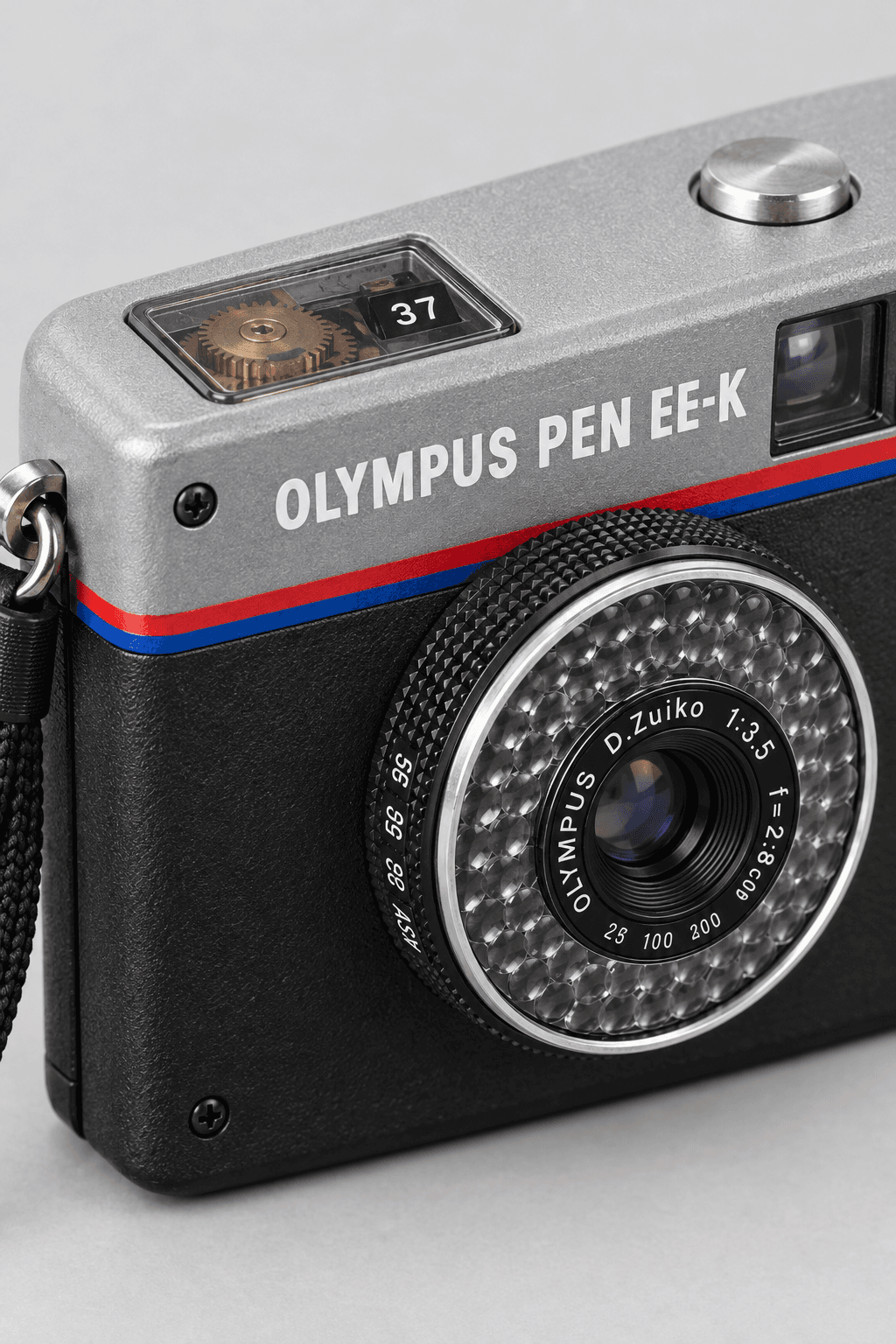
The sealed core holds the D.Zuiko 28mm f/3.5, the two-speed shutter, the selenium cell and its meter, so the camera still needs no battery. Tamiya engineered the rest in the colours it would otherwise have asked a modeller to paint: lower body and back in satin black, top plate in light grey, and a small clear smoke window on the top over the brass advance gears and frame counter, so the builder can watch the counter step on each turn of the thumbwheel. An internal black bulkhead keeps that window well away from the film. Maitani asked for only two things to be left exactly as on the 1961 original: the red low-light flag, and the feel of the shutter button.
Part numbers were left visible on the inside of the back and on one outside face, A2, beside the hinge, so a camera opened years later could be matched against the instructions. Every marking, including OLYMPUS PEN EE-K, comes on the waterslide decal sheet, along with a red-over-blue stripe borrowed from the Rough Rider. The 12-page instructions run to 14 steps and end with loading a roll of Fujicolor F-II, included. A postcard offered a free film-flatness check in Tokyo for one year. About 1,100 cameras came back, and the service log records that most faults were the advance spring fitted upside down in step 9.
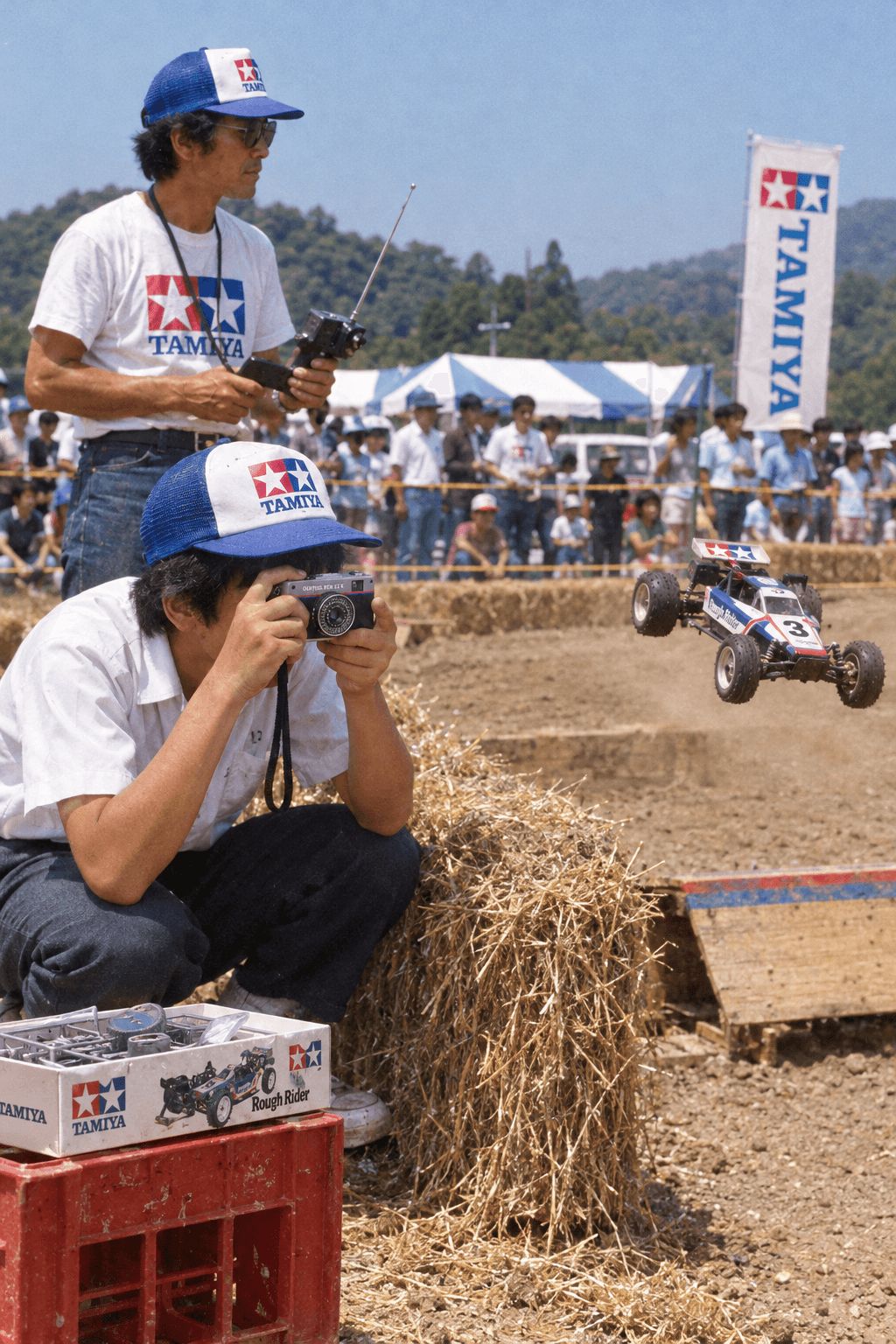
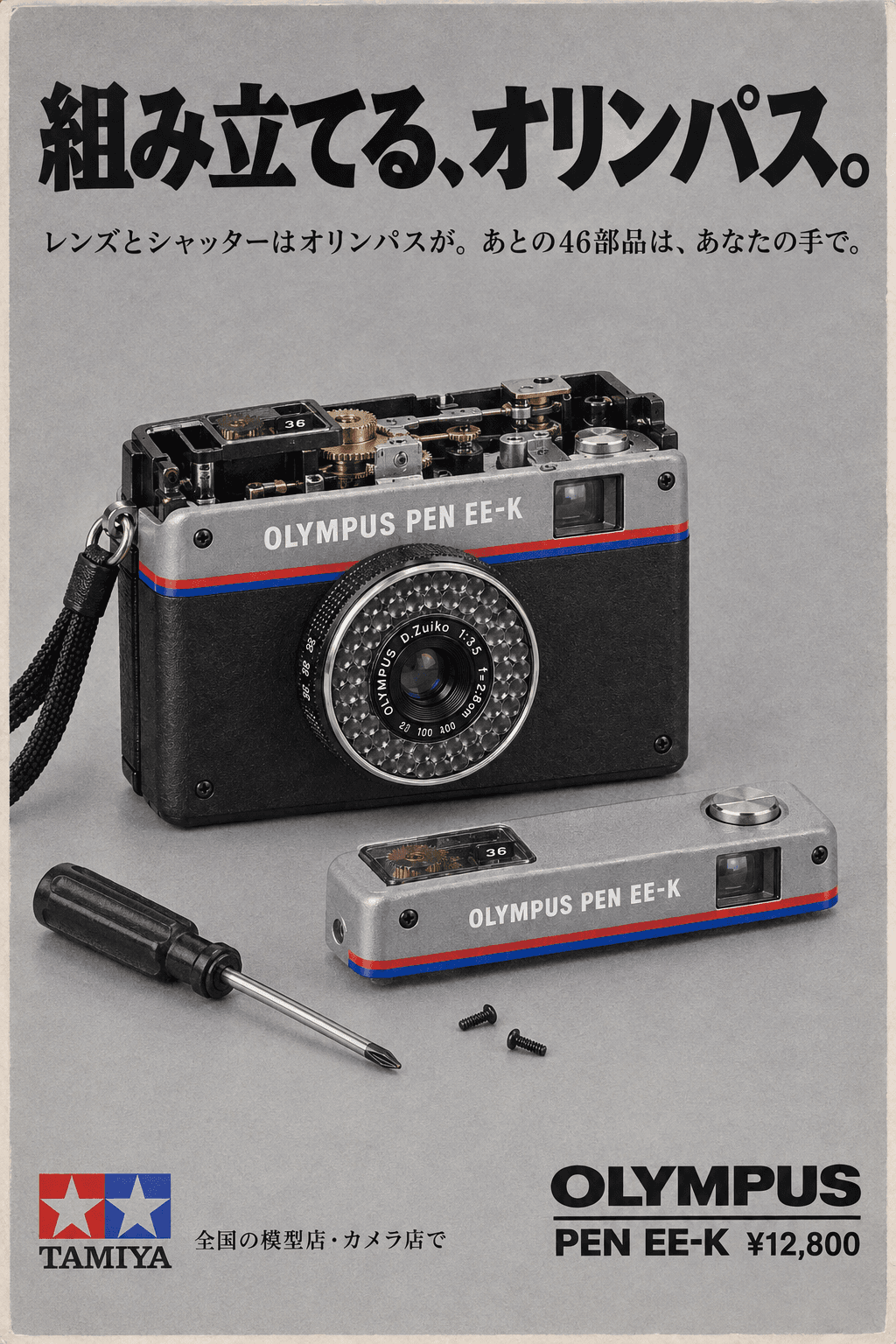
Camera dealers did not know where to shelve it. Model shops did, and in Japan it sold mostly beside the Rough Rider. Asahi Camera's reviewer built one in 2 hours 40 minutes, lost one screw to the carpet, and still called it the most honest camera of the year. The painted box art shows the finished camera on a workbench next to a pair of sprue cutters and a single unused decal.