No. 111 · 3 October 2026
Fisher-Price × Moog
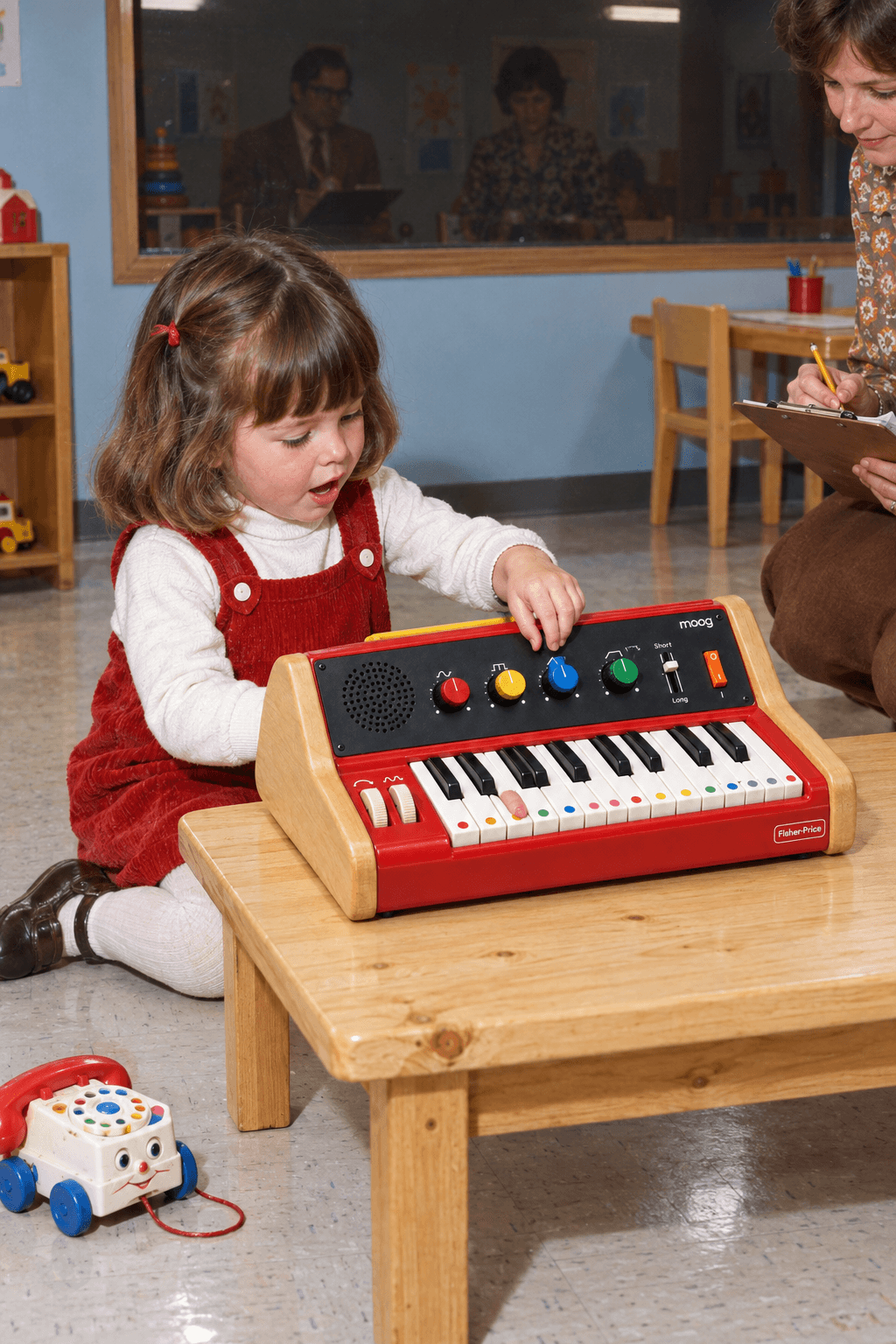
No. 942 Sound Maker, children's synthesiser, 1974
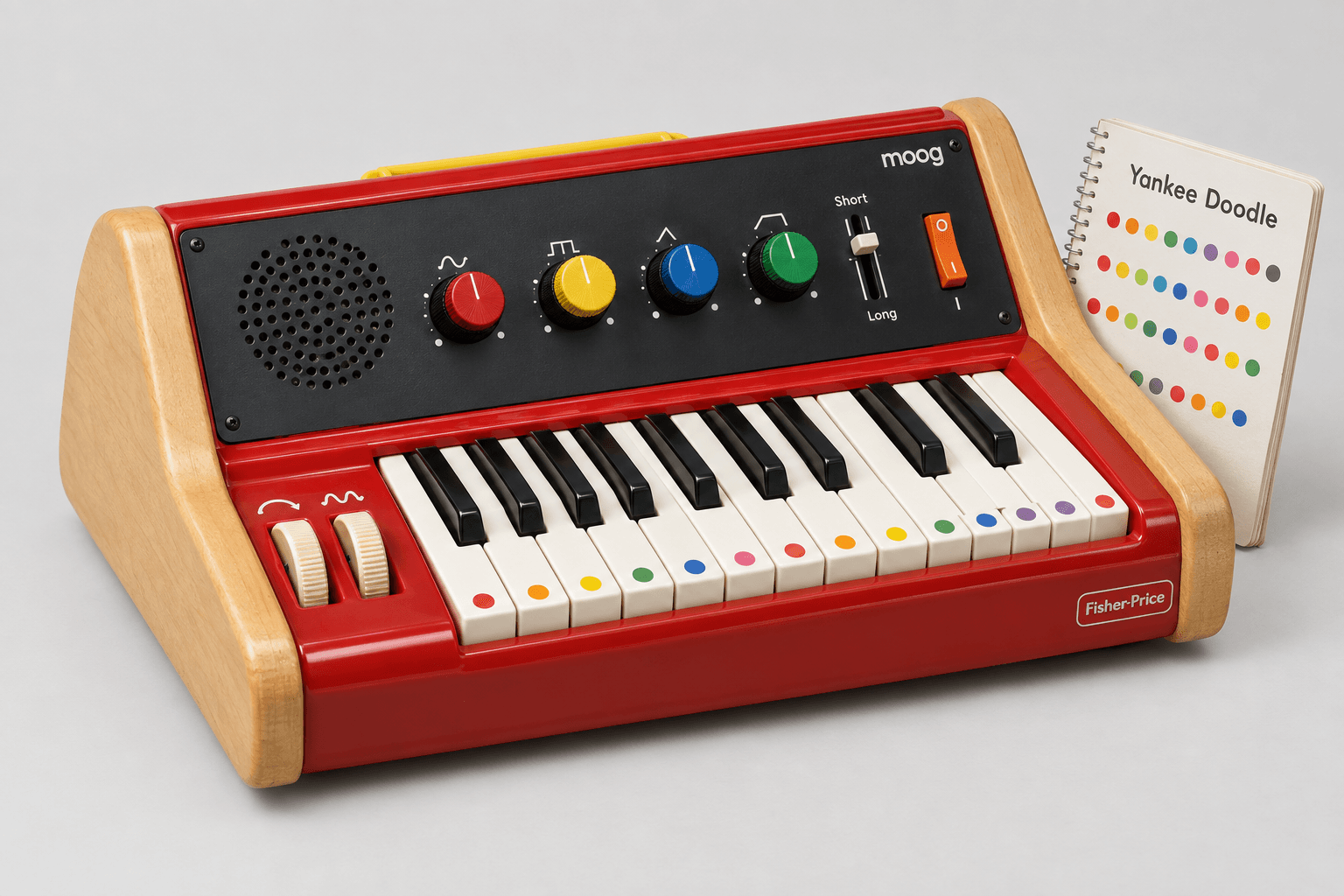
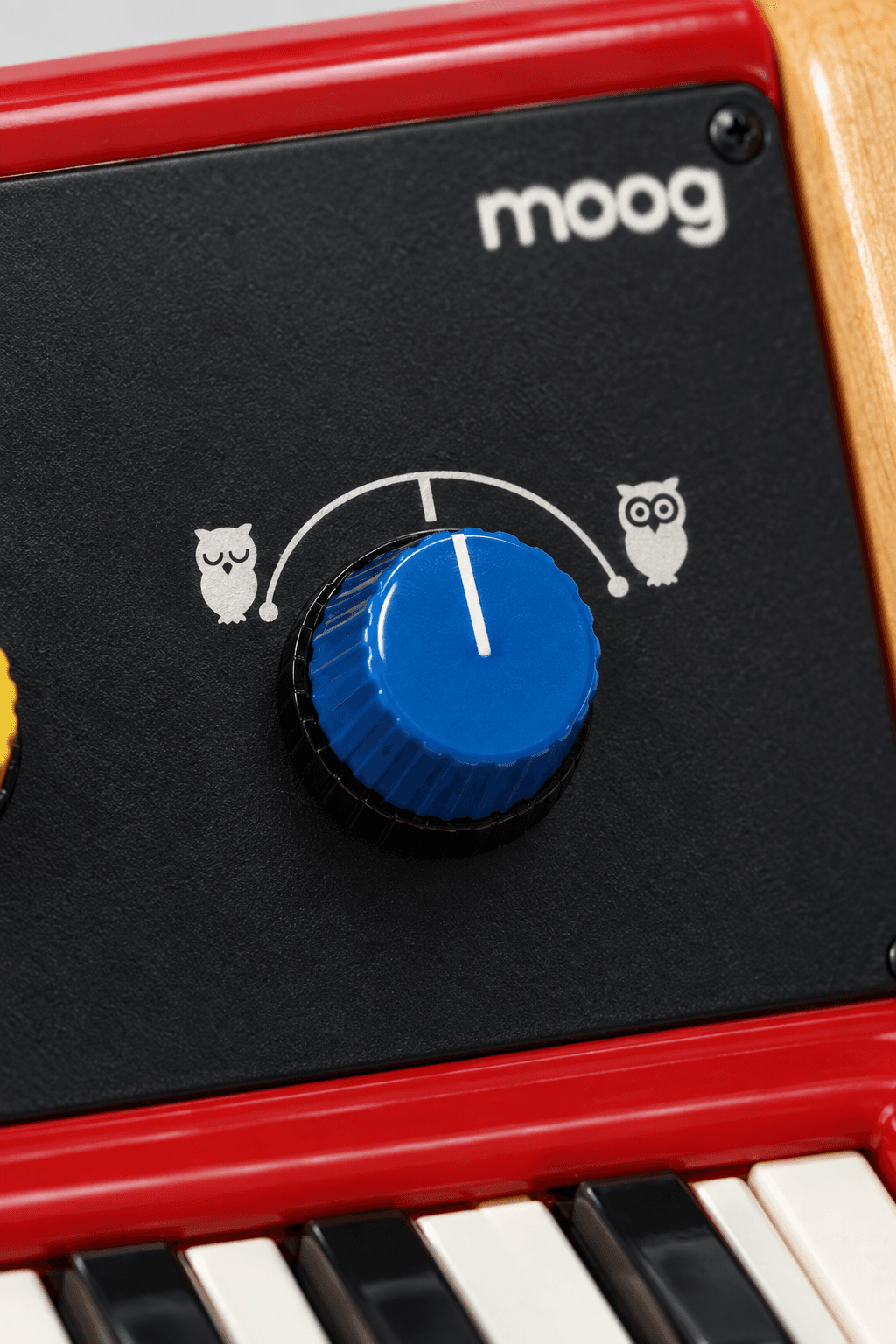
A genuine Moog ladder filter built to survive a fall off a kitchen table, with its cutoff knob labelled by a sleeping owl at one end and a wide-awake owl at the other.
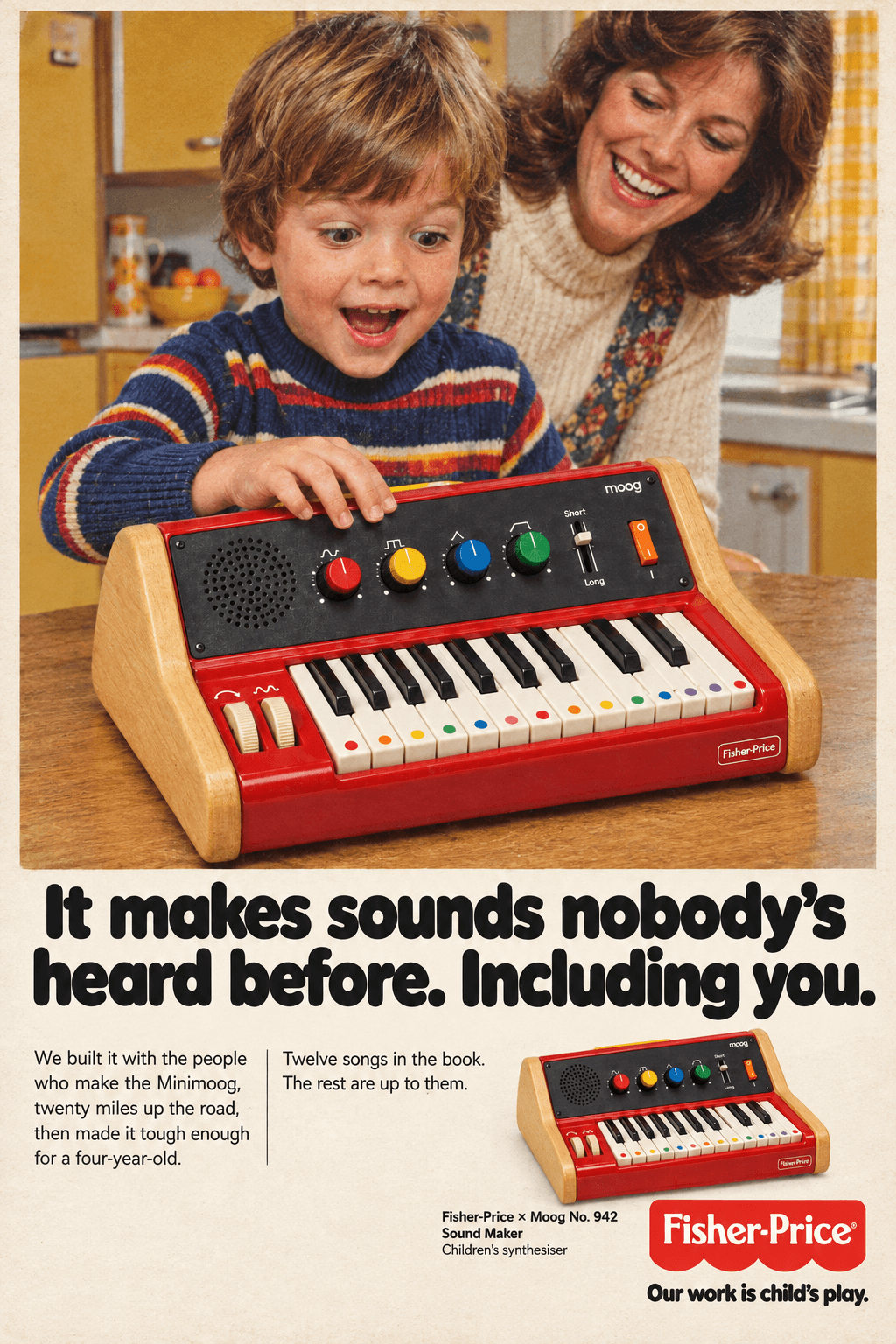
Announced February 11, 1974 at the American Toy Fair at 200 Fifth Avenue, the No. 942 Sound Maker began with a short drive. Fisher-Price's design department in East Aurora and Moog's plant in Williamsville were twenty miles apart up Transit Road. In the spring of 1973 Ernest Thornell, who had given the Chatter Telephone its eyes, drove over with a crayon drawing of a piano that 'went wobbly'. Bob Moog agreed to do the electronics on one condition: nothing inside was to be a fake.
The layout is a Minimoog redrawn for small hands. The tilting front panel, the wood cheeks, the two wheels left of the keyboard and the rocker switch are Moog. Everything else is Fisher-Price. The walnut became hard maple, the last of the stock from Fisher-Price's own wood shop, which was going over to plastic. The knobs keep the Minimoog's skirted profile at nearly twice the size, moulded in red, yellow, blue and green. Each one is labelled with pictures: a tortoise and a hare for wobble speed, a small bird and a big bird for pitch, a sleeping owl and a waking owl for the filter, a mouse and a lion for volume. The twenty keys are a quarter wider than standard, and every white key carries a dot in its note's colour to match the twelve-tune songbook, from 'Yankee Doodle' to 'Turkey in the Straw'.
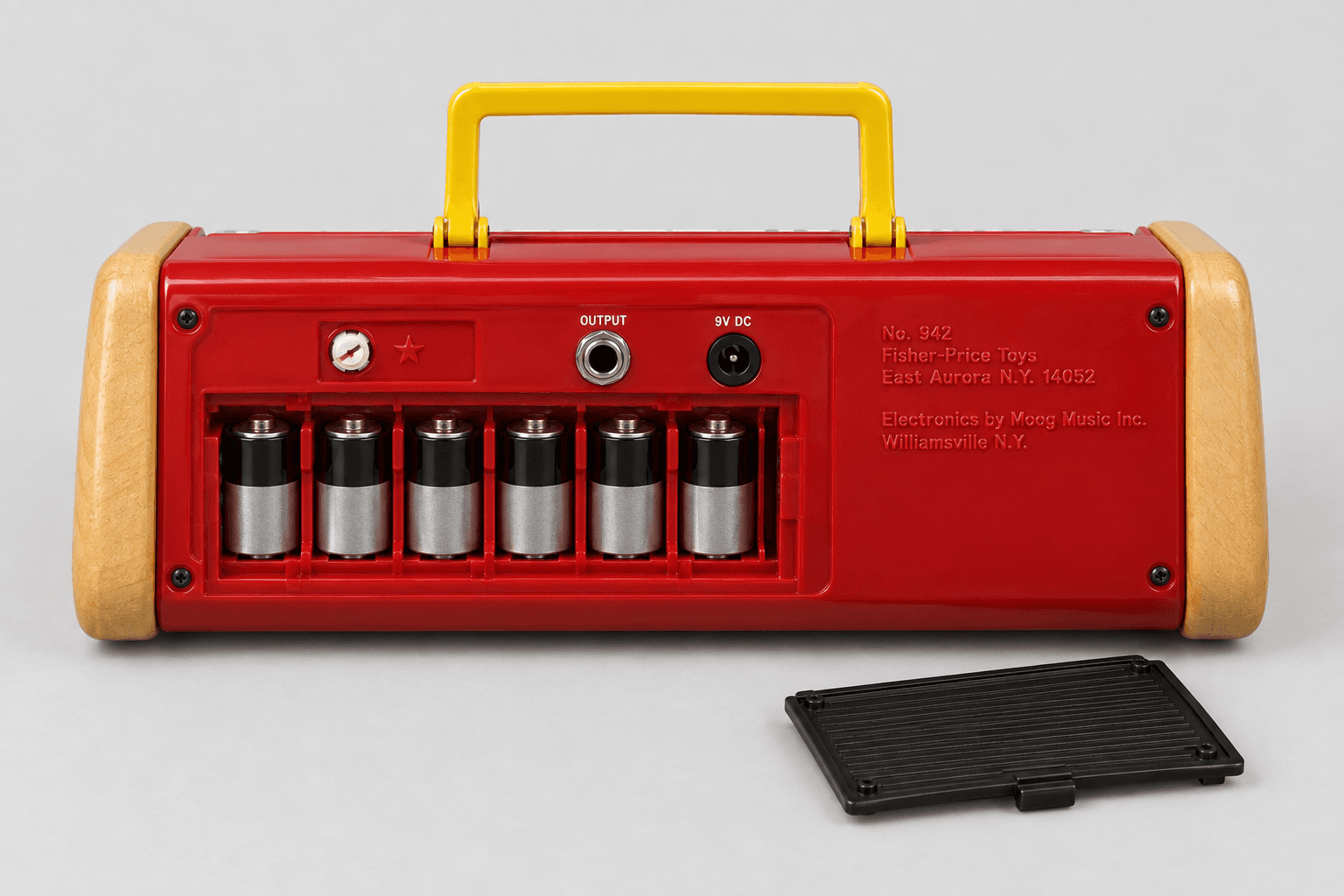
Inside are one transistor oscillator and a four-pole ladder filter on a single board, assembled and tuned in Williamsville. Fisher-Price's safety engineers asked for the resonance to be capped below self-oscillation, because at full tilt it whistled like a kettle. Moog complied, then fitted a trim pot behind the battery door marked only with a small embossed star. The 1975 technicians' service sheet describes turning it as 'not recommended for the nursery'.
Toy buyers were not sure what it was. Sears listed it on page 412 of the 1974 Christmas Wish Book, between a xylophone and a chord organ. Music shops in Buffalo and Rochester stocked it quietly beside the $1,495 Minimoog, where it sold better. Contemporary Keyboard reviewed it in 1976: 'the cheapest way into the filter, provided you can stand the owls.'