No. 110 · 2 October 2026
Dr. Martens × London Transport
1760, bus conductor's boot, 1960
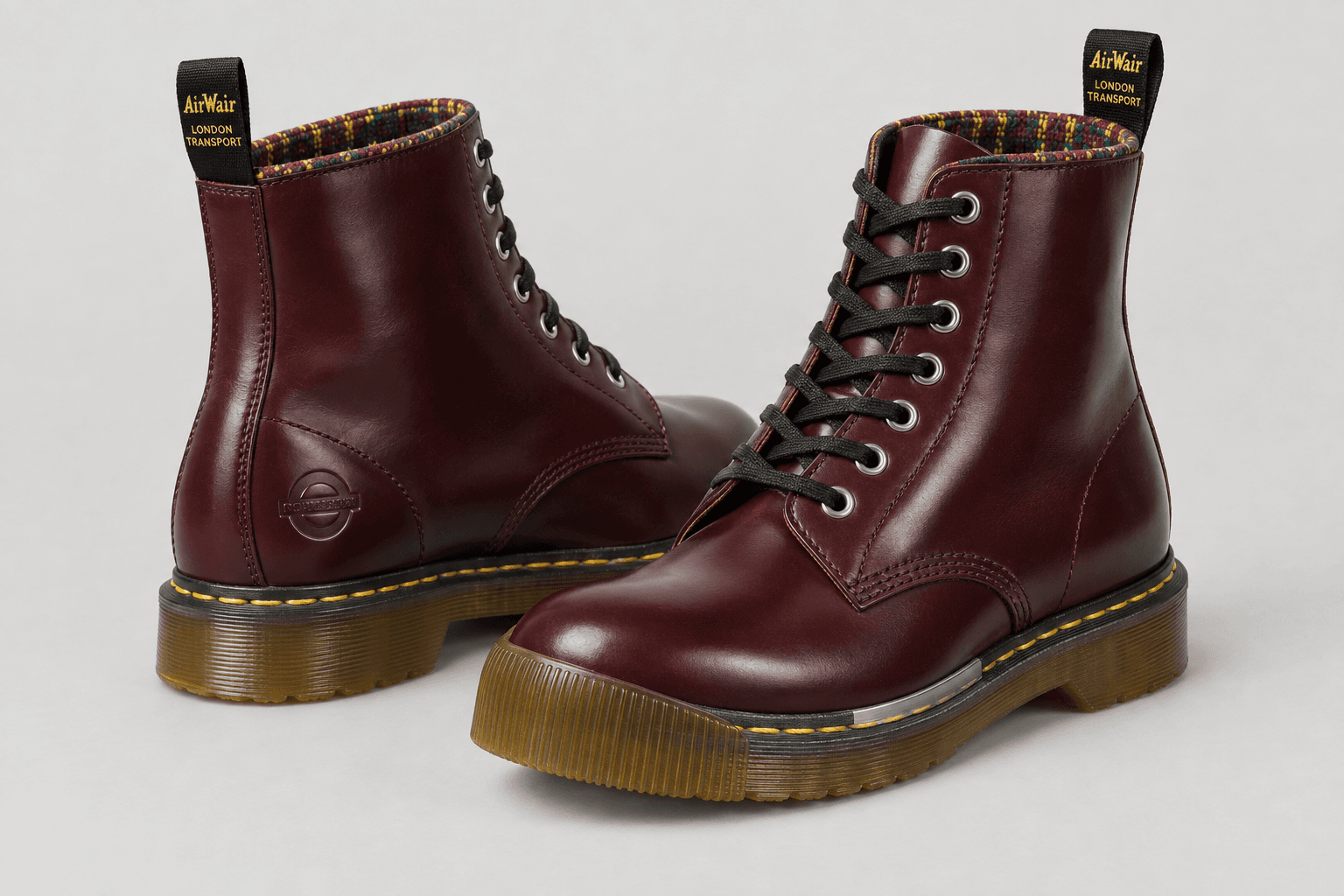
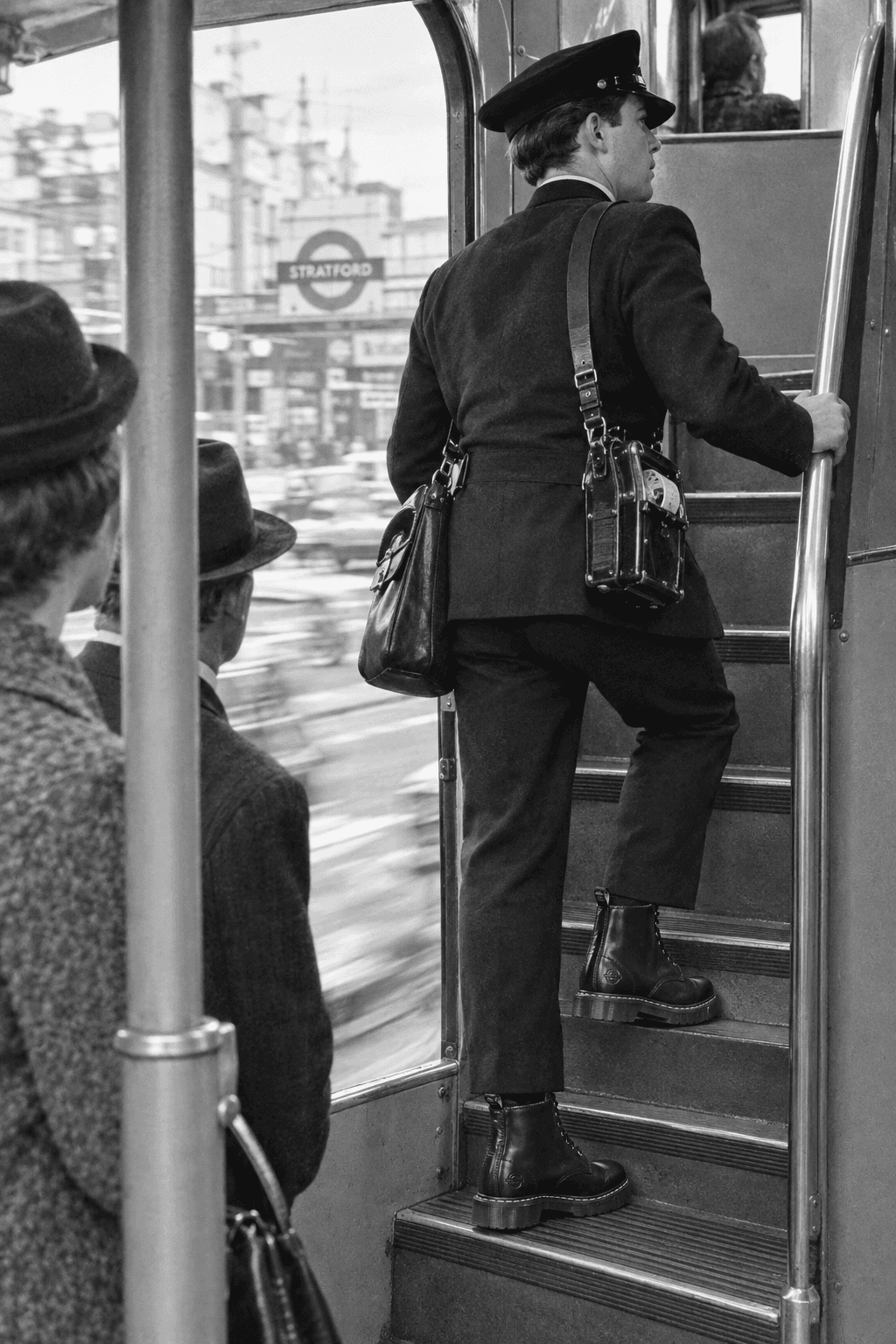
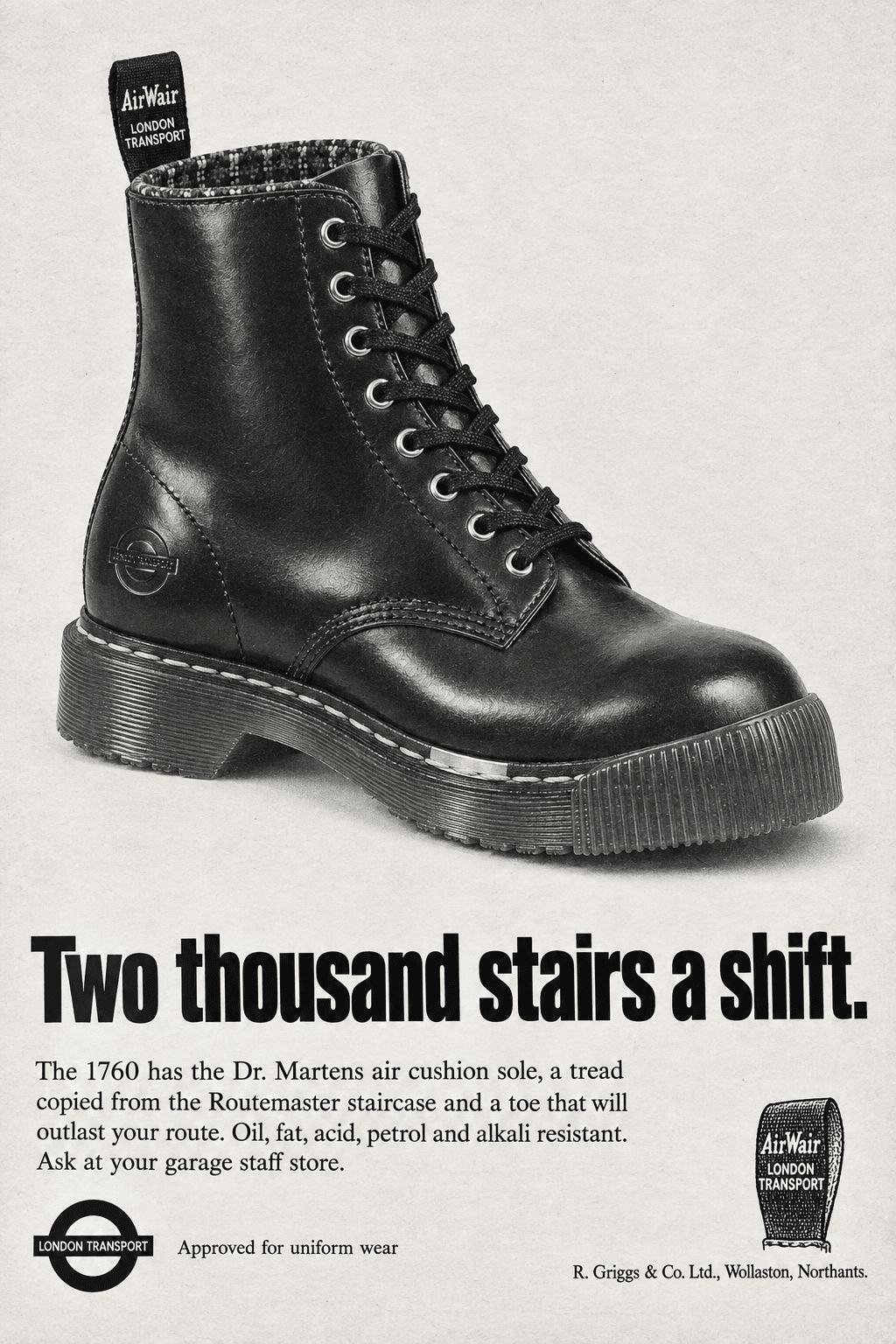
A Routemaster conductor went up the staircase about two hundred times a shift, and this is the only boot whose sole was copied from the stairs.
Announced July 1, 1960, at London Transport's headquarters at 55 Broadway, the 1760 kept Griggs' habit of naming boots after the day: first of the seventh, sixty. It began with a complaint from West Ham garage, one of the first to run Routemasters on the trolleybus replacement routes. Conductors were scuffing through the toes of their shoes on the stair risers and sliding about on the wet platform, and London Transport's Design Panel asked Douglas Scott, who had styled the bus, to look into it.
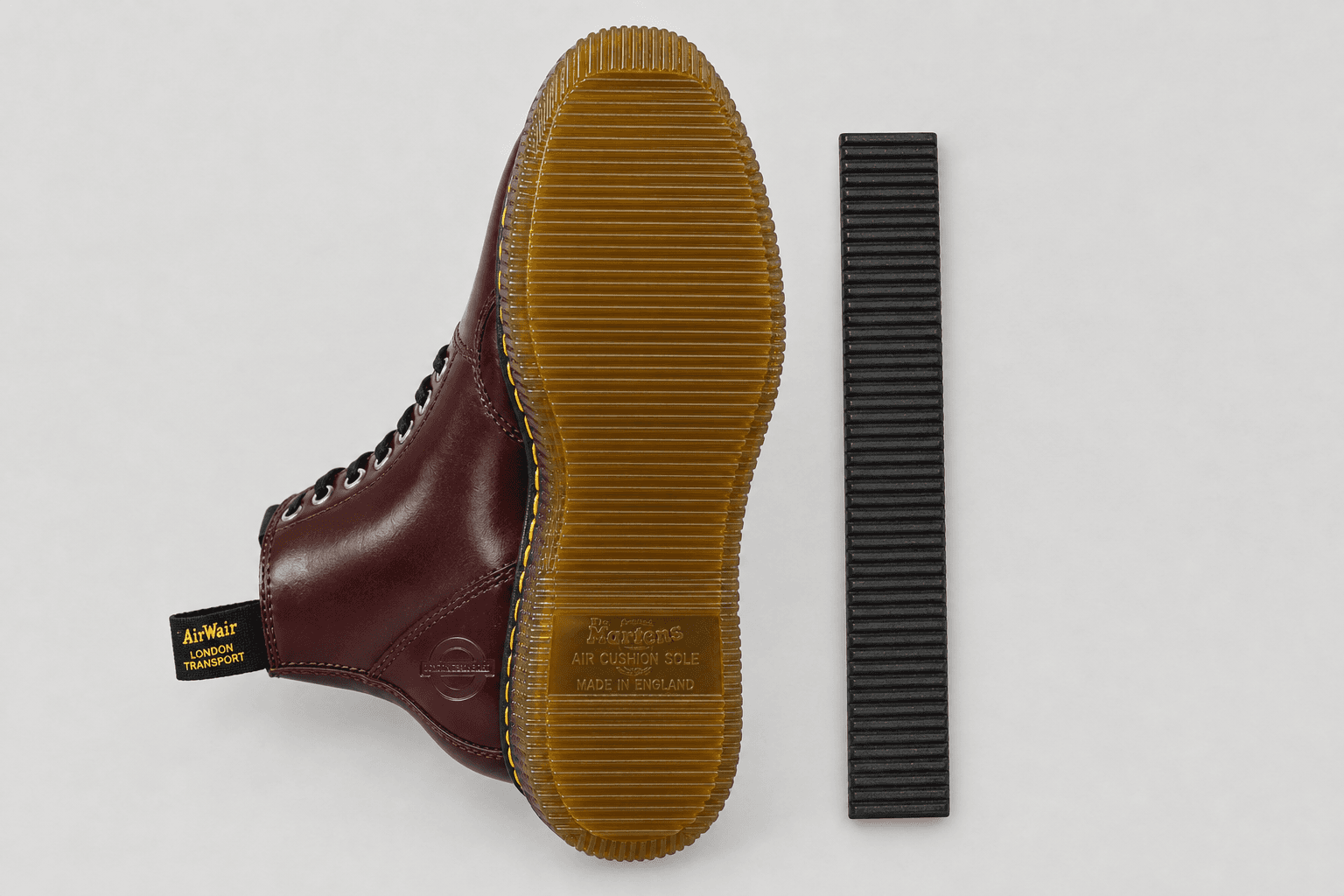
Scott went to Wollaston with a length of Routemaster stair nosing in his briefcase. Bill Griggs kept the welt and heat-sealed air-cushioned sole of the 1460 but cut a new mould whose tread was a field of fine transverse ribs at the nosing's own 4 mm spacing, then carried the ribs up and over the toe as a bumper moulded in one with the sole. The boot is six eyes rather than eight so a conductor could crouch to retrieve a dropped coin on the platform without the collar biting his shin.
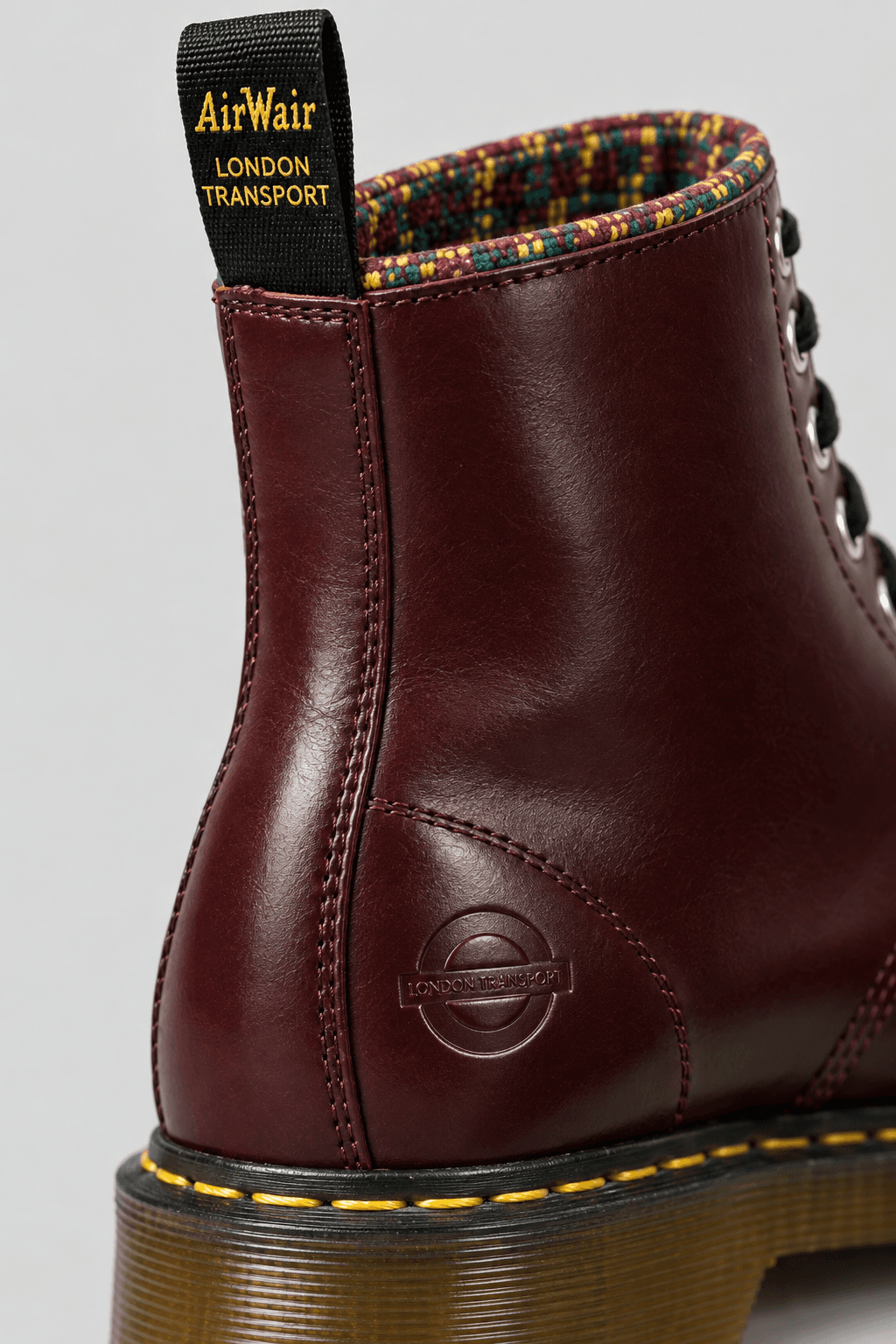
Scott chose the colours from his own interior. The leather is matched to the Burgundy of the lower saloon panels, which meant a special run of dye at the tannery, since Griggs' Cherry Red was judged 'too cheerful for the Executive'. The welt thread is Sung yellow, from the ceiling. The padded collar is lined with Routemaster seat moquette, so the part of the boot that rubs all day is made of the material that had already survived several hundred thousand passengers. The heel loop reads 'AirWair' over 'LONDON TRANSPORT' in Johnston capitals, and a small roundel is blind-embossed on the outer heel counter, the one surface a passenger sees as the conductor goes up the stairs ahead of them.
On the right boot only there is a 4 cm strip of stainless steel let into the inside welt behind the toe. Conductors braced that foot against the base of the platform pole as the bus pulled away, and Scott located the strip by measuring the wear marks on forty pairs of old shoes collected at West Ham. Staff called them stair boots. The Transport and General Workers' Union approved them within a month, which was considered fast.