No. 114 · 6 October 2026
Ercol × Slazengers
Ercol 380, tennis racket press and stand, 1956
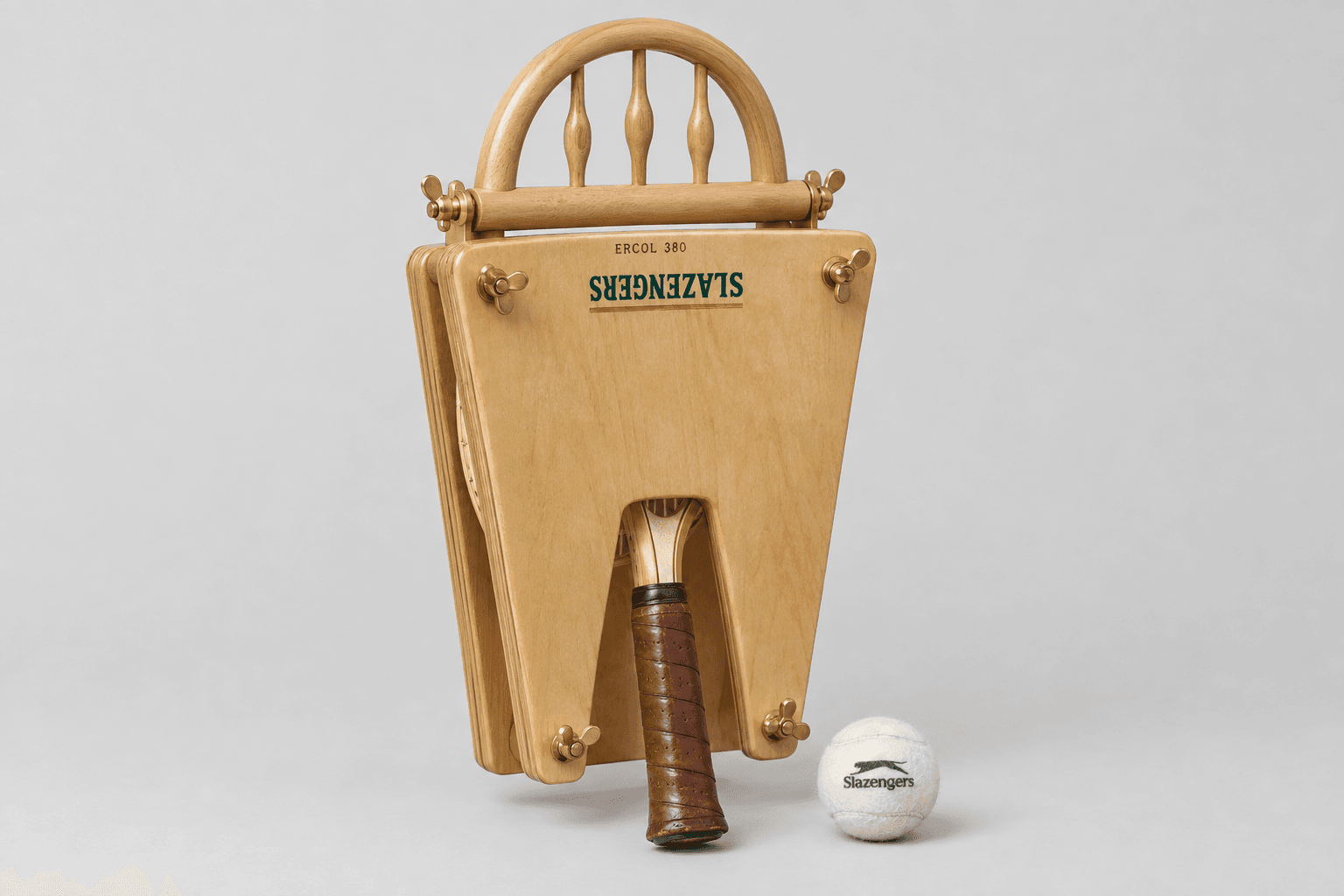
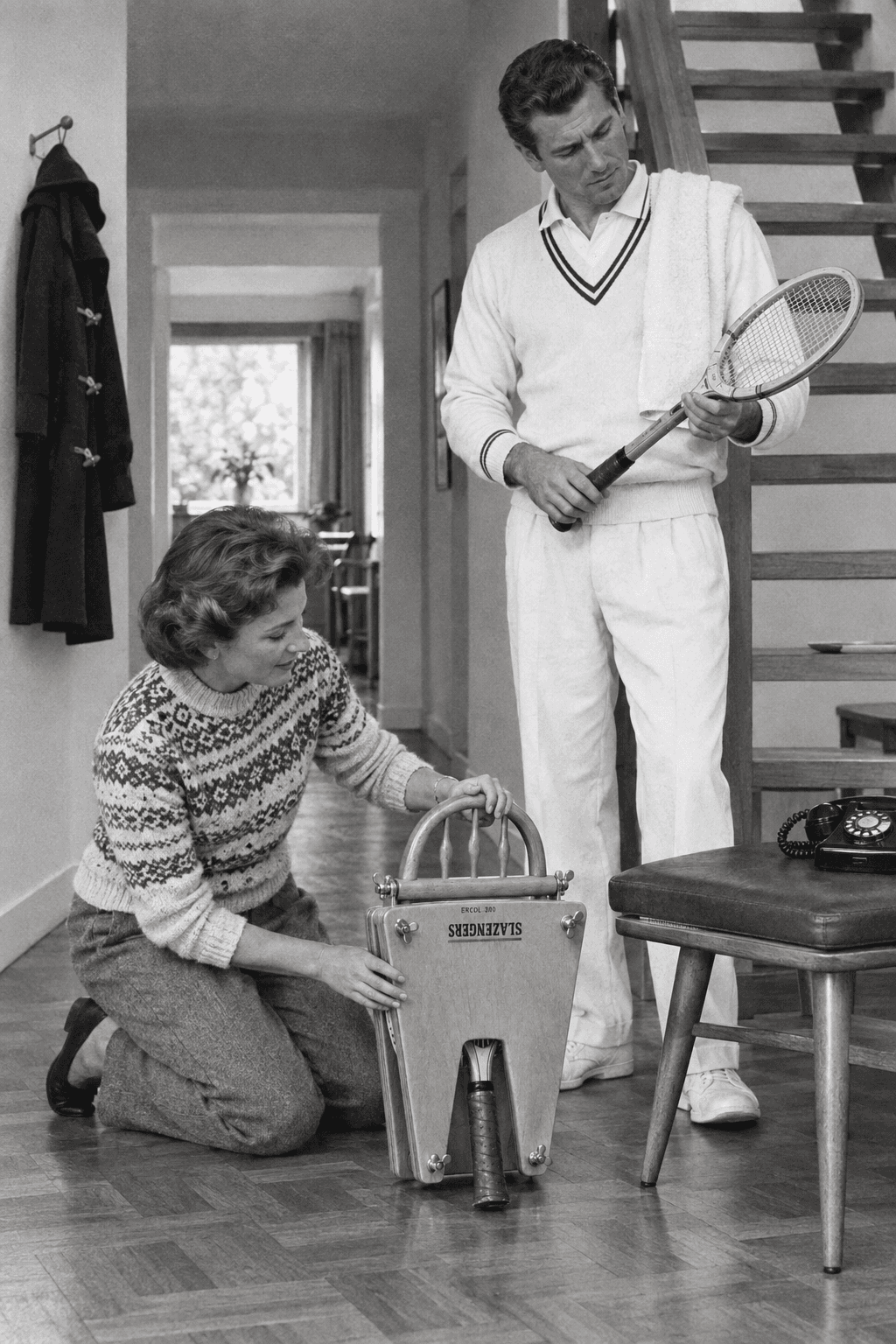
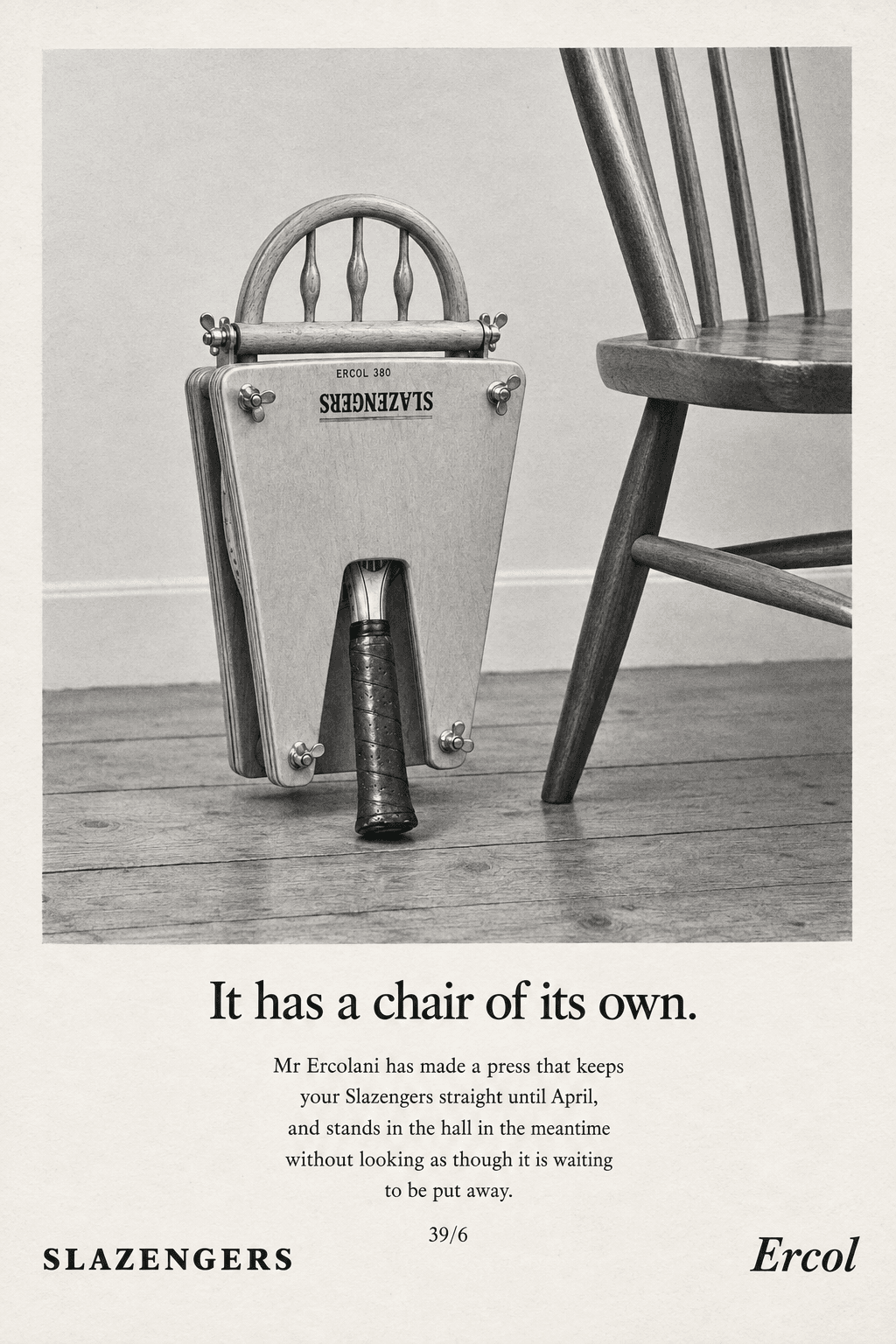
A racket press whose handle is a small Windsor chair back, so that over the winter your racket stands in the hall on its own little chair.
Announced June 14, 1956, at Slazengers' London offices, eleven days before Wimbledon opened, the Ercol 380 began with a complaint. Lucian Ercolani sat on the committee of a lawn tennis club near High Wycombe and objected to the members' presses, all split plywood and rusted bolts, heaped under the pavilion bench each October. He wrote to Slazengers offering to make one 'that a person would not be ashamed to own'.
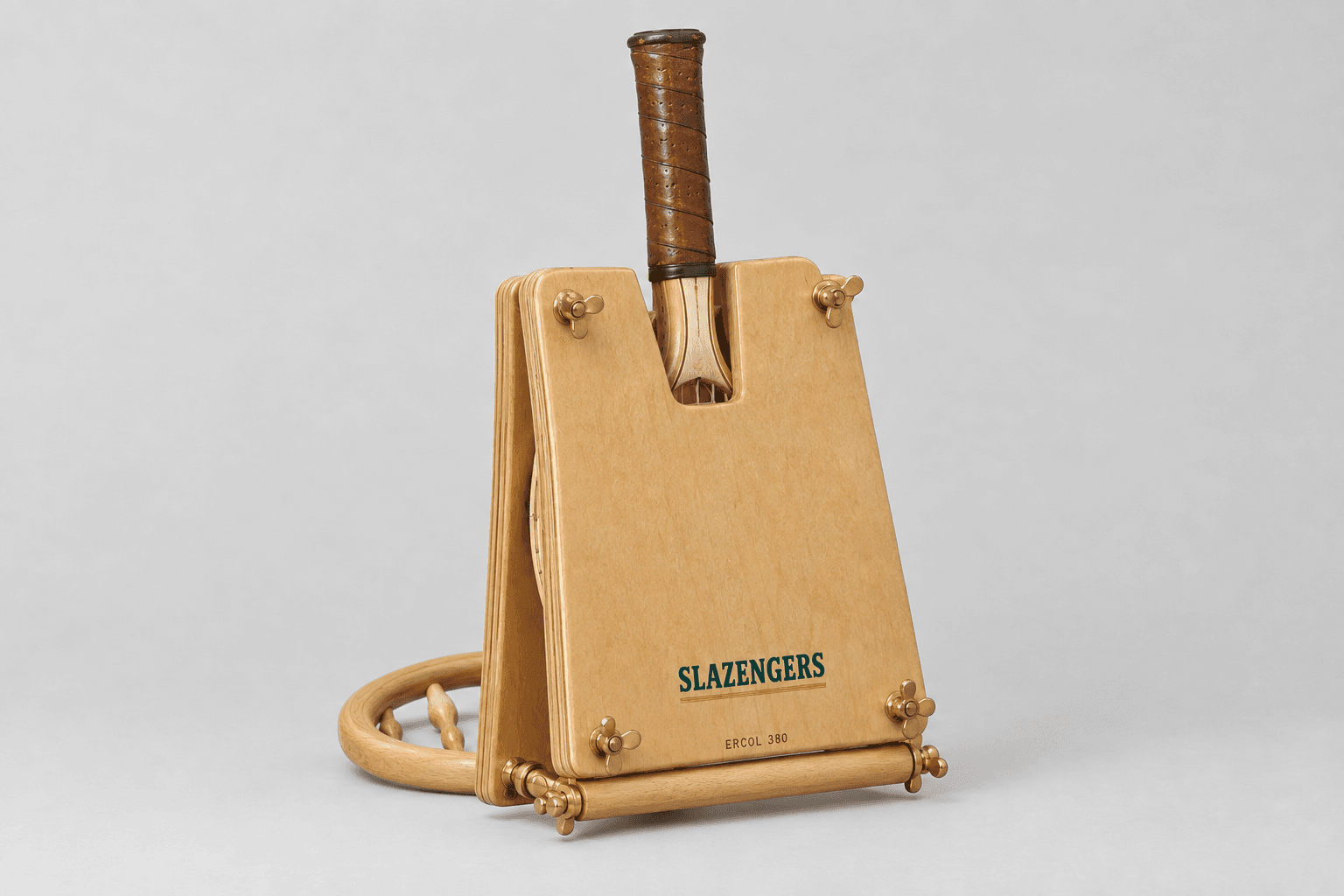
Horbury supplied the geometry: trapezoid plates cut to clear the head of a Challenge No. 1, four bolts placed where a laminated ash frame most wants to warp, and a clamping pressure. Ercol wanted solid elm plates; Horbury pointed out that solid elm that thin would cup by Christmas. The compromise was three cross-grained layers of elm, glued and pressed on the same machines that laminated racket frames. Ercolani had set out to abolish plywood and ended up making it. The catalogue called it 'three-ply elm' and never used the other word.
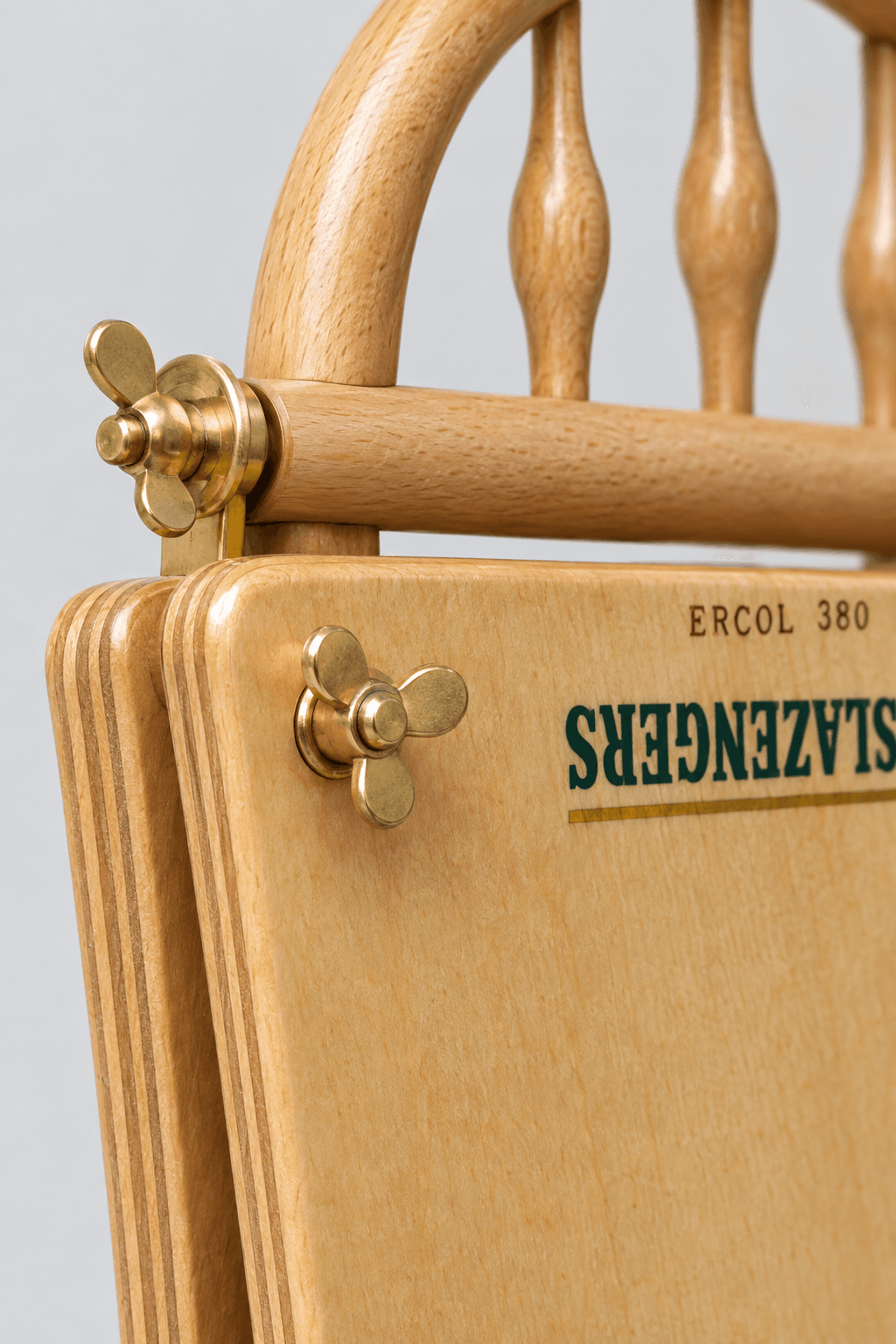
The handle is a Windsor chair back in miniature: a steam-bent beech bow, bent on the 203 easy chair jigs, with three turned spindles socketed into a turned beech rail. Loosen two small wing nuts, swing the back flat, stand the press on its wide top edge and it becomes a foot, with the racket upright and handle skyward. Ercol called this 'the parlour position'. Slazengers insisted the transfer be read in that position, so in the carrying position it is upside down, which the firm described in a letter to stockists as 'intentional'.
The Field was approving; a correspondent to Lawn Tennis and Badminton observed that at 1.4 kg it weighed more than twice a normal press and 'rather more than the racket'. Ercol's most quoted claim was that every bow came from beech offcuts left over from the Loveseat, and that the 380 contained no wood that would not otherwise have gone into the boiler for the steam boxes.