No. 116 · 8 October 2026
Moulinex × Courrèges
Mixeur Lune, electric countertop blender, 1968
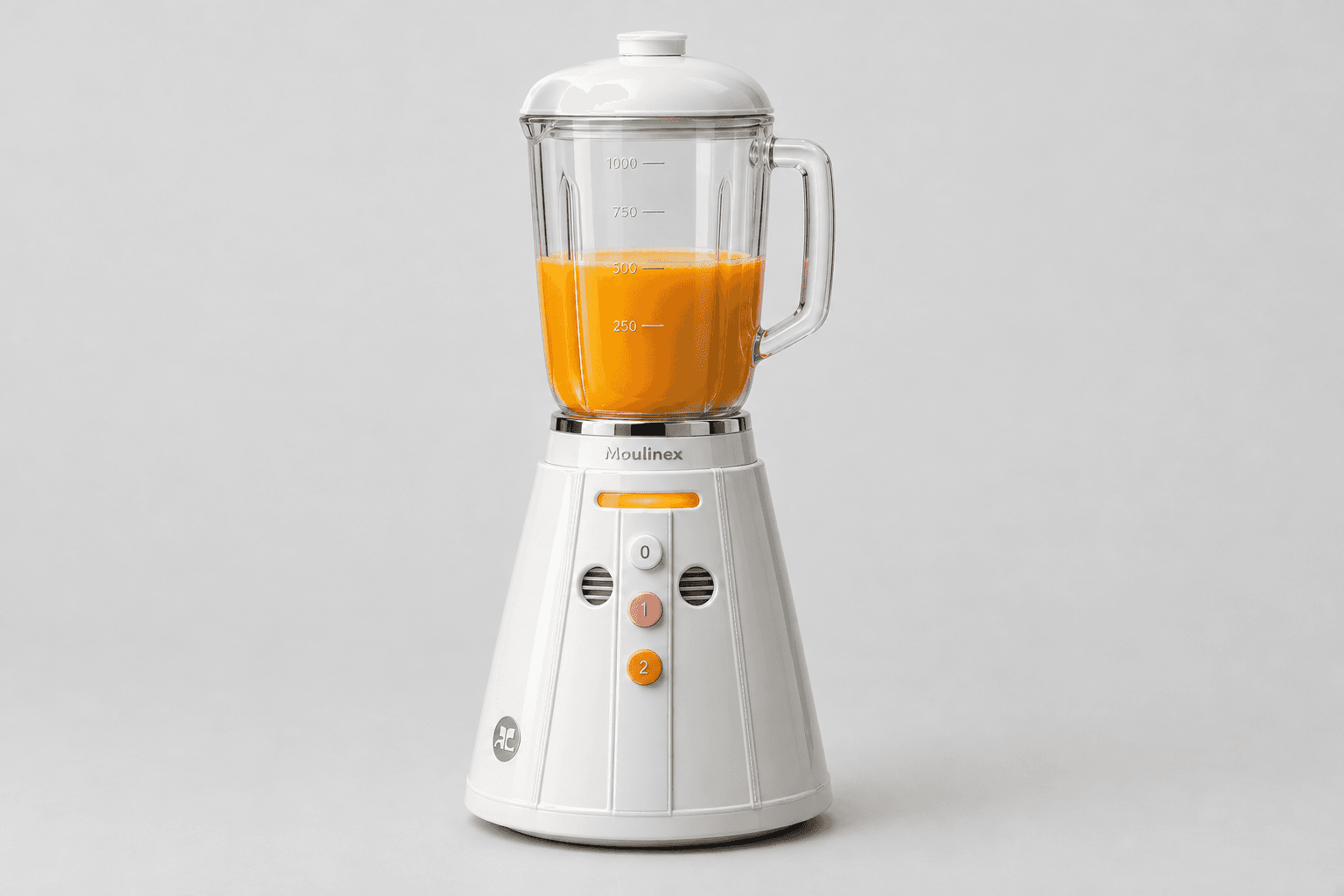
A blender cut like a trapeze dress, with its speed buttons sewn down a front placket and a vinyl sleeve that happens to make it the quietest mixeur in France.
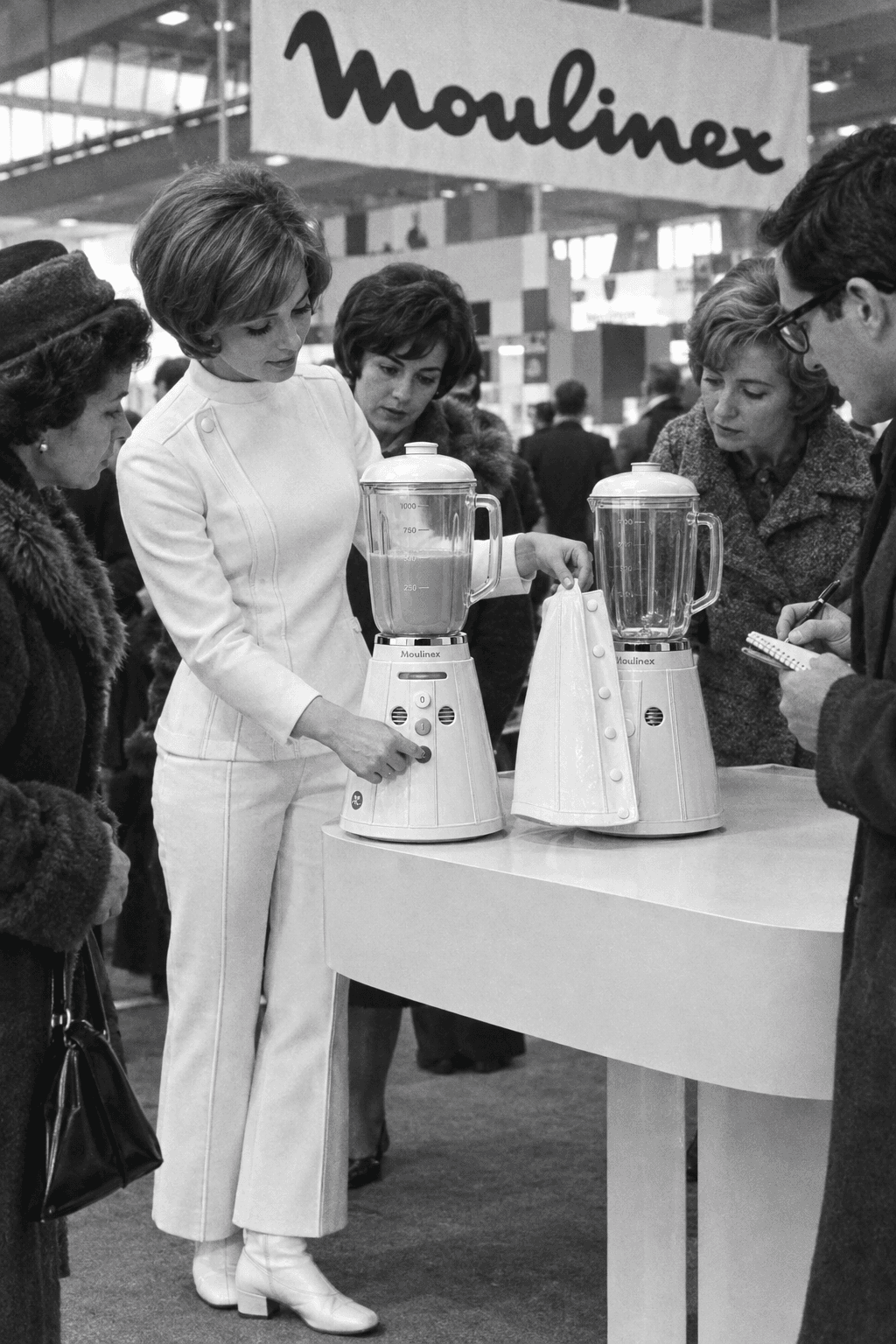
Announced February 27, 1968, at the Salon des Arts Ménagers in the CNIT hall at La Défense, the Mixeur Lune was Jean Mantelet's attempt to sell a kitchen appliance as something a woman might want to be seen with. Courrèges agreed to the project on one condition, set down in a two-line letter: the machine was to be treated as a garment with a motor inside.
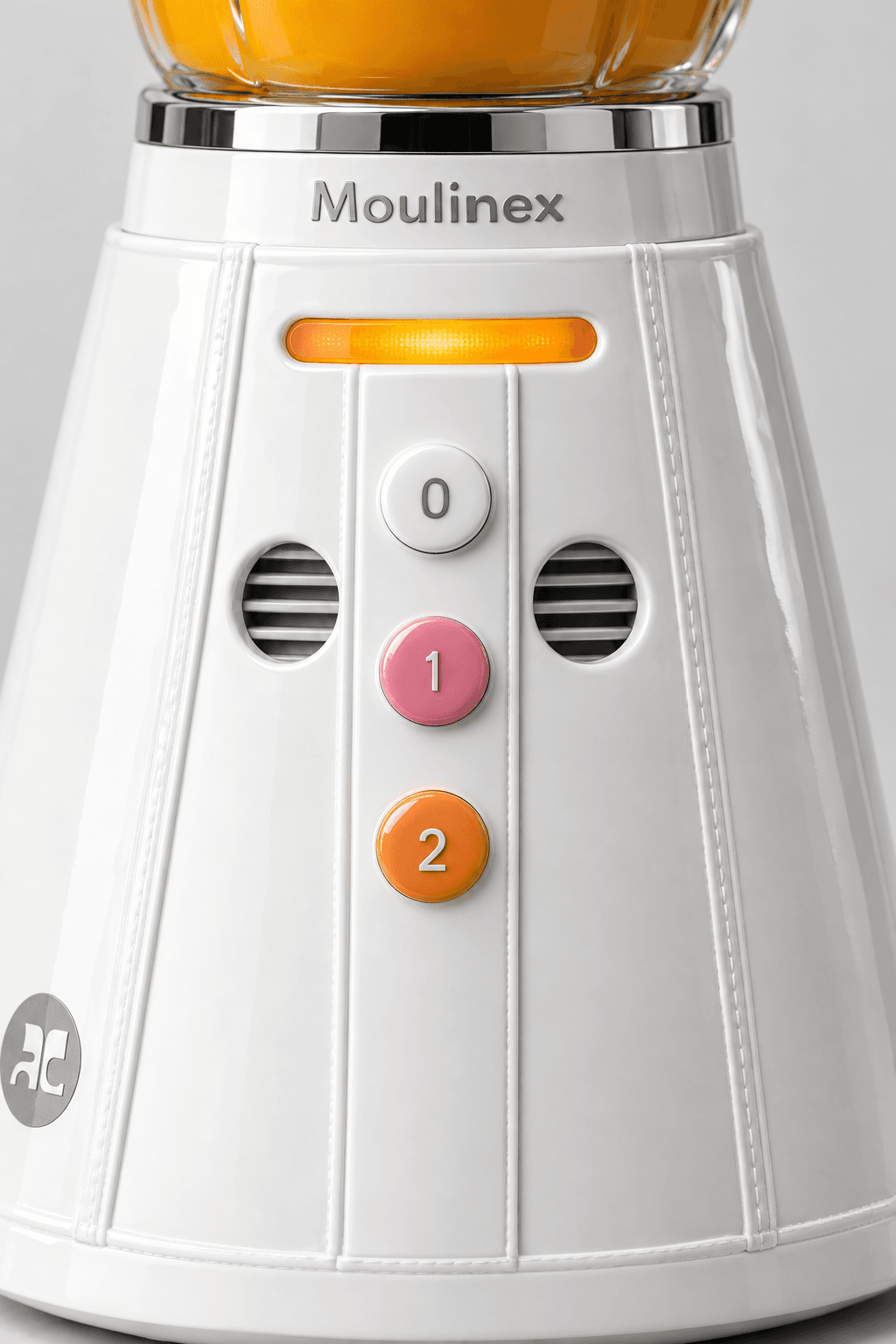
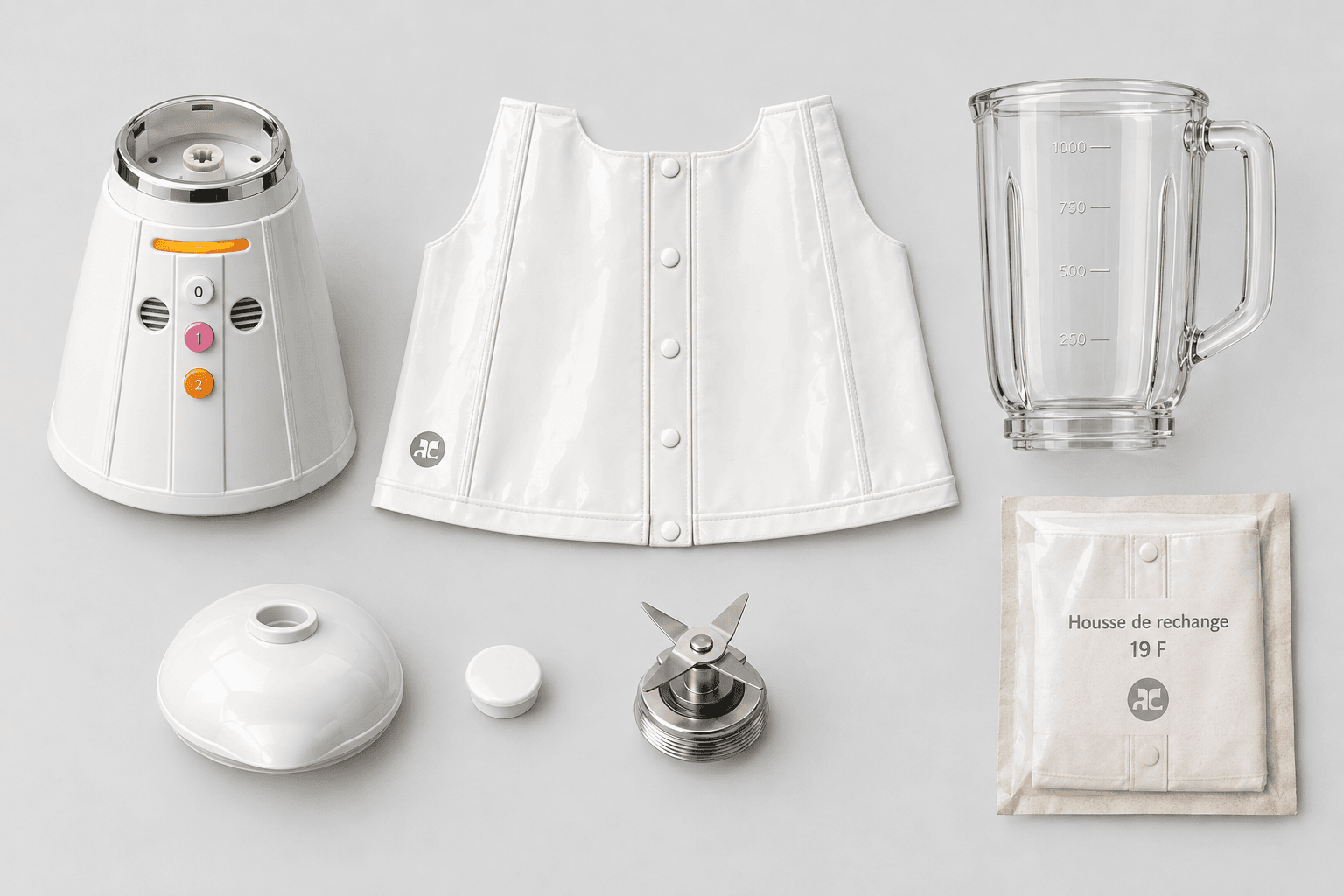
The base keeps the Moulinex cone but sets it to the line of a trapeze dress, narrow at the shoulder where the jar sits and flaring to a wide, stable hem. Over the gloss ABS shell goes a removable white vinyl sleeve with the welted seams of a Courrèges coat, closed at the back with four press studs. The three speed buttons run down a welted front placket, where a coat would carry its buttons; Moulinex had wanted them in a row, and lost. Two porthole cut-outs from a 1966 jacket sit either side of the placket over the cooling vents, the lid is a small domed helmet with a peak, and the power lamp shows through a slit taken from the Eskimo sunglasses, where the neon glows tangerine of its own accord. Alençon's engineers then found the sleeve took almost four decibels off the motor at full speed, and dropped their objections.
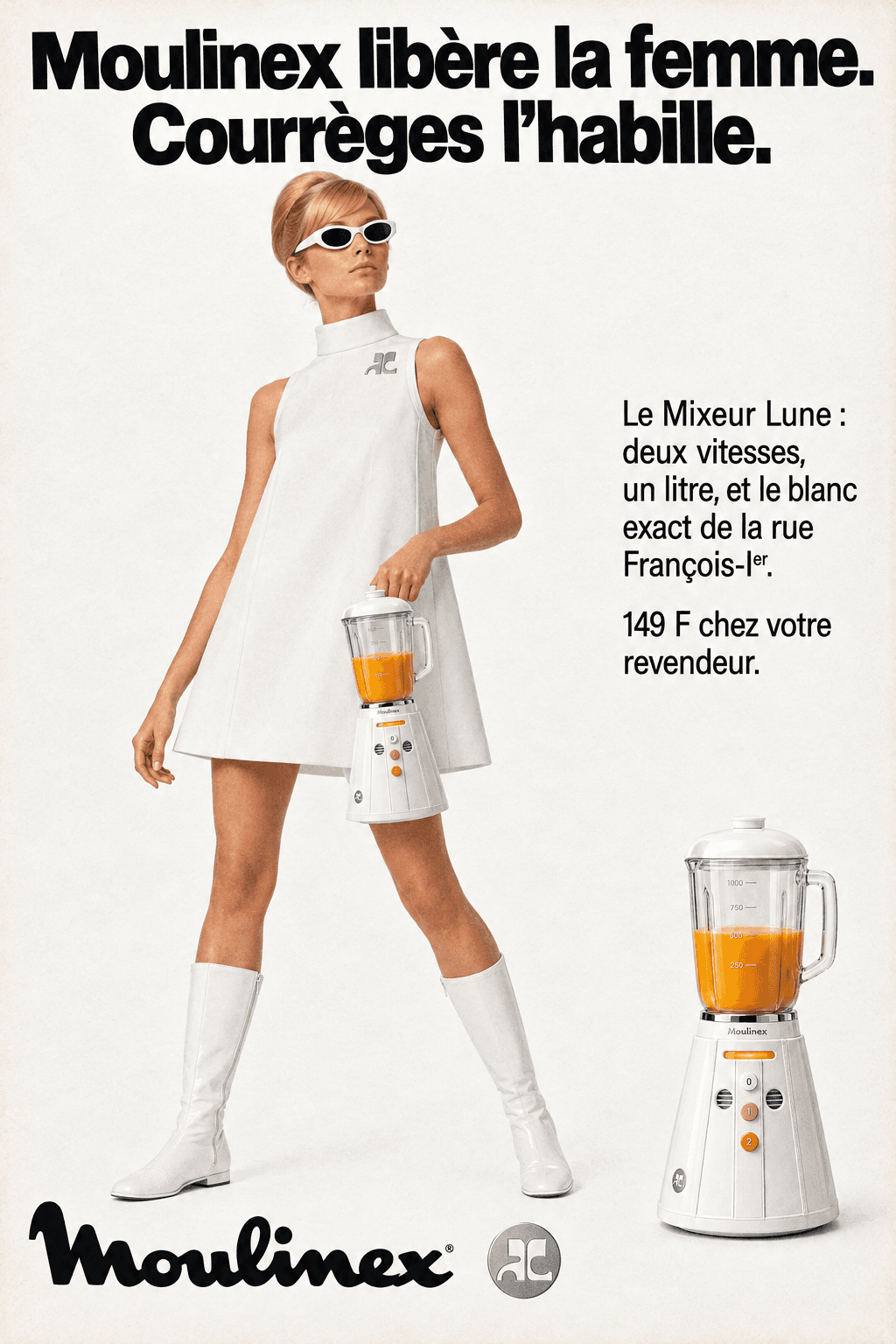
Courrèges insisted the plastic match the white of his gabardine, and a swatch was posted from rue François-Ier to Alençon. The chemists ran eleven pigment batches before he accepted one; the approved disc was kept in a drawer at the factory with 'AC, oui' pencilled on the back. The strikes of May 1968 then closed the works for nearly three weeks, so the first deliveries reached the Galeries Lafayette in July, three months after the advertisements.
Elle gave it a double page beside the summer collection. One appliance trade journal complained that a mixeur had no business owning a wardrobe, and Moulinex quietly began selling spare sleeves at 19 F. The first run of 12,000 had sold out by Christmas, mostly to young couples furnishing new flats in the western suburbs.