No. 117 · 9 October 2026
Olympus × Shiseido
XA-C, illuminated powder compact, 1980
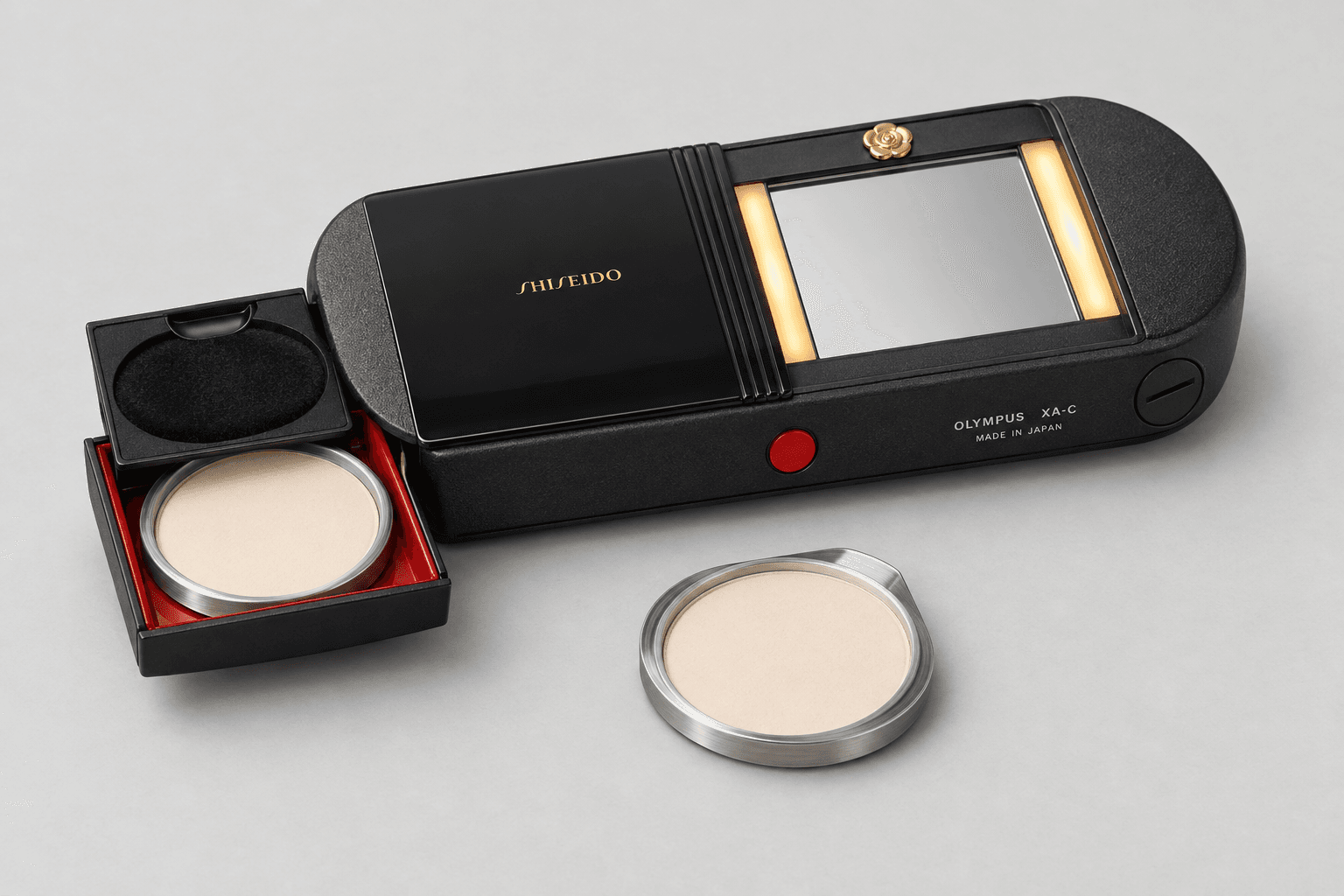
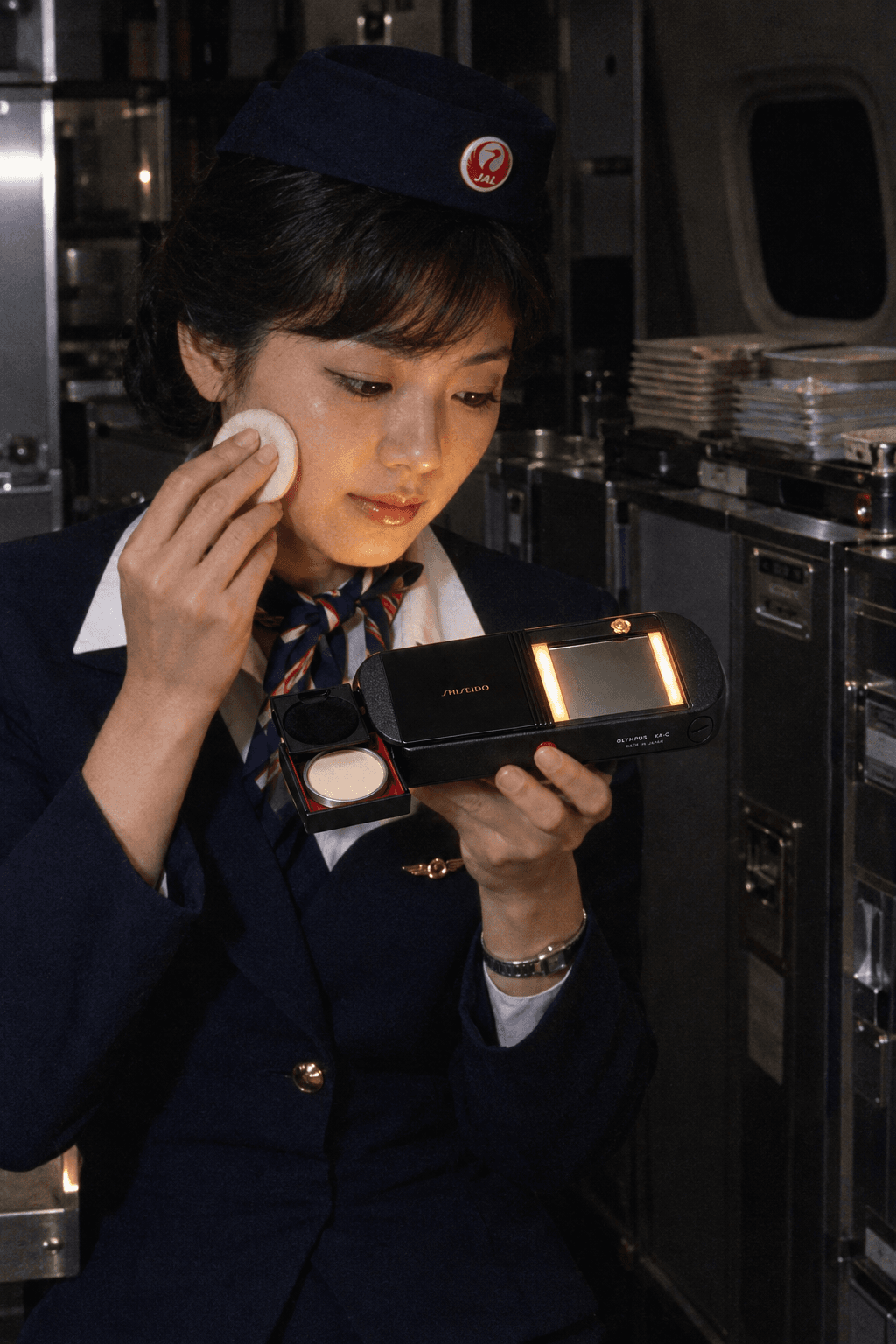
A powder compact built on the Olympus XA's sliding barrier, whose red button lights your face for twenty seconds and then, at Shiseido's insistence, dims slowly instead of switching off.
Announced September 16, 1980, at Shiseido's building in Ginza 7-chome, the XA-C began as a letter. Makoto Nakamura had bought an Olympus XA the year before and spent meetings sliding its barrier open and shut. He had also spent a long time watching women repair make-up in taxis and on the last Yamanote Line trains, tilting mirrors towards whatever light was going. He wrote to Olympus asking whether the barrier could protect a mirror instead of a lens.
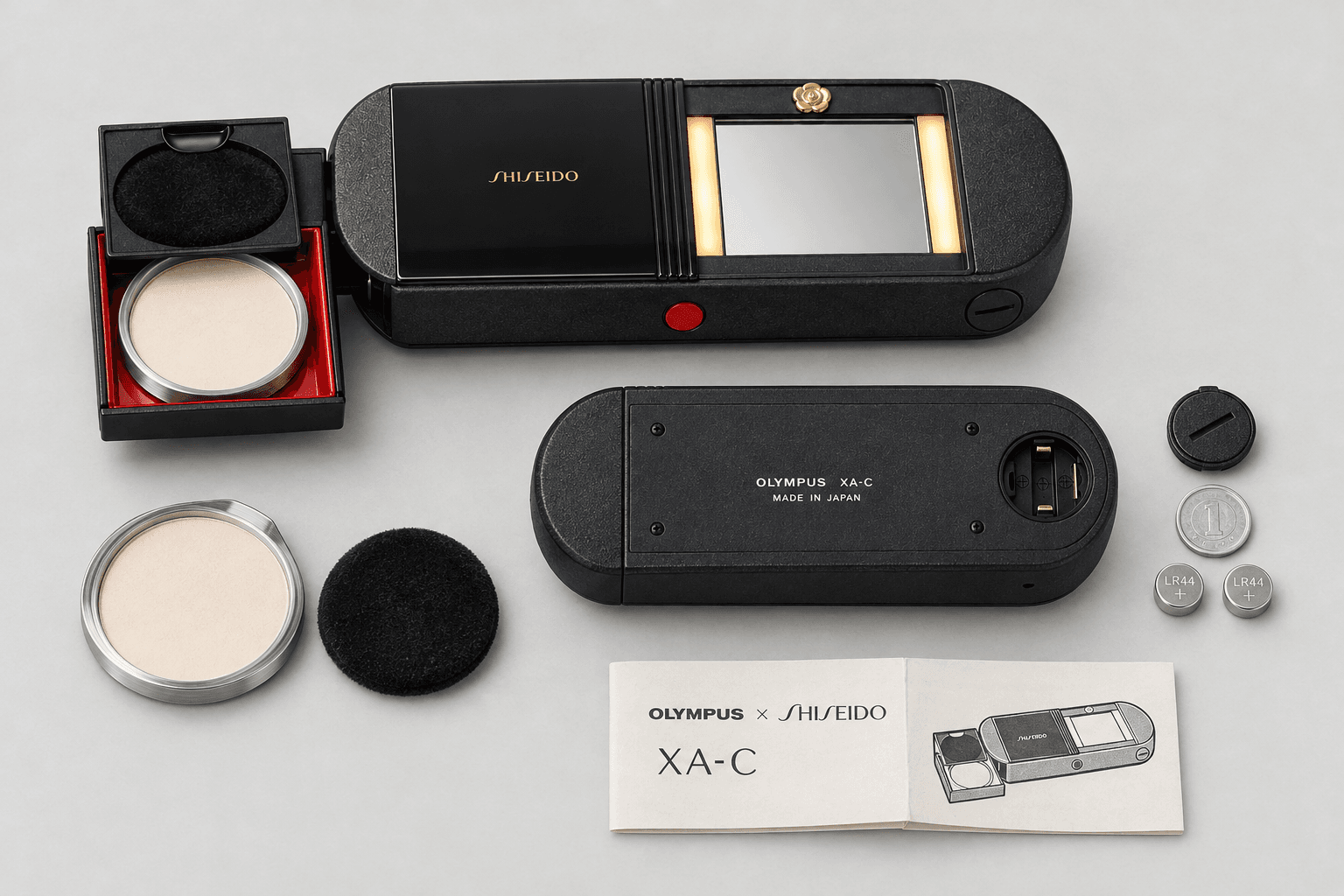
Yasuo Maitani answered with a drawing within a fortnight. He kept the XA's pebble-grain body and half-round ends but flattened it to 20 mm. The barrier slides right to uncover a flush mirror and, as on the camera, opening it is what wakes the electronics: closed, the red button does nothing. Pressed, it lights two small tungsten lamps for twenty seconds on a timer adapted from the XA's shutter circuit. Maitani's prototype snapped off. Nakamura sent it back with one word, 'ゆっくり', and the production version fades out over about three seconds.
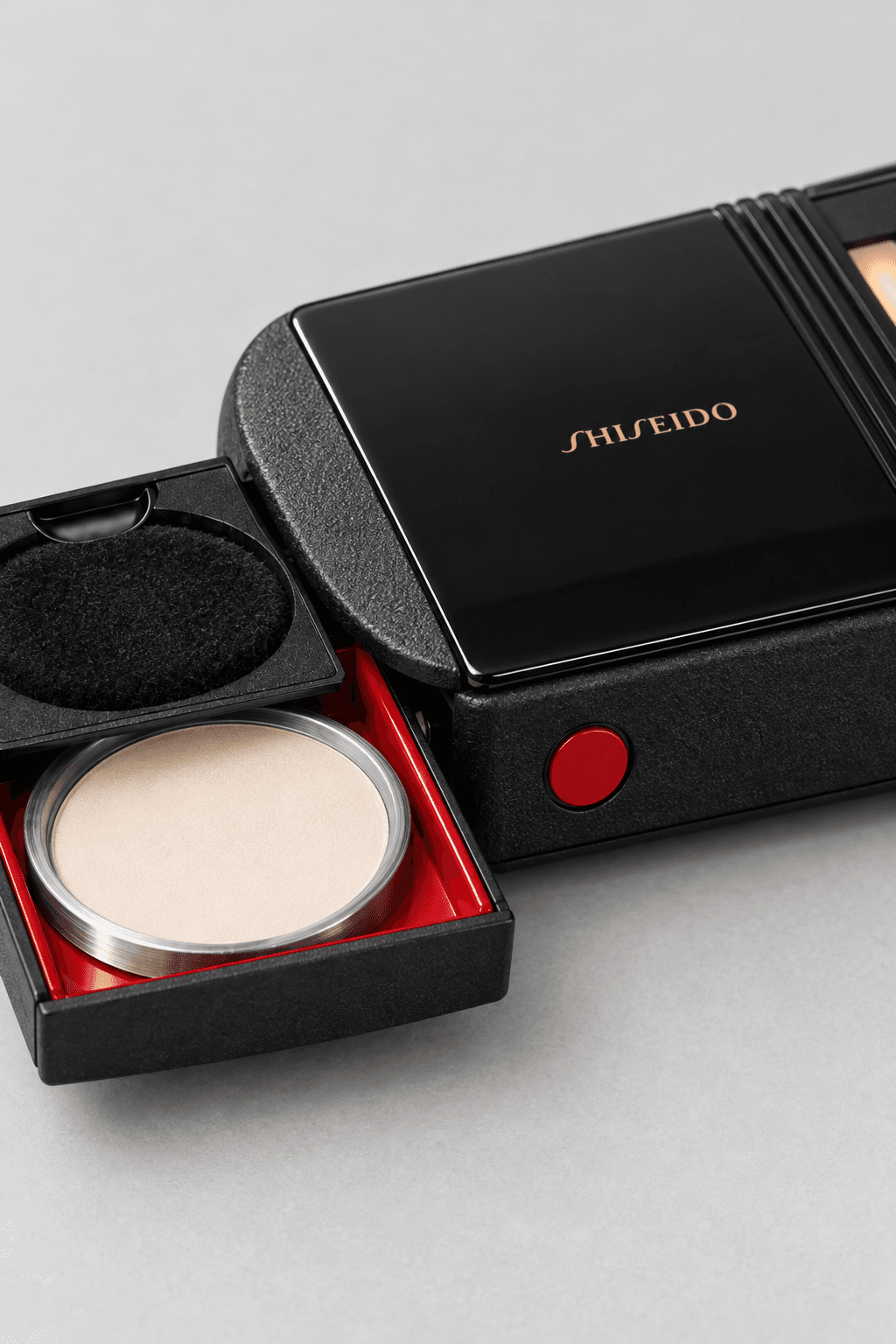
Nakamura then took over everything that touches skin or eye. The barrier is gloss black lacquer against the matt body, as on an Inoui case. The powder sits in a separate drawer that slides from the left end, lined in Inoui red, so that opening the compact fully takes two movements: one Olympus, one Shiseido. The only ornament is a 6 mm gold camellia above the mirror. OLYMPUS appears once, in white, on the base. Fashion editors at an・an liked it. Asahi Camera reviewed it in its accessories column, between a lens hood and a cable release, and called it 'well made, purpose unclear'.
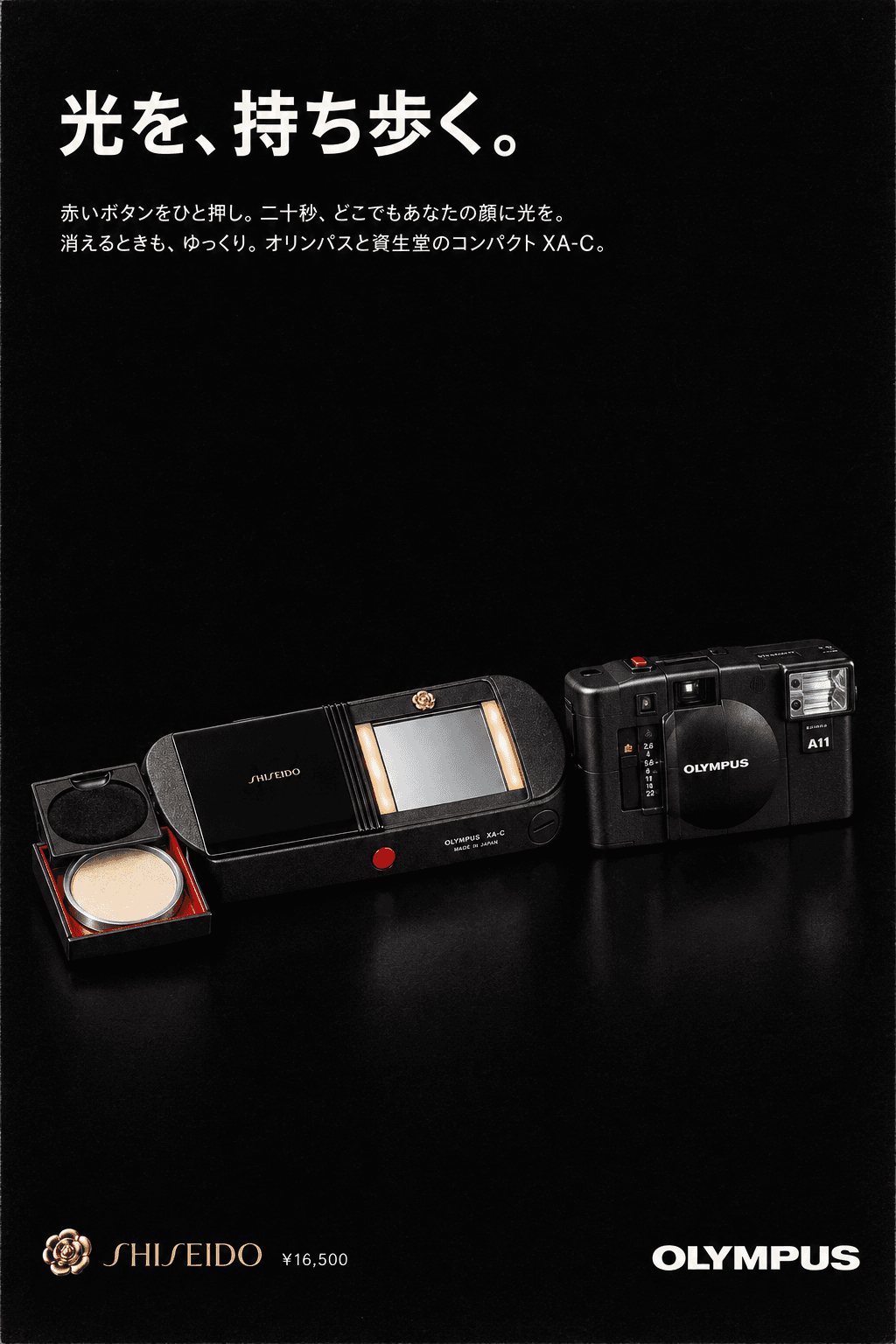
The frosted lamp strips are moulded from the same diffusing acrylic as the window of the Olympus A11 flash, which was cold and blue. Nakamura had the material tinted pale amber, and testers at the Shiseido Research Center in Yokohama reported that skin under the XA-C looked slightly warmer than it did in daylight. He had this printed in the instruction leaflet as an advantage.