No. 112 · 4 October 2026
Wurlitzer × Herman Miller
Model 125, electronic piano, 1956
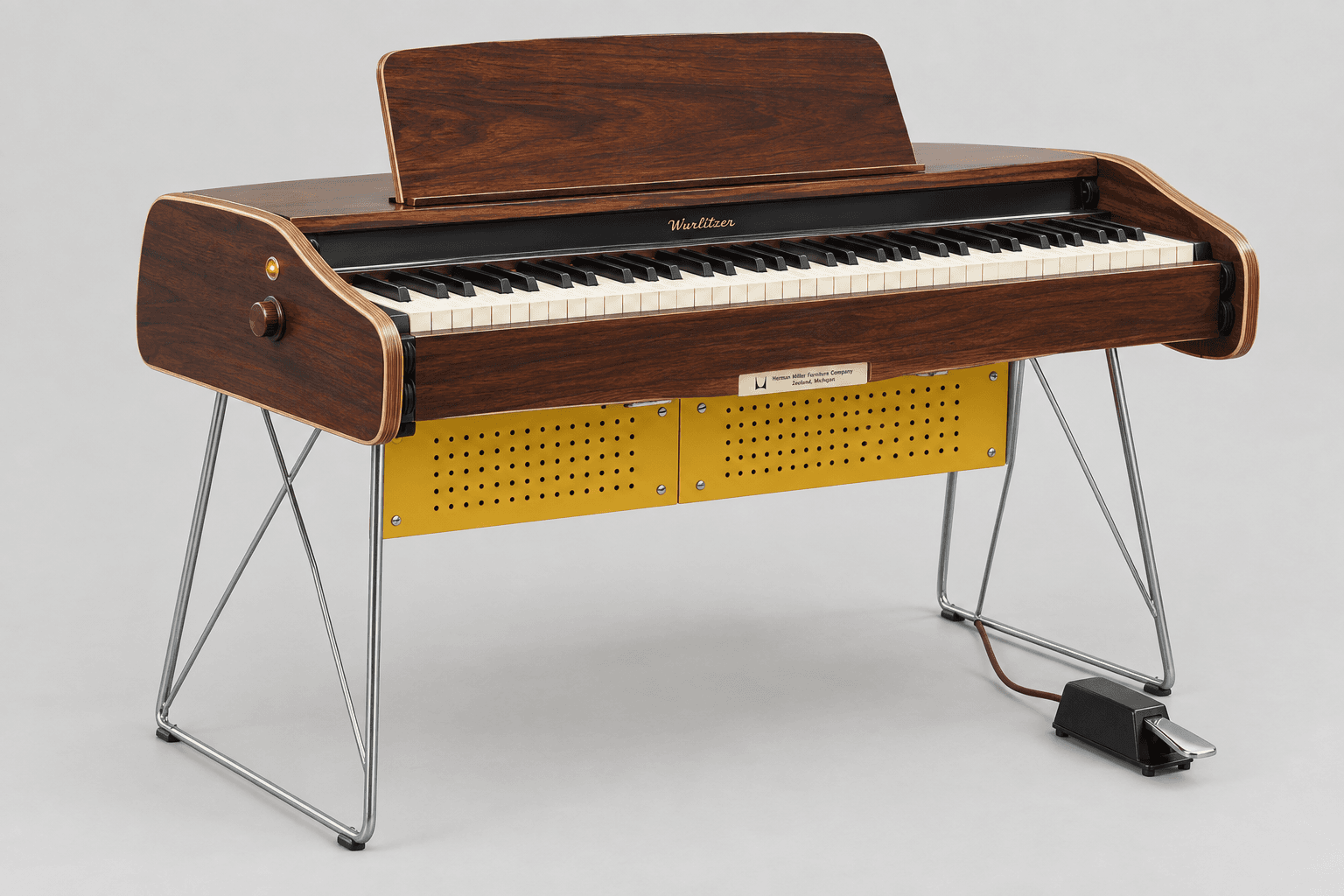
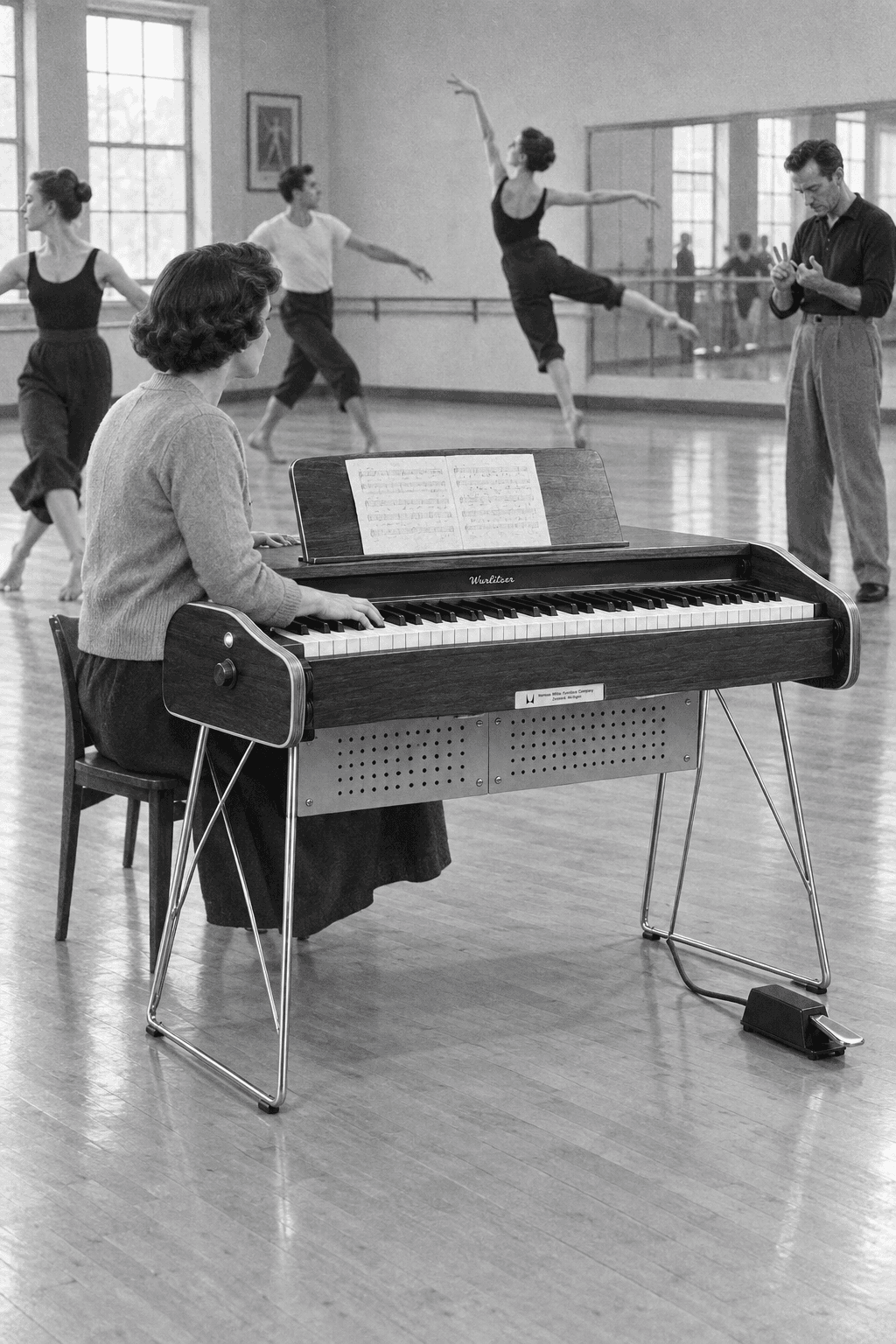
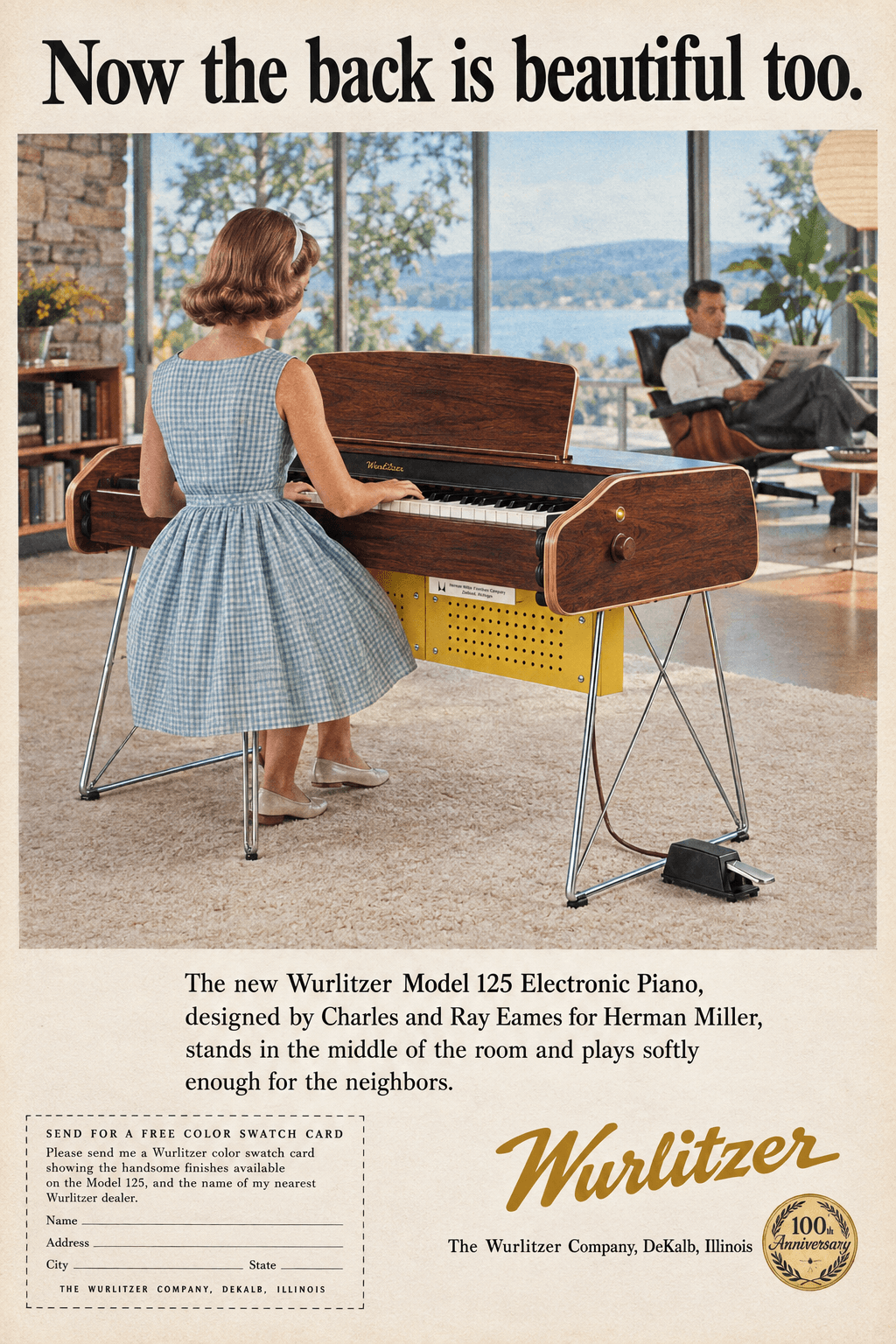
The first electric piano designed on the assumption that someone would be standing behind it.
Announced July 16, 1956 at the NAMM trade show at the Palmer House in Chicago, the Model 125 began as a complaint. Wurlitzer's salesmen reported that the Model 120 was selling well to schools and churches. It was not selling to young couples in new open-plan houses, who had no wall to push a piano against. In its centennial year the company approached Herman Miller, and George Nelson passed the brief to the Eames Office at 901 Washington Boulevard, Venice, California.
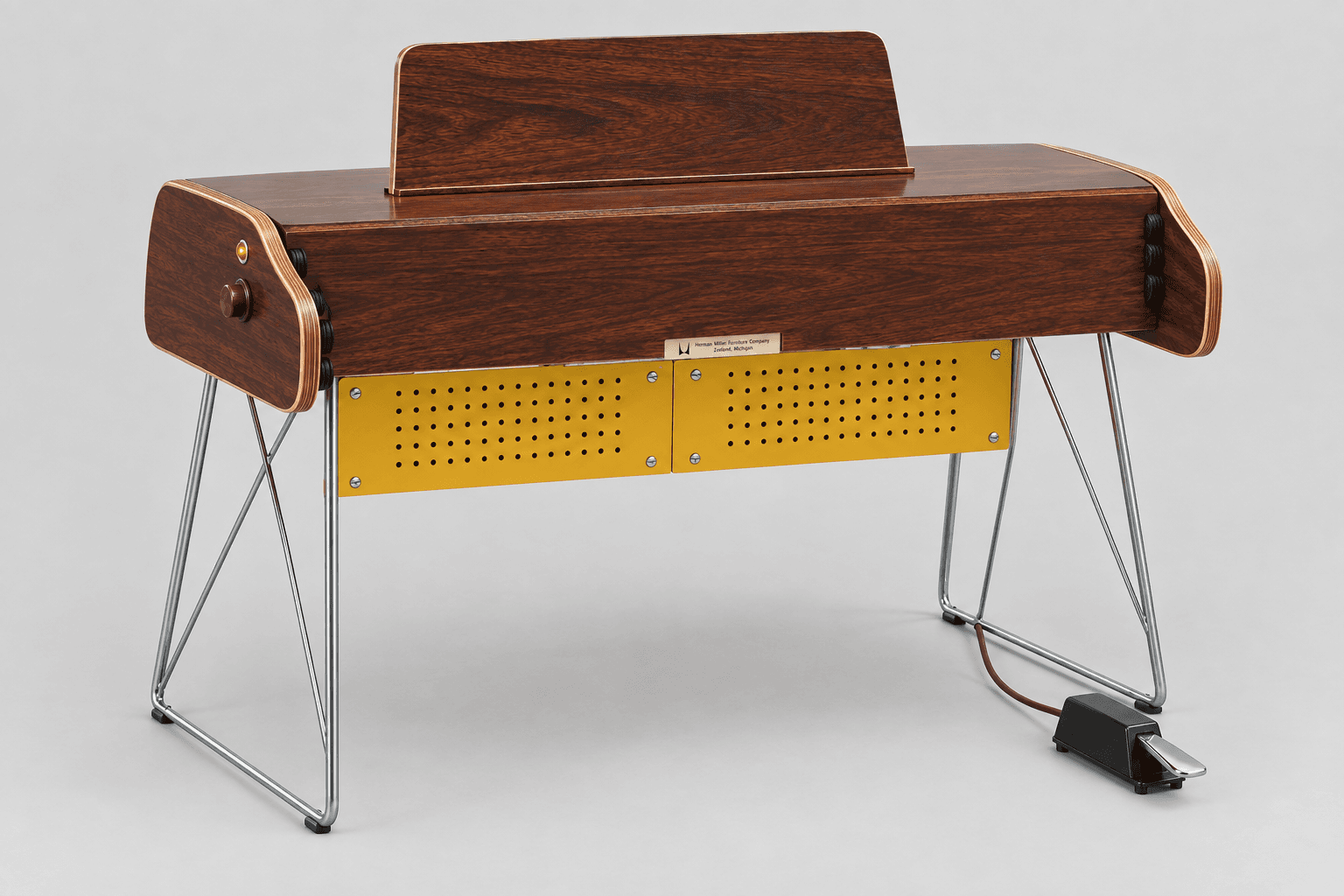
The DeKalb engineers made one condition: the action was not to be touched. The reeds, hammers, Miessner pickup and valve amplifier came straight from the Model 120. Everything around them changed. The Eameses had learnt in 1946 that plywood will not take a deep compound curve in one piece, so the case is three. A shallow tray holds the keyboard, and two end cheeks curve down like the arms of the lounge chair. All three were pressed in Zeeland on the lounge chair presses and joined by the same rubber shock mounts. The case stands on two zinc-plated wire trestles from the LTR table. The back is closed by two drilled Masonite panels from the Storage Unit, so from behind the piano reads as a sideboard that hums.
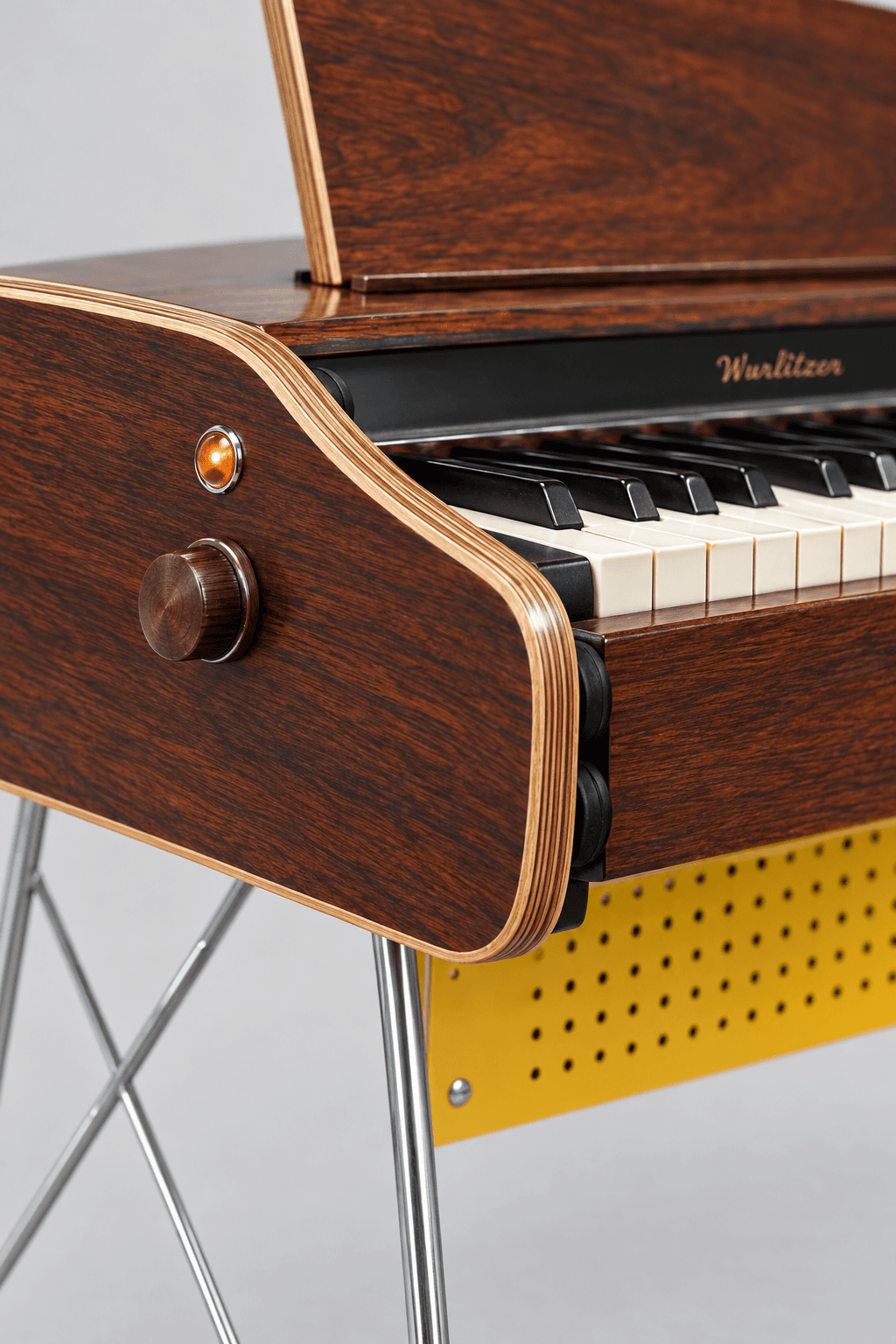
The lid was Ray Eames's idea: a curved plywood leaf that lifts, turns and drops into a slot as the music desk, so there is no separate part to lose. Wurlitzer's one visible contribution beyond the script is the amber pilot lamp above the volume knob, a jewel and chrome bezel taken unchanged from the Model 2000 jukebox. Charles kept it because it told the player the valves were warm, and he had the knob beneath it turned in walnut. A reviewer at the Palmer House called it 'a piano for people who bought the hi-fi first'. He meant it as a criticism, and Herman Miller printed it as praise.
The Eames Office made a six-minute launch film of the action being assembled, scored by Elmer Bernstein on a pre-production example. Dealers received a swatch card for the back panels in red, yellow, blue or black. Order forms show almost two thirds chose yellow, a colour that matched no Wurlitzer finish. Corinth had to keep a separate touch-up bottle labelled, in pencil, 'Eames'.