No. 004 · 2 September 2026
Nintendo × Braun
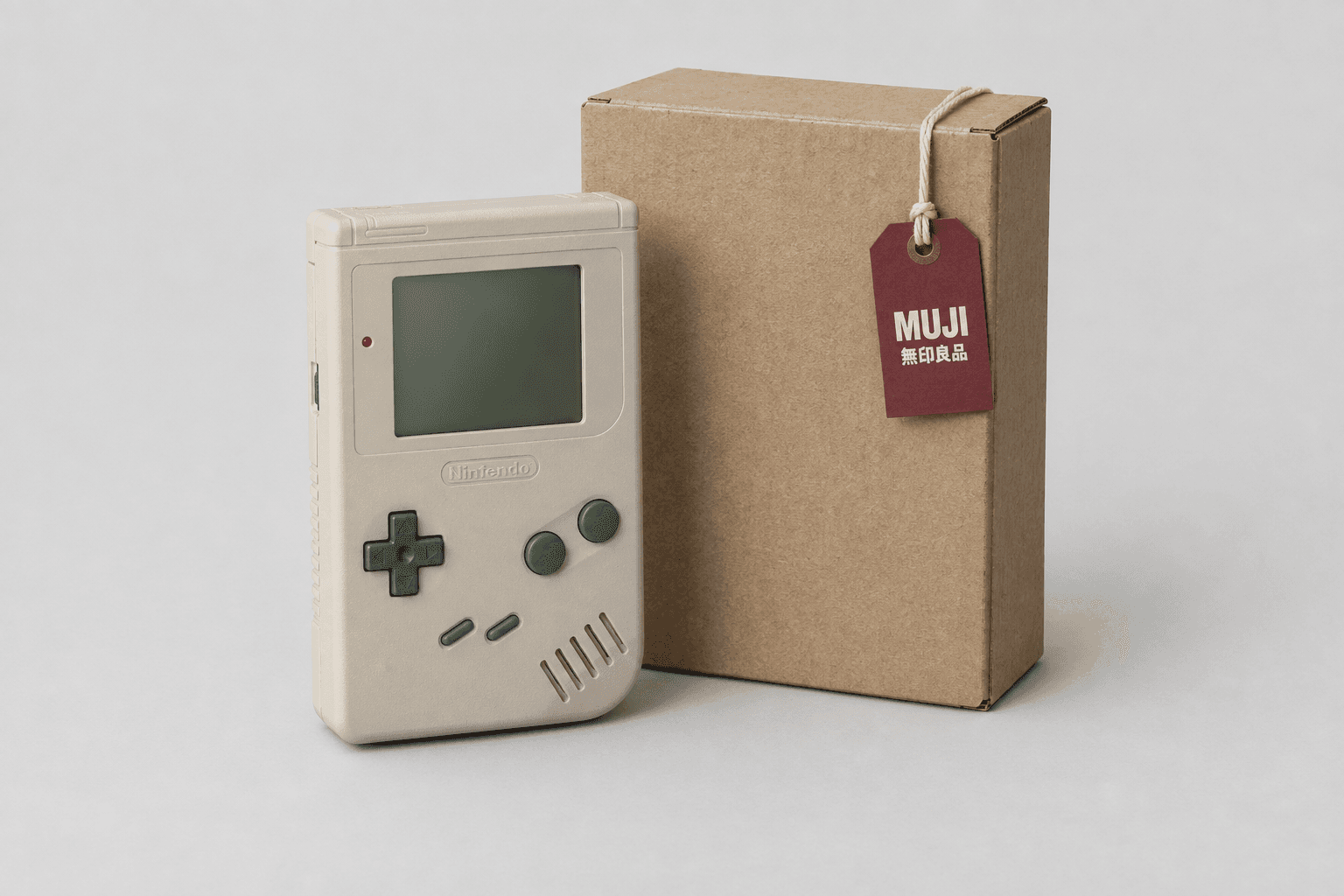
Game Boy studio DMG-S01, handheld games console, 1990
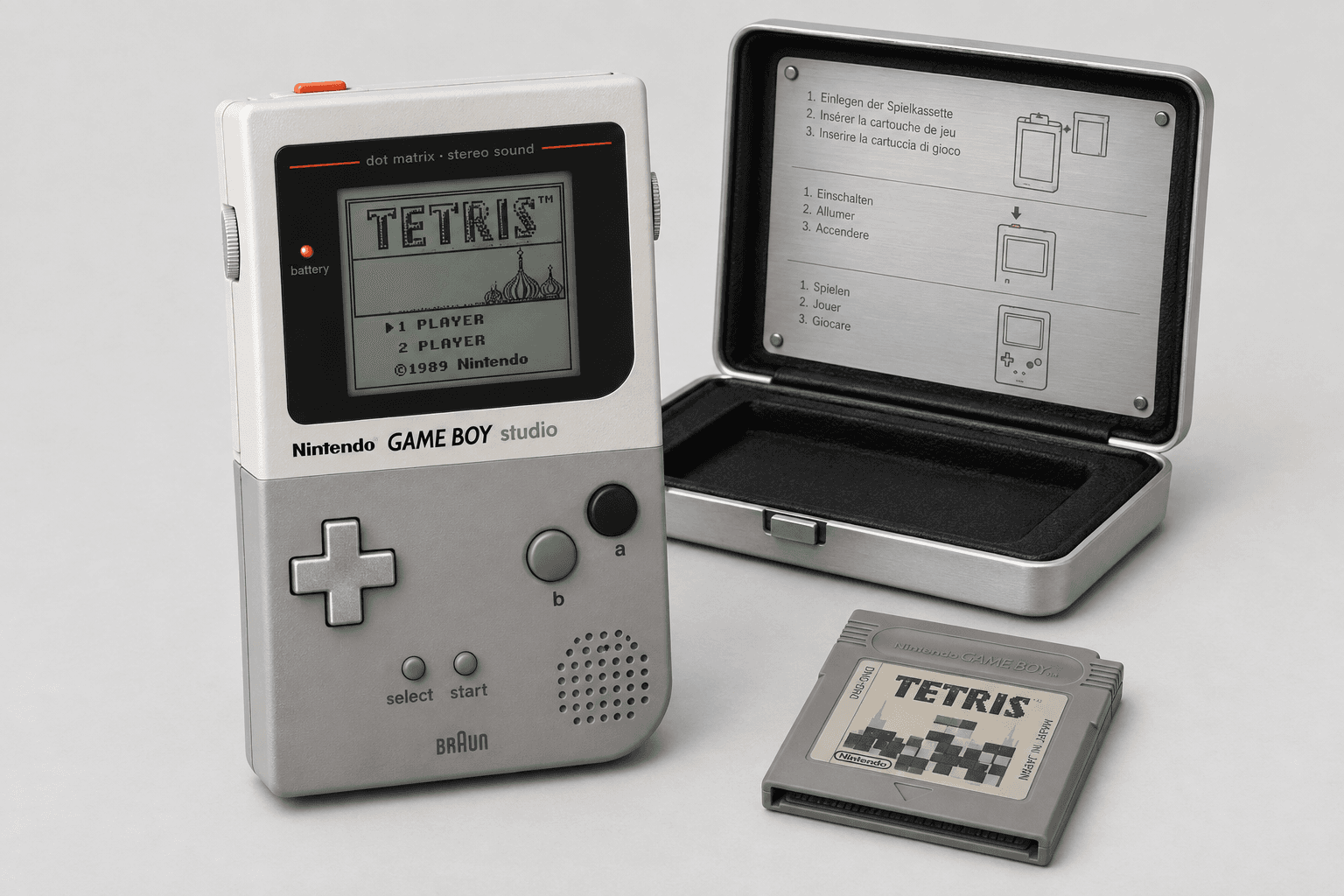
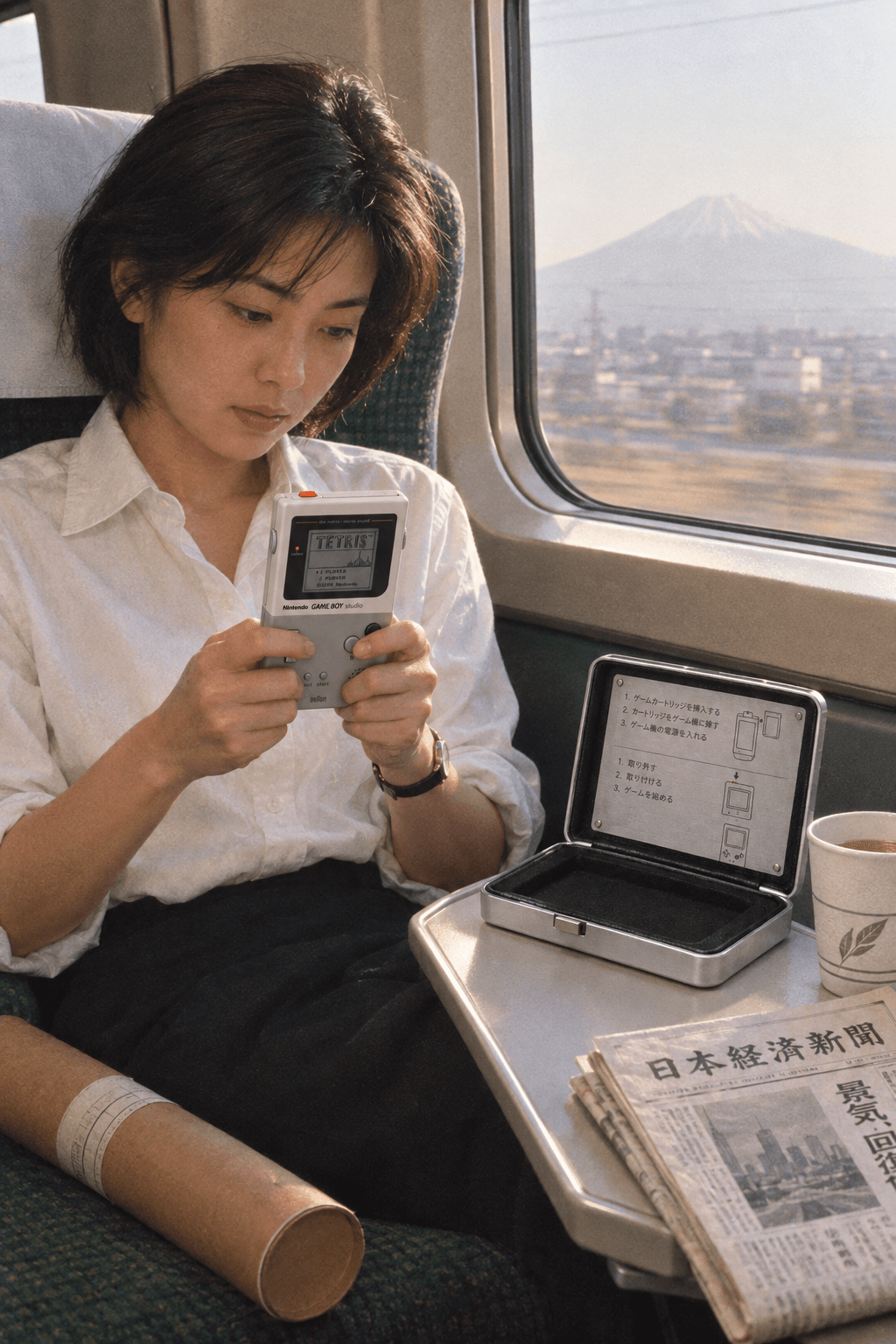
A Game Boy that could stand on an Atelier rack without apology and still take the Tetris cartridge your son left in the car.
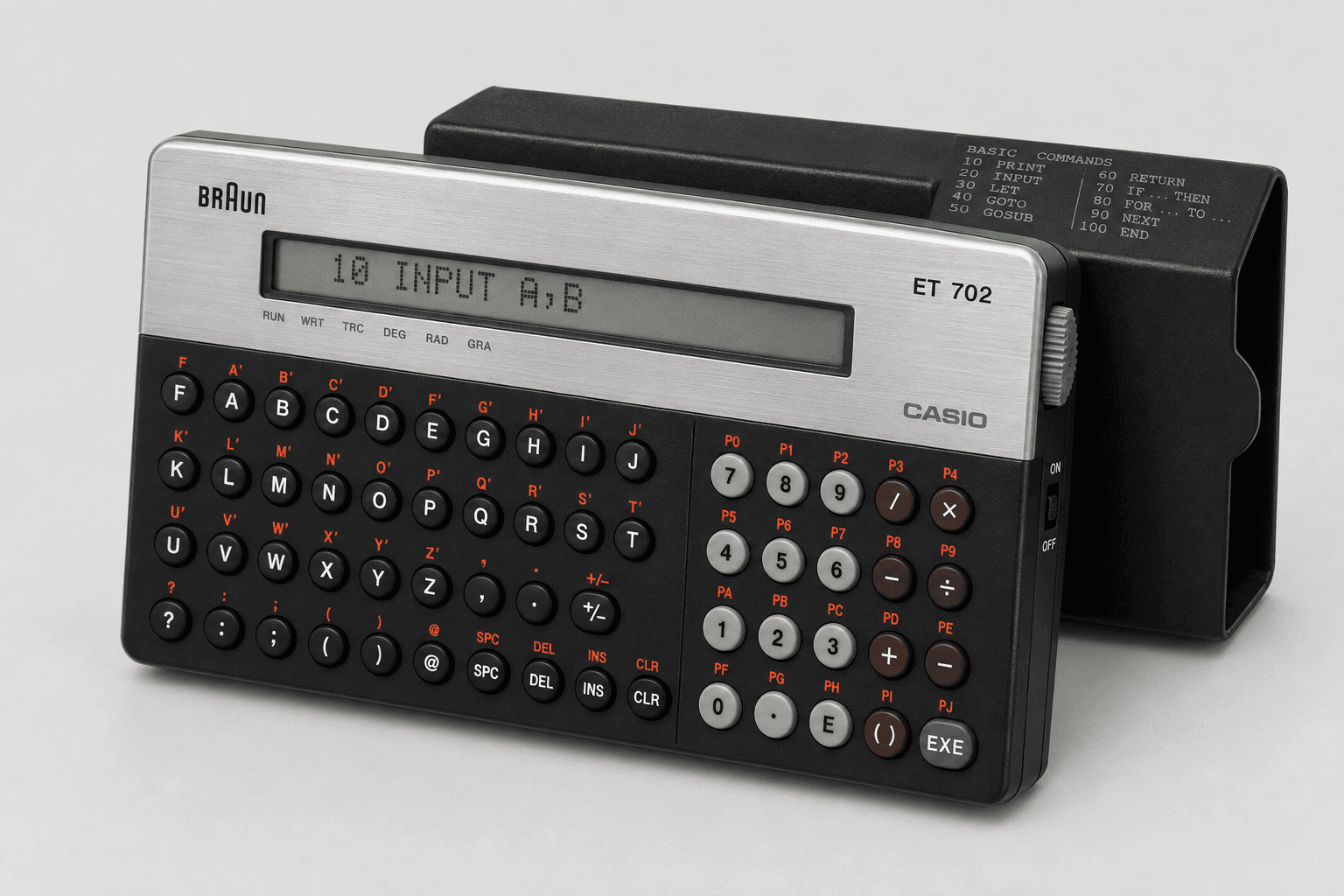
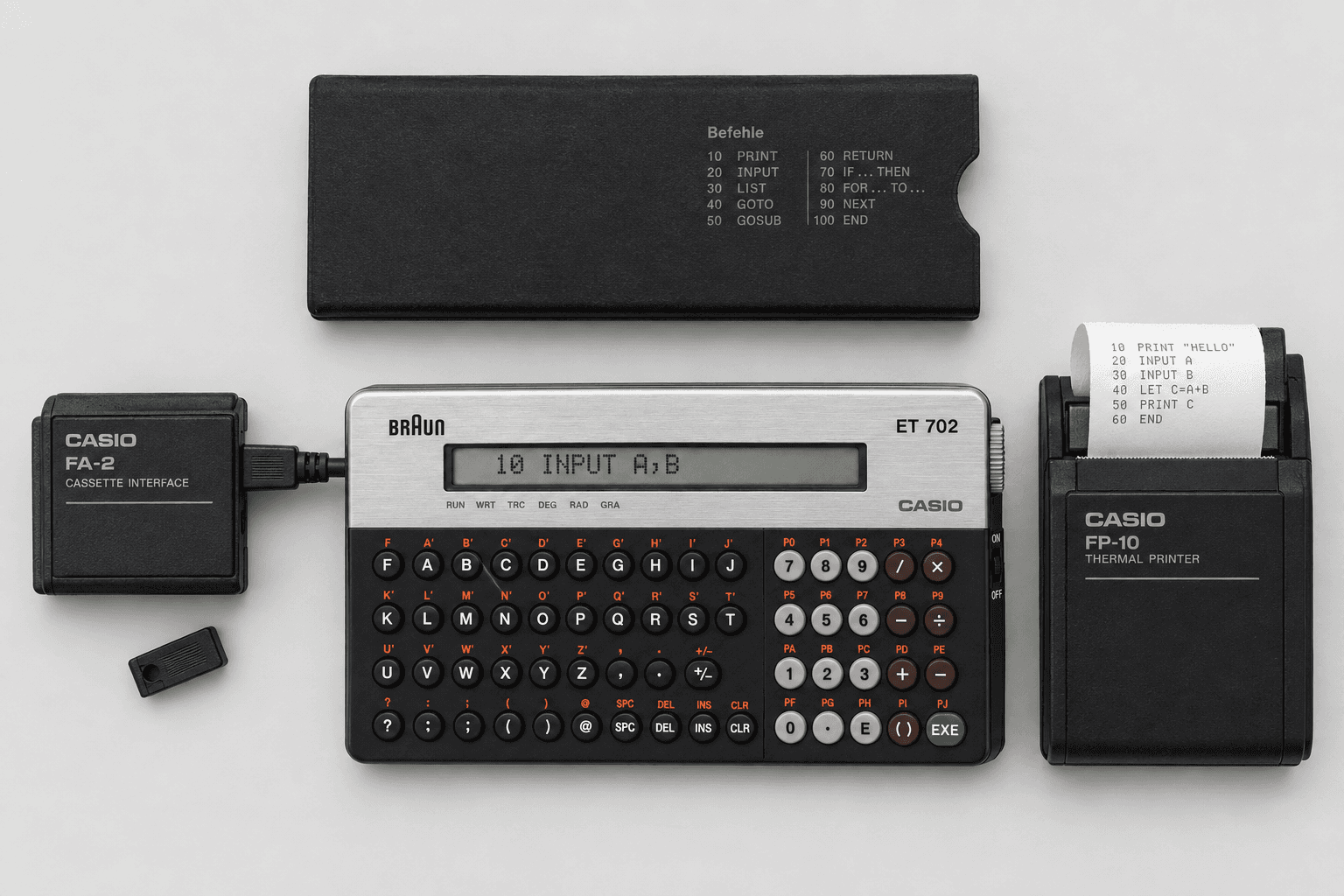
Announced August 28, 1990 at a press showing at Nintendo's headquarters in Kamitoba, Kyoto, the Game Boy studio was pitched as the Game Boy for fathers who had bought one for a child and not given it back. A dealer in Kyoto had shown Gunpei Yokoi an ET 66 calculator in 1988. Yokoi wrote to Kronberg to ask whether Braun would redraw his machine without changing how it held. Rams agreed on one condition: nothing on the face that did not do something. Yokoi replied that this already described the Game Boy, and the correspondence became friendlier.
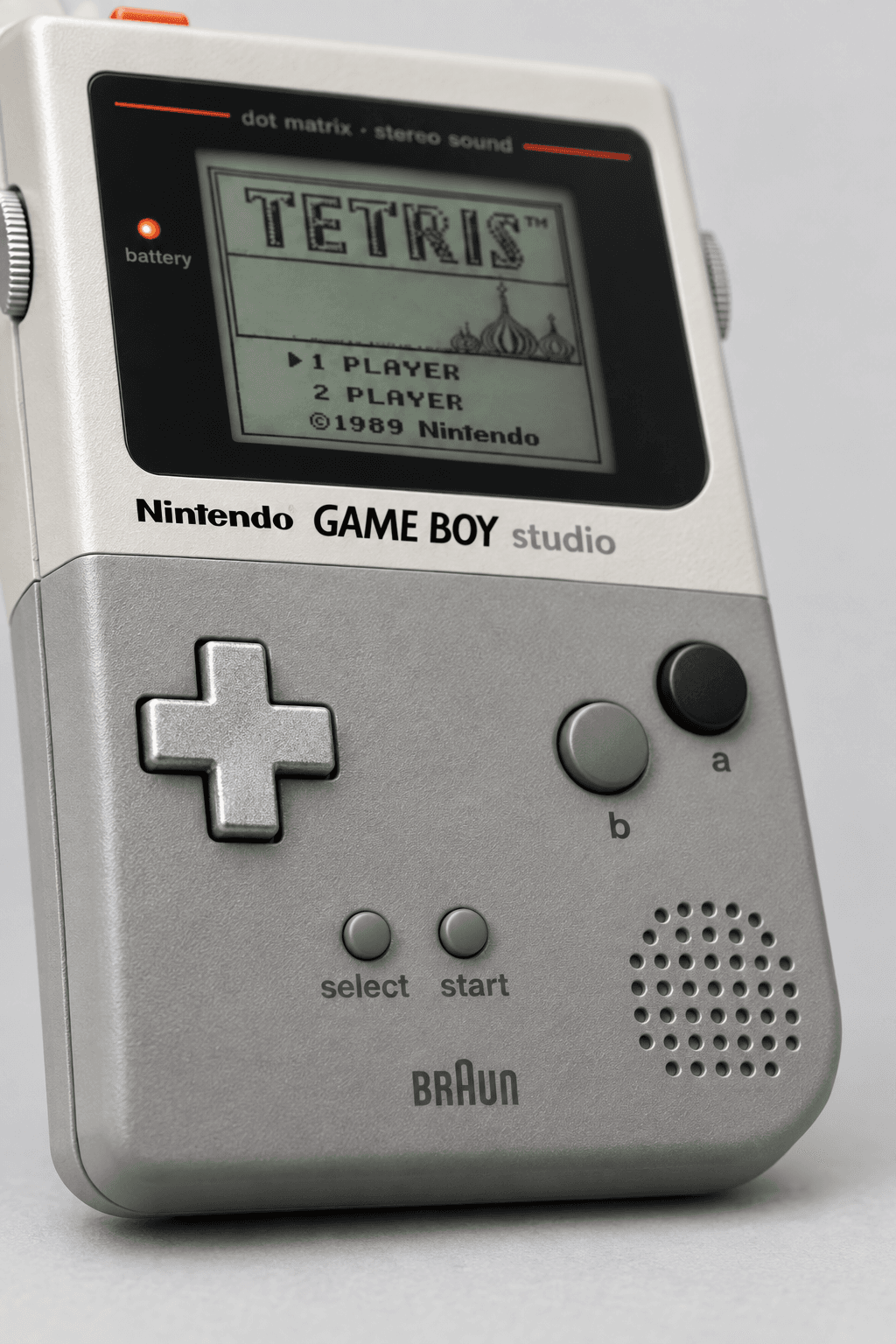
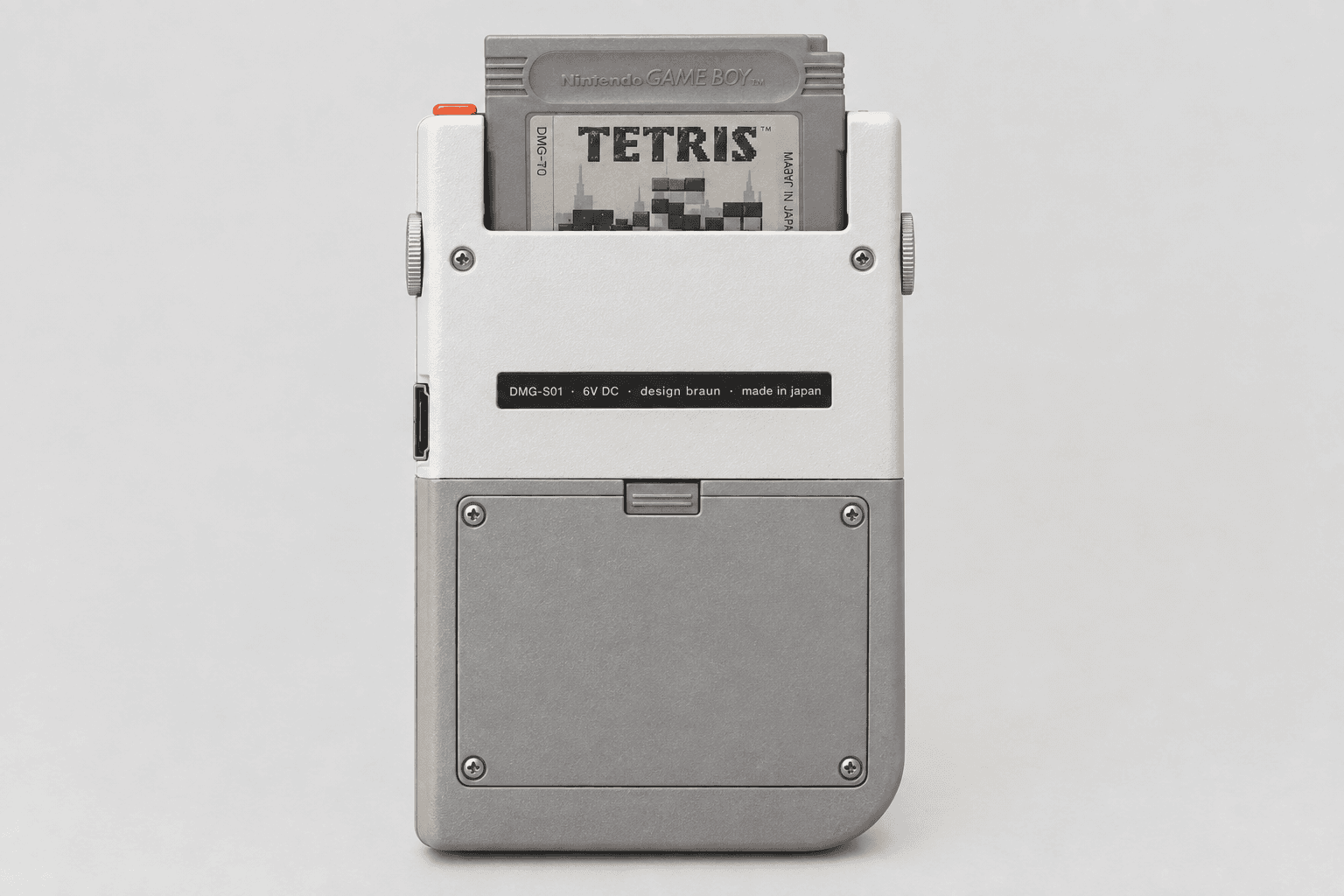
The package is Yokoi's. The screen, the rising A and B, the cross, the thumbwheels and the top-loading slot sit exactly where they do on the DMG-01, and Satoru Okada's circuit board is unchanged. The surface is Braun's. Off-white ABS sits above warm grey, split like an Atelier fascia. A and B are ET 66 keys, A in black and B in mid grey. Start and Select became small round keys, and Rams called the rubber pills 'erasers'. The cross is solid aluminium, turned and milled in Kronberg, then bead-blasted. The speaker is a T 3 circle of 37 holes. Lubs kept Yokoi's hairlines across the screen surround but reduced two colours to one orange-red rule. He also reset the old capitals as 'dot matrix · stereo sound'. Orange-red appears only on that rule, the battery lamp and the power slider.
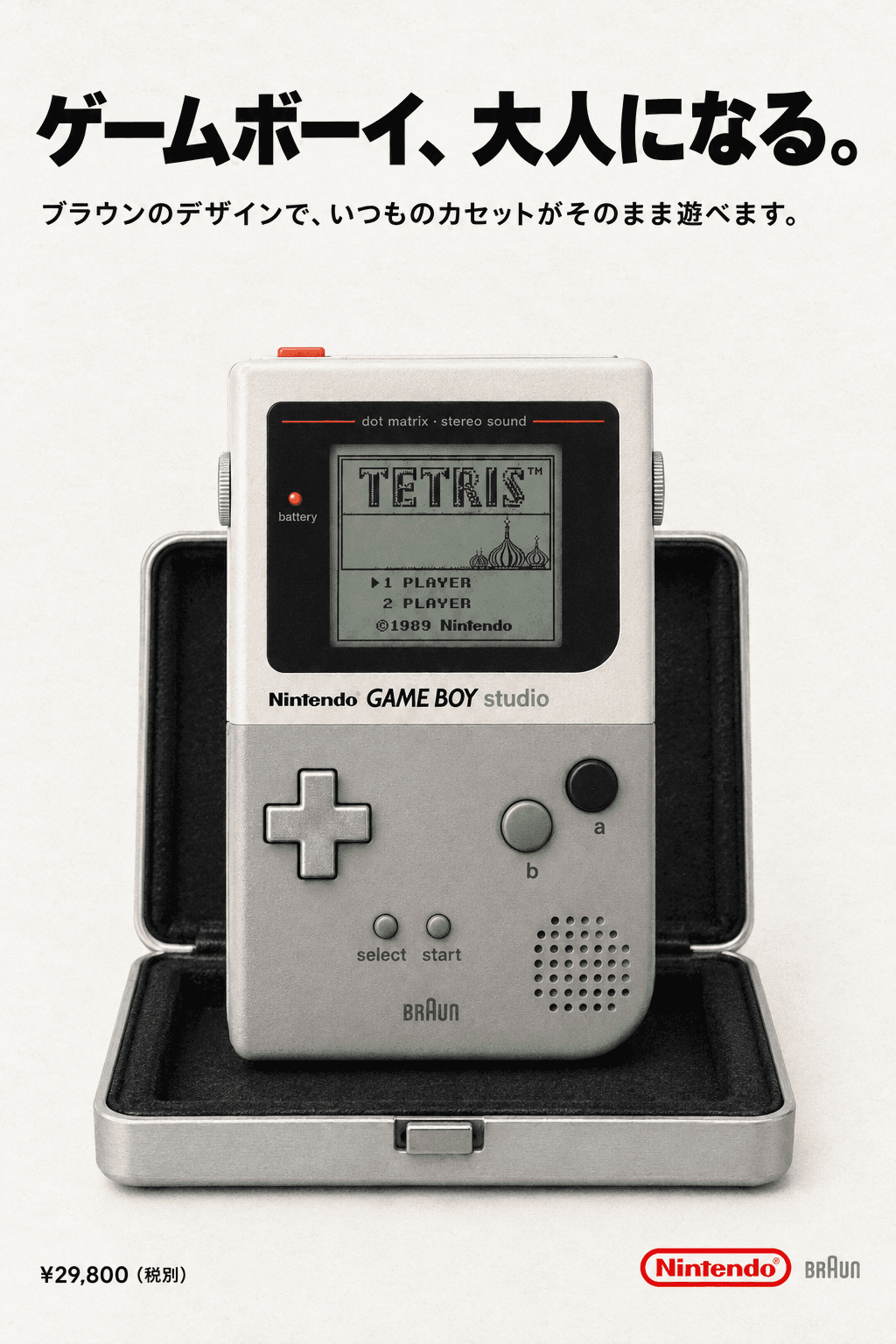
Sharp supplied a film-compensated STN panel showing black on pale grey. Rams considered it the only change that mattered, and Yokoi considered it the only one that cost money. The case is black calf over a brushed aluminium frame, made in Offenbach am Main. The inside of the lid carries the operating instructions in Japanese, German and English, printed on aluminium in the manner of the T 1000. Brutus called it the first toy you could take into a meeting. Famicom Tsūshin praised the screen and complained that the aluminium cross was cold in January.
The oddest detail is the cartridge. Standard Game Boy cartridges were moulded in the DMG's cool grey, and Rams objected that one looked like a repair when it stood in the warm grey body. Tetris in Japan belonged to Bullet-Proof Software, so Henk Rogers was persuaded to authorise a special run. It was moulded in the lower-body grey, with a white label reading 'tetris' in Akzidenz. It is the only Game Boy cartridge of the period with a lowercase title, and Rogers is said to have kept four.