No. 023 · 21 September 2026
MUJI × Nintendo
Game Boy Kinari, handheld games console, 1994
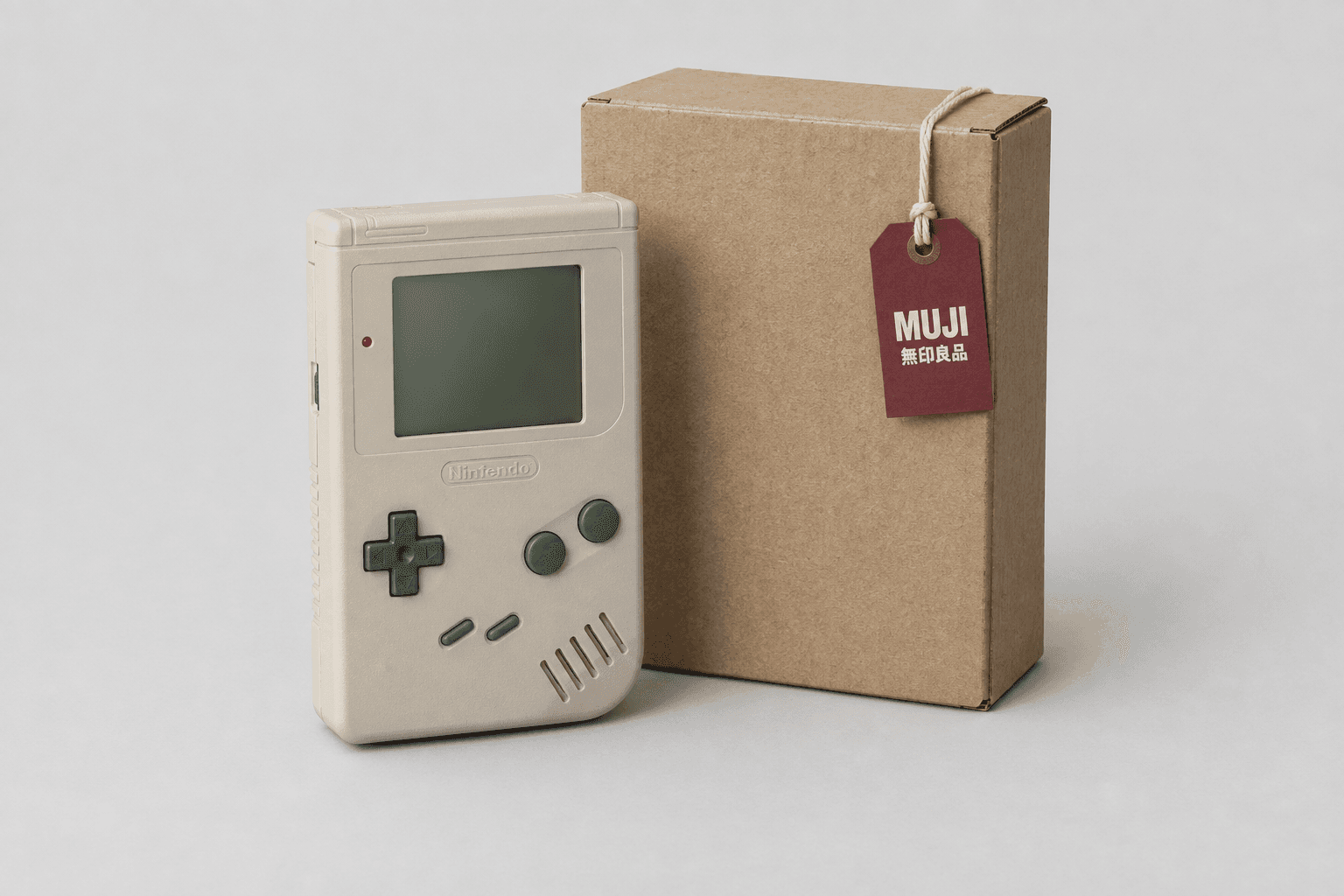
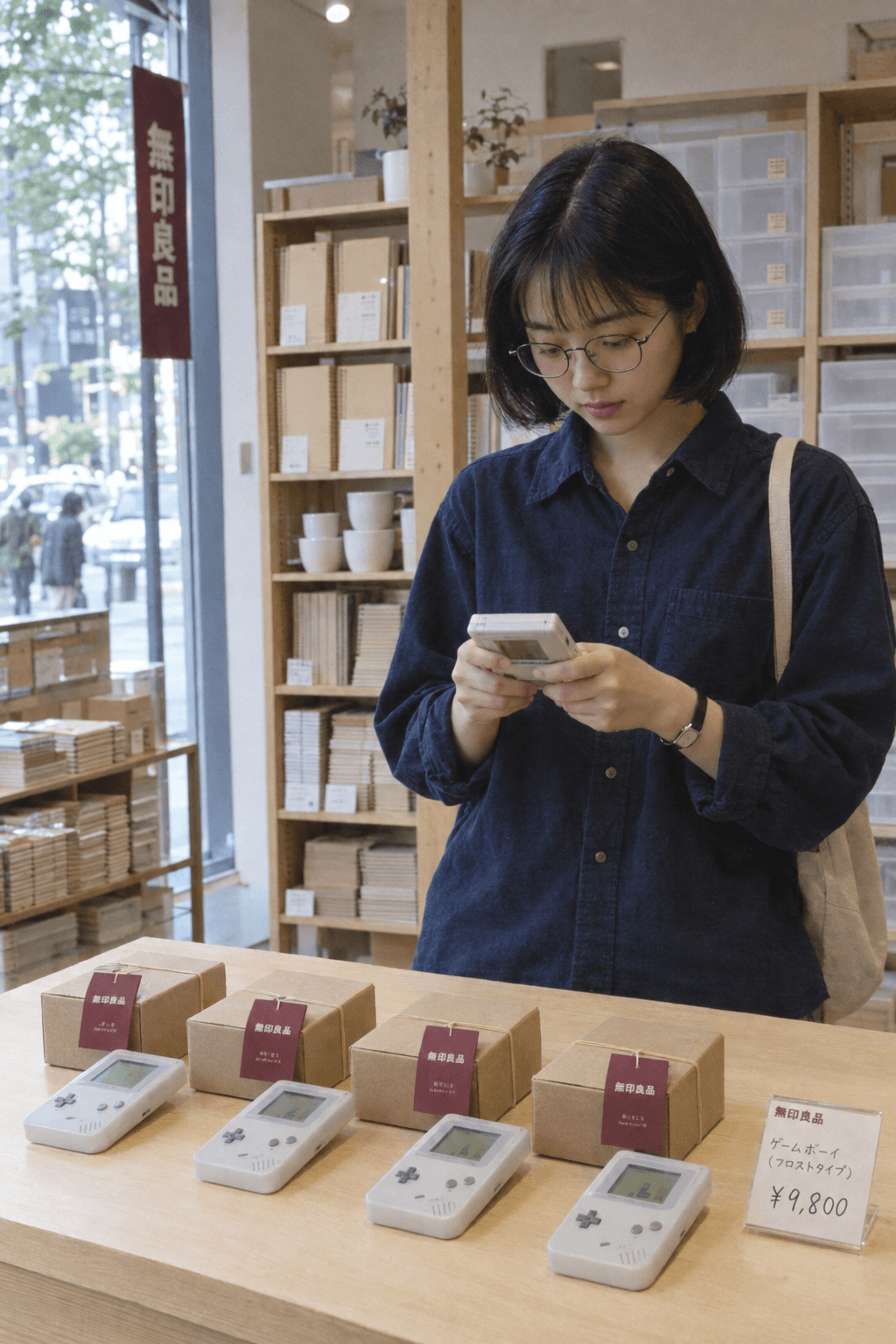
A Game Boy with the paint, the slogan and the purple taken away, sold next to the notebooks at the same price as a good pair of shoes.
Announced October 14, 1994, at the MUJI store in Aoyama, the Game Boy Kinari was Ryohin Keikaku's first piece of consumer electronics and Nintendo's first licensed hardware sold outside a toy shop. The brief came from MUJI's advisory board, Ikko Tanaka and Kazuko Koike, who asked Nintendo a single question: what is left of a Game Boy if you remove everything that is there to sell it? Gunpei Yokoi's R&D1 team answered with the original DMG-01 tooling, altered as little as the moulds would allow.
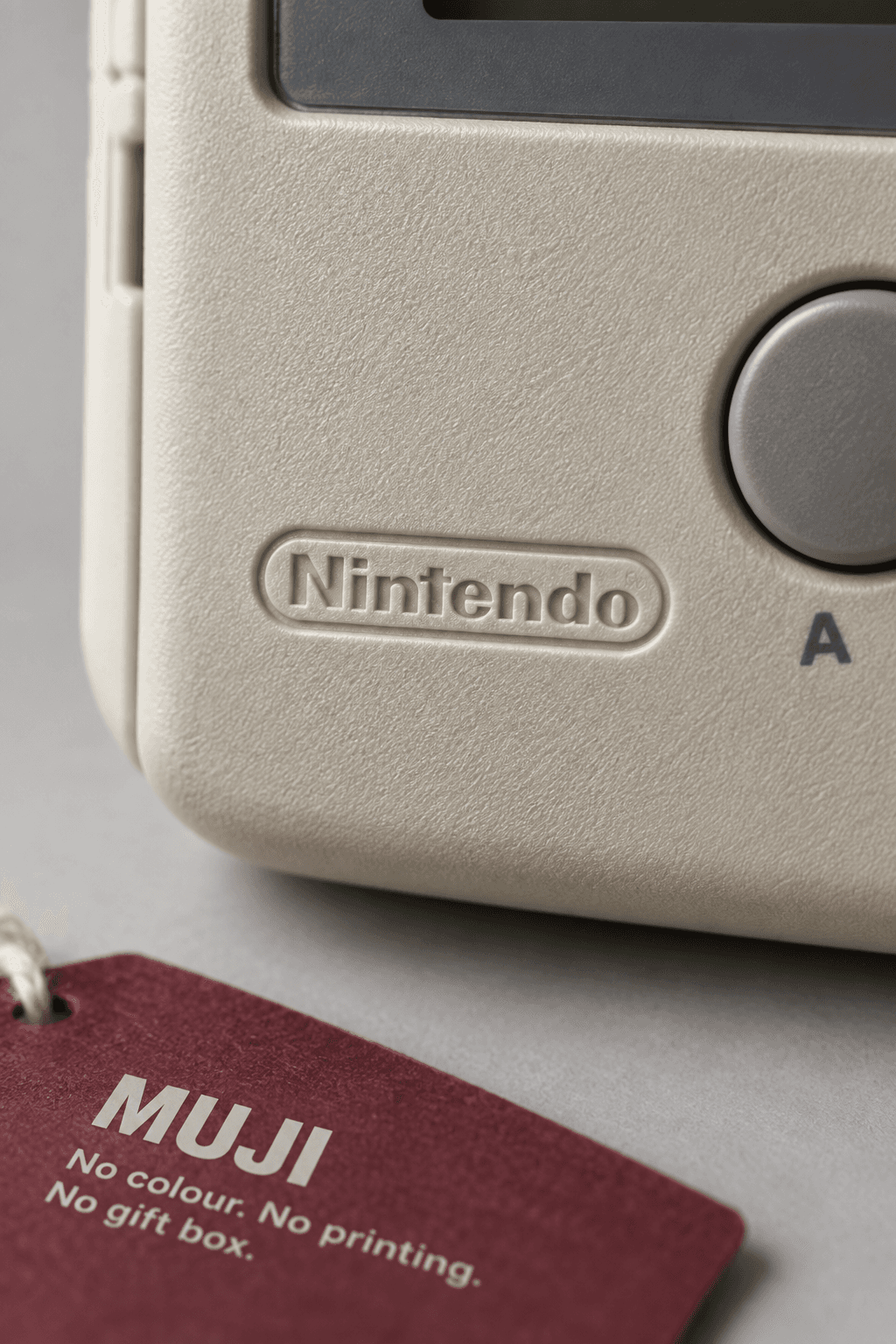
The shell was moulded in a frosted, lightly textured ABS in MUJI's unbleached kinari tone, close to the colour of the brand's recycled paper. The printed legend 'DOT MATRIX WITH STEREO SOUND', the coloured stripes around the screen and the magenta A and B buttons were all dropped. The screen surround was left in the same plastic as the body, and the buttons were moulded in a slightly darker warm grey. The Nintendo name survived only as a tone-on-tone emboss below the screen; MUJI appeared nowhere on the product at all, only on the burgundy paper tag tied to the box.
Packaging followed MUJI's rules to the letter: an unprinted corrugated box, a folded kraft-paper manual in Japanese, a single elastic band, and four AA batteries in a paper sleeve. The in-store tag listed the usual 'reasons for low price', which in this case read, in full, 'No colour. No printing. No gift box.' Tetris was offered alongside it in a frosted polypropylene cartridge sleeve, the same material as MUJI's desk drawers.
Sales were steady rather than dramatic. Game shops were baffled, design magazines were not, and Axis ran it on the cover of its winter issue beside a Tanaka poster. Liberty in London took a small allocation in 1995 at £69.99, where it was reportedly bought mainly by architects who did not own a single game.