No. 132 · 1 November 2026
Louis Poulsen × Carl Zeiss
VP Himmel, pendant lamp and planetarium, 1970
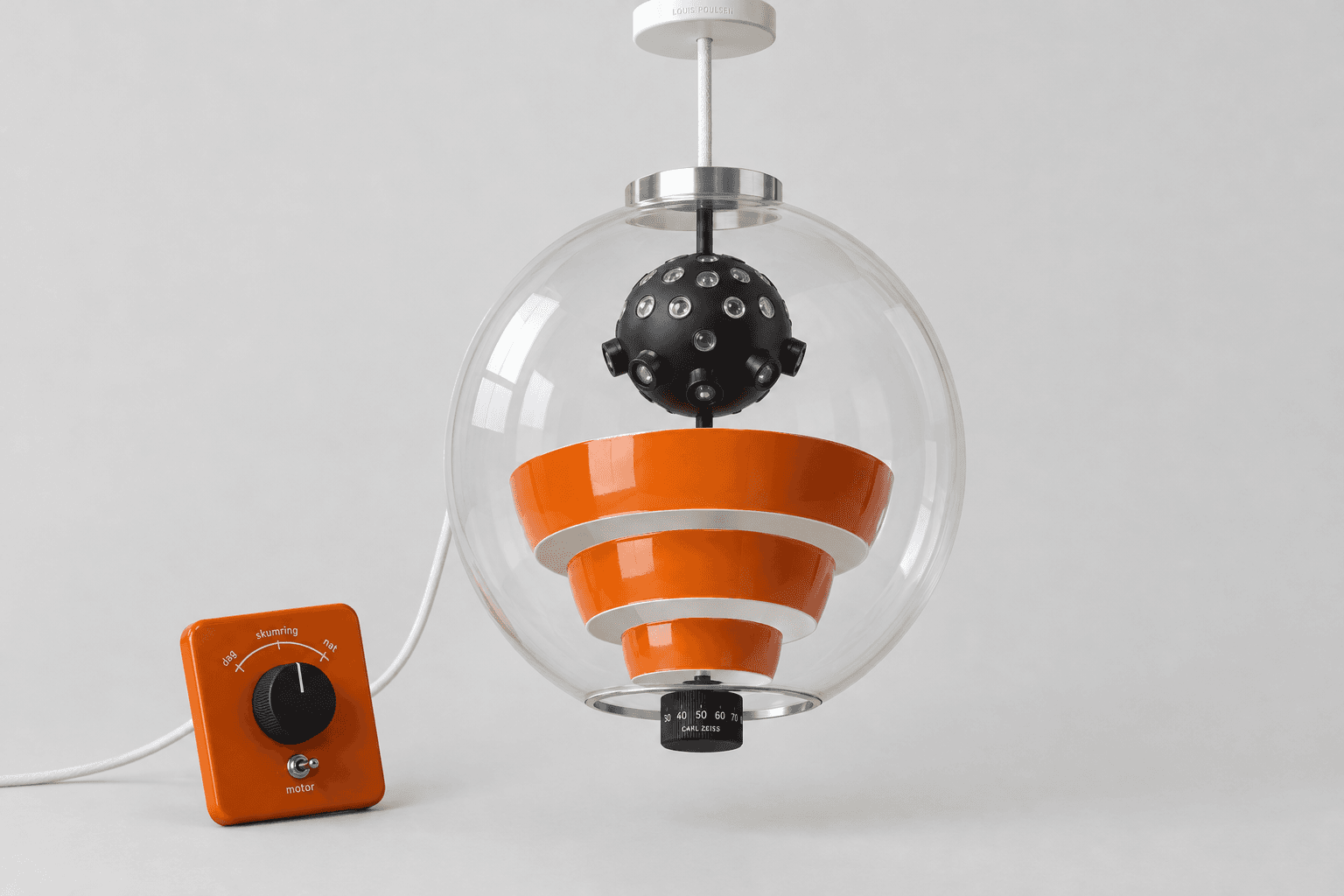
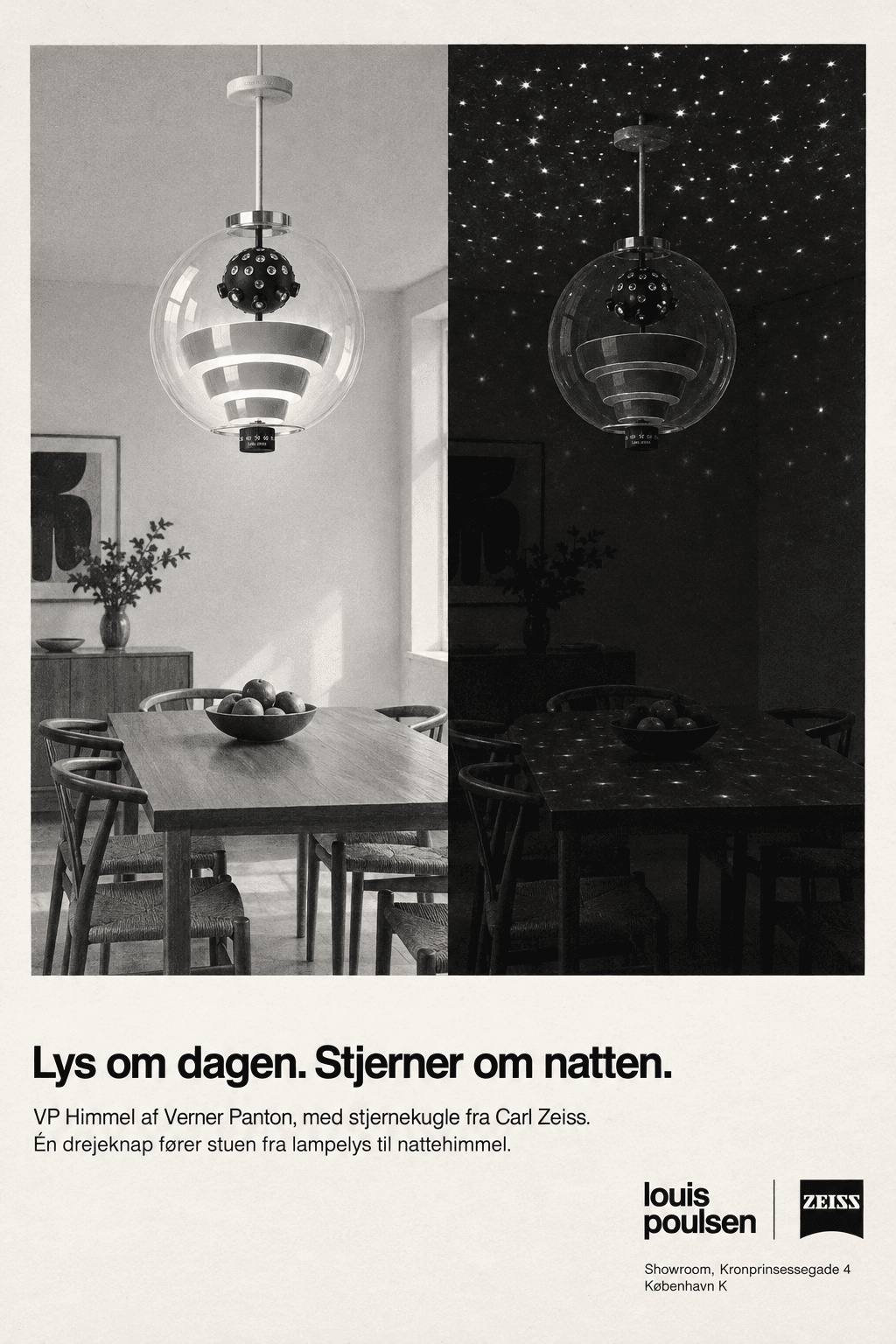
One dial turns down the reading light and turns up 2,100 stars, so the room goes dark the way the sky does.
Announced January 20, 1970 at the Internationale Möbelmesse in Cologne, the same week Panton's Visiona 2 interior for Bayer filled a Rhine boat with foam and colour. The VP Himmel hung on the Louis Poulsen stand and was switched over to night every twenty minutes, at which point the hall lights on that side were dimmed by arrangement with the fair management, who asked that it not happen during the opening speeches.
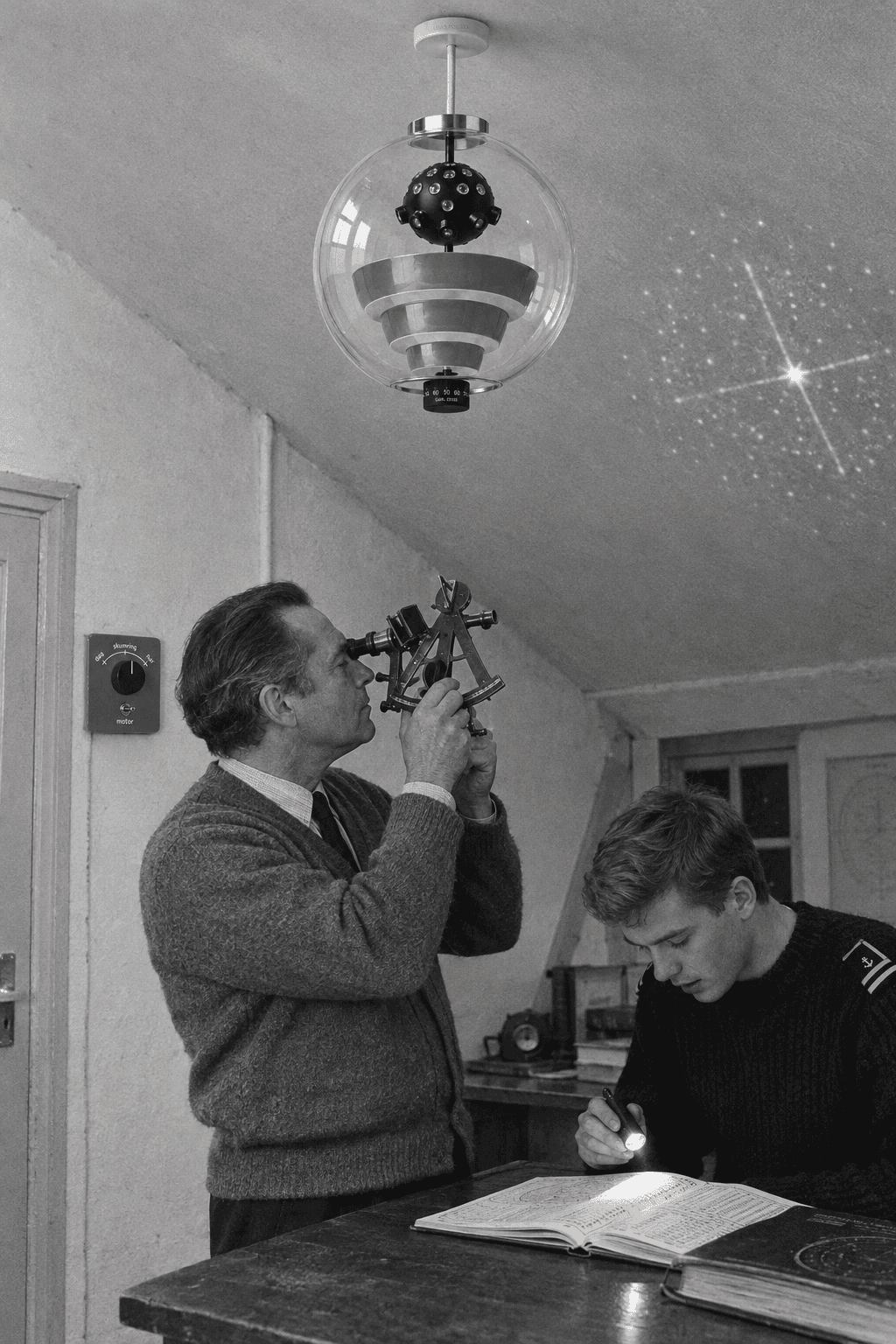
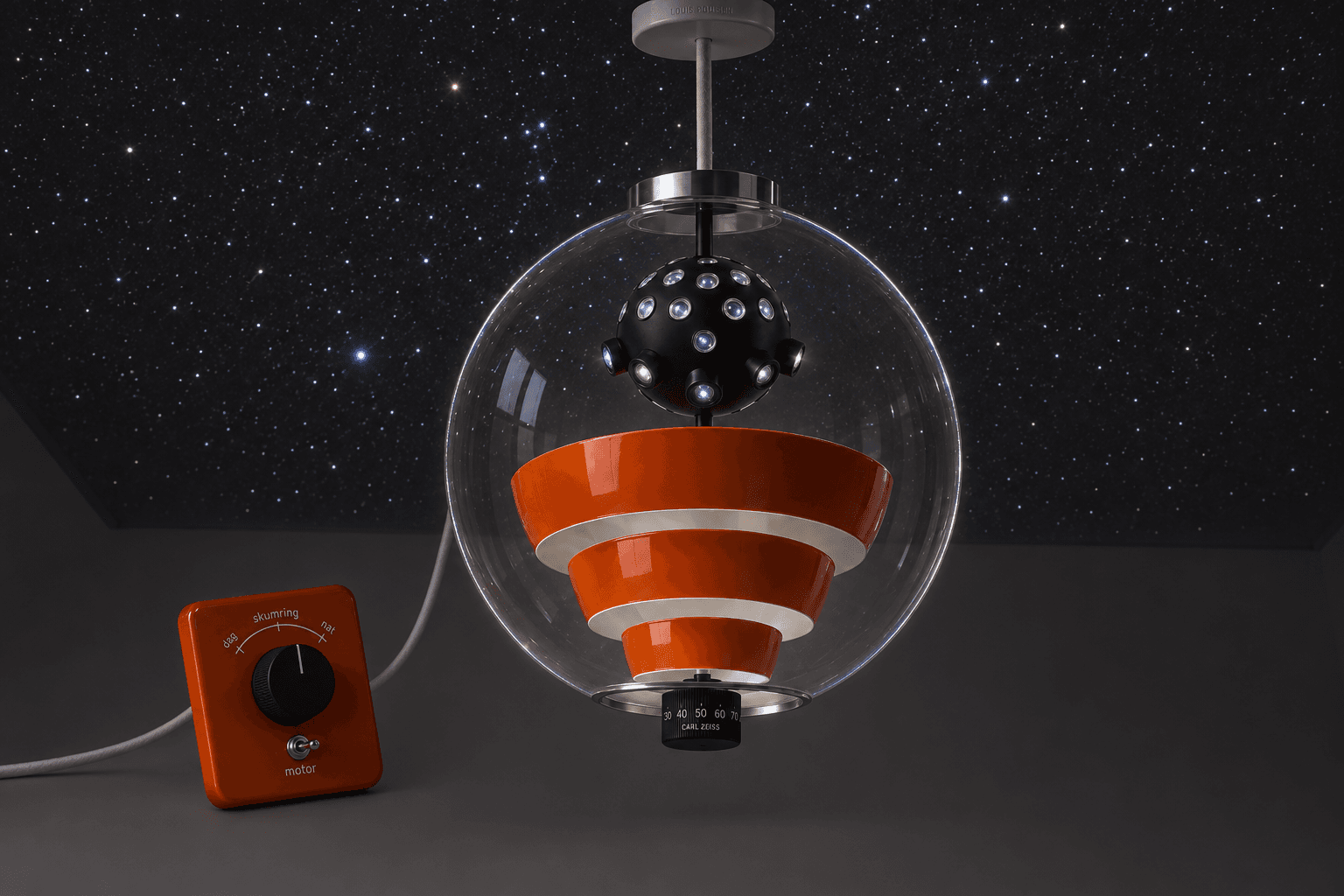
Panton visited the Hamburg Planetarium in the summer of 1969, weeks before Apollo 11, and wrote to Oberkochen asking whether a star sphere could be made small enough to live inside a lamp. The planetarium division replied that it could, provided it was done their way: twenty small field projectors with photographic star plates and eight lenses for the brightest stars, packed into an 18 cm sphere. Zeiss also asked that the sphere sit at the exact centre of the acrylic globe, so every beam would cross the shell squarely and the constellations would not bend. Panton moved his reflectors below it, opening downward, which is where Henningsen would have put them anyway.
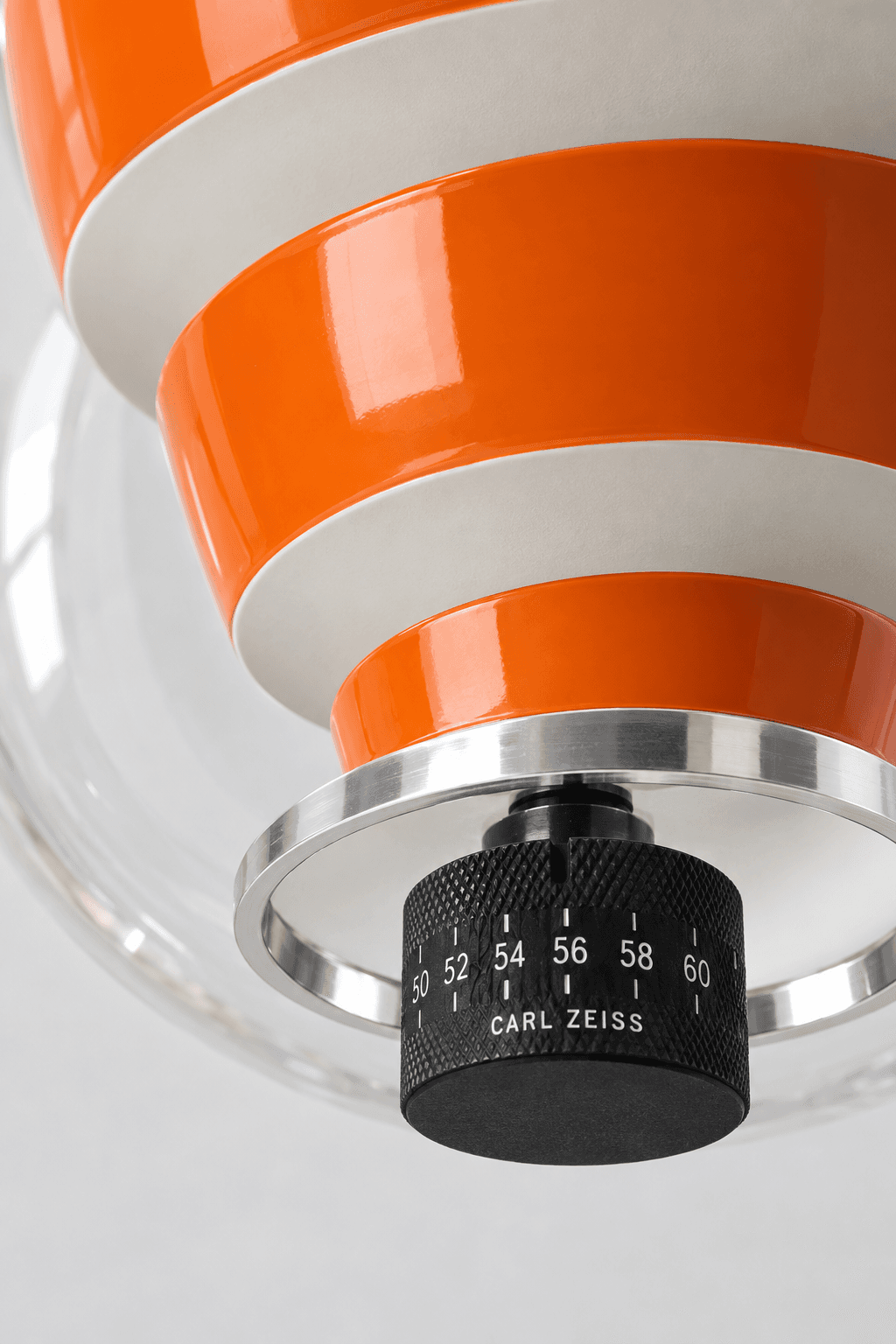
The wall plate carries one knurled dial engraved dag, skumring and nat. Turned clockwise, it fades the 150 W reading light down and the star lamp up through the same arc, so the room passes through dusk rather than switching off. Latitude is set by a black knurled knob hanging below the reflectors, which also stops anyone seeing the bulb from beneath. It clicks in whole degrees from 30 to 70 north, with firmer detents at 56 and 49. The instruction leaflet notes that Copenhagen is strictly 55 degrees 40 minutes and asks owners there to accept 56.
Mobilia gave it eight pages in its March issue and photographed it in a whitewashed Jutland farmhouse. The Zeiss engineers insisted on one detail Panton first resisted and later defended in interviews: the Sirius lens carries a faint blue filter and the Betelgeuse lens a faint amber one, so a white ceiling shows the same difference as a clear January night.