No. 125 · 17 October 2026
Kenwood × Black & Decker
Workshop Chef A790, bench power unit, 1962
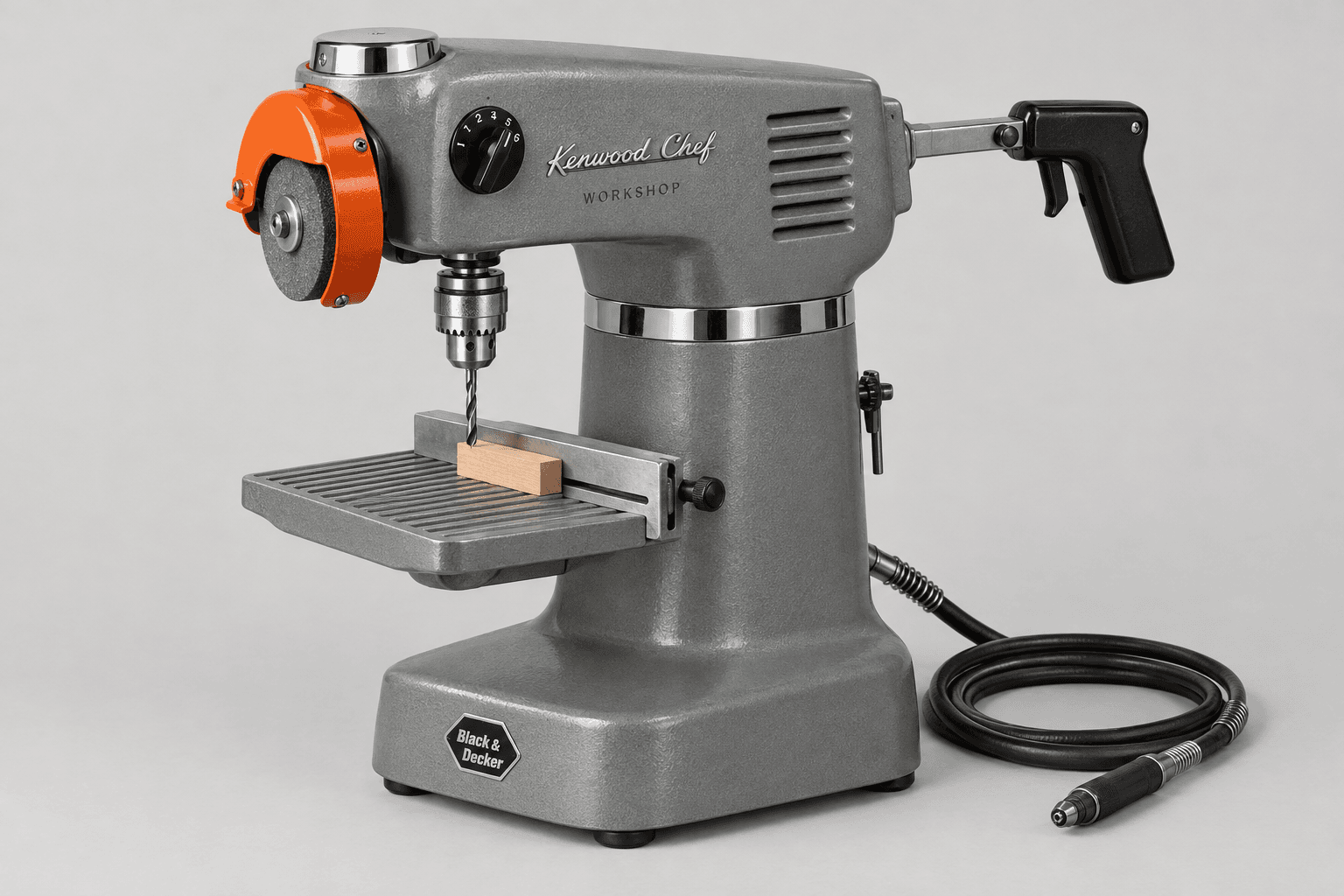
A Kenwood Chef that drills, grinds and polishes, with outlets machined so that nothing from the kitchen will fit it.
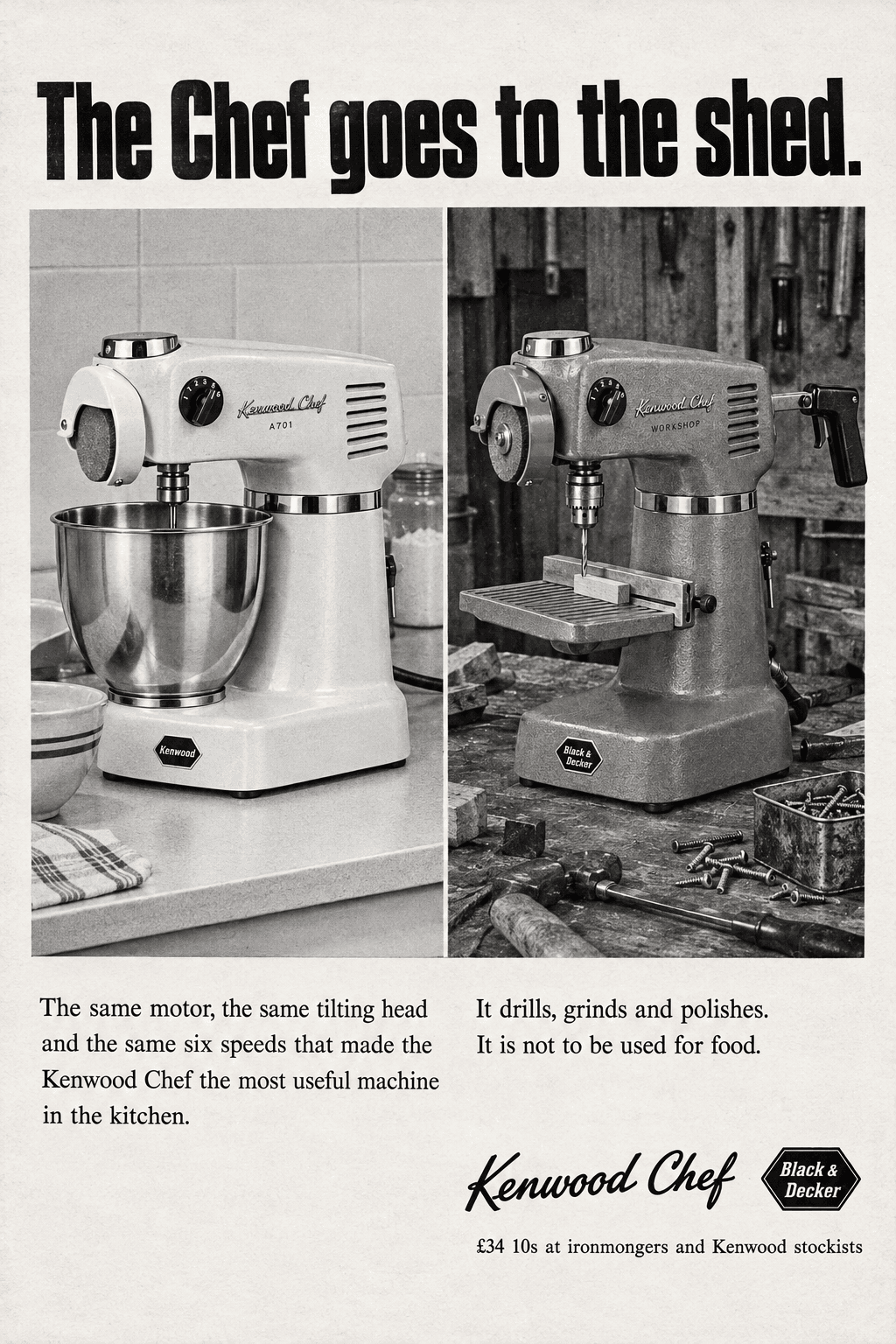
Announced March 6, 1962, on a stand at the Ideal Home Exhibition at Olympia split down the middle: a fitted kitchen on the left, a shed bench on the right, the same grey machine on the dividing line. Kenneth Wood had noticed that Black & Decker sold the British amateur one motor and a box of attachments, which was precisely what Kenwood sold his wife, and asked Kenneth Grange to draw a Chef for the other end of the garden.
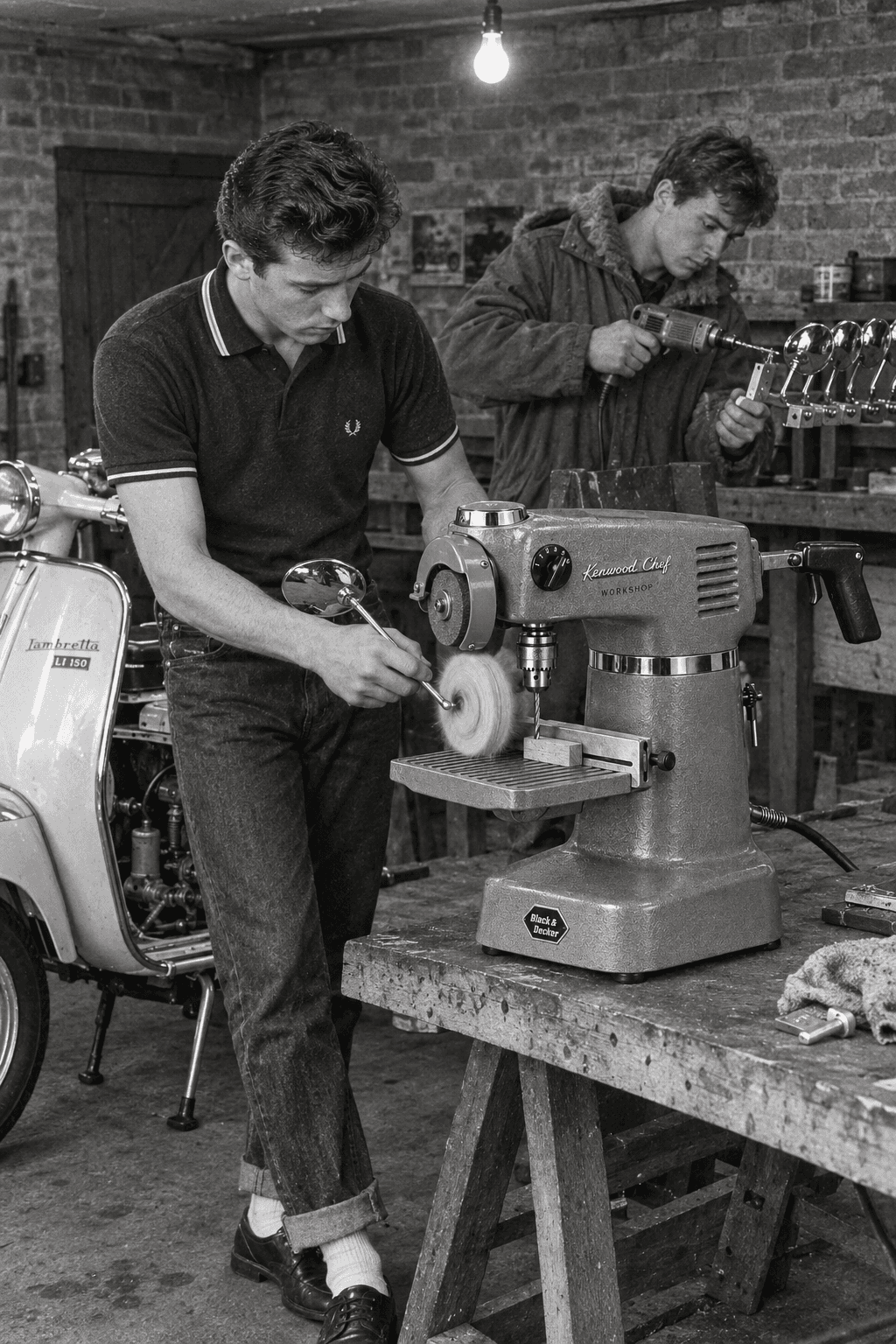
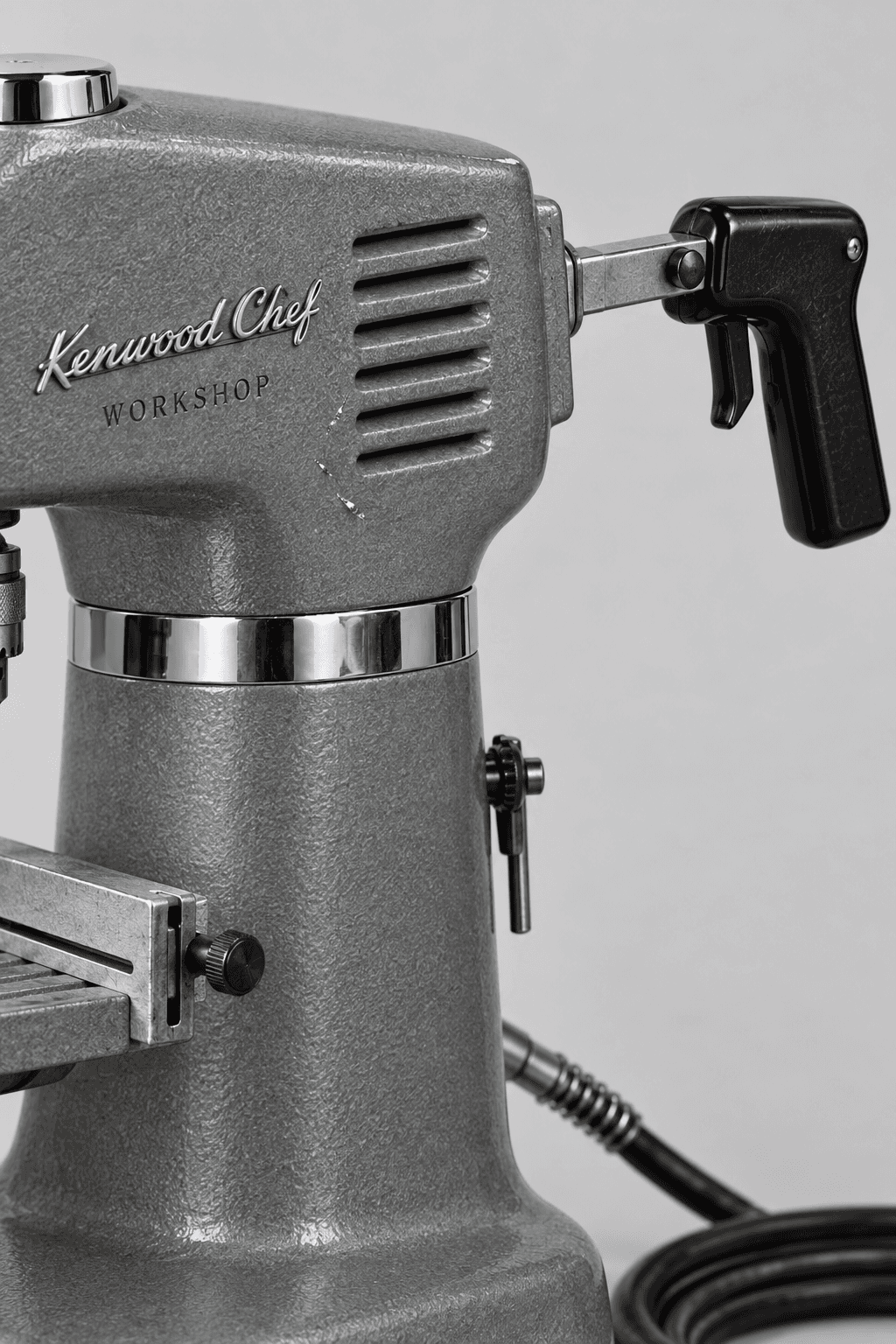
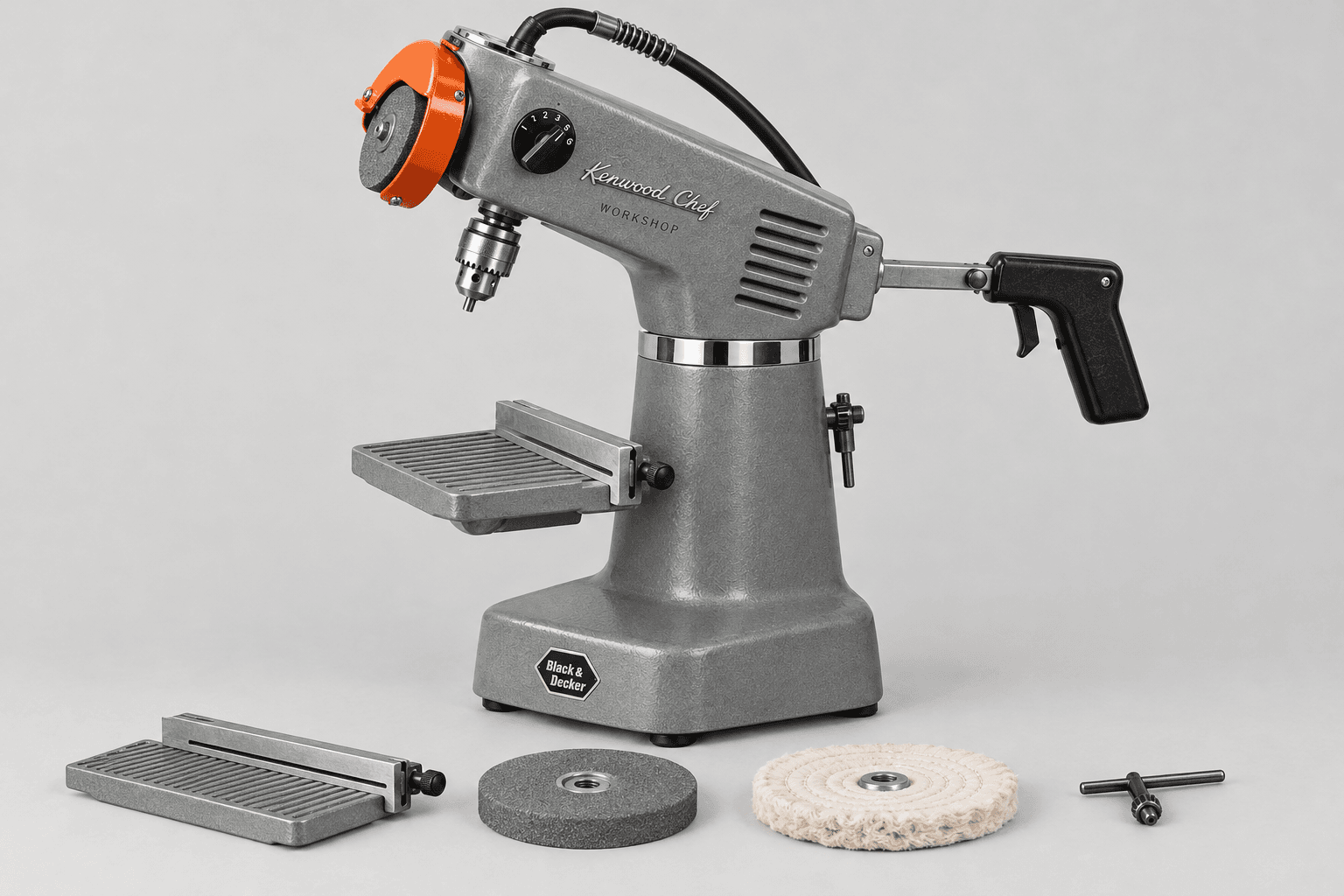
Grange kept the A701's flat sides, rear hinge and chrome waist band almost line for line, and let Black & Decker have everything a hand would touch while drilling. The bowl became a ribbed cast work table, the planetary drive became a vertical spindle with a three-eighths Jacobs chuck, and the feed lever became a Black & Decker pistol grip on a steel arm: pull it down and the quill descends two inches, let go of the trigger and the motor stops. A lock-on button beside the trigger kept it running for grinding. Harmondsworth supplied the windings, the chuck and the louvres along the head, and insisted on hammer-grey enamel because white shows every speck of swarf.
The front and top outlets were bored a sixteenth of an inch larger than the domestic Chef's, so that no liquidiser could be fitted to it and no grinding wheel to the one in the kitchen. The service manual covered the matter in one sentence that went round the trade for years: 'The Workshop Chef is not to be used for food.'
The instruction leaflet was set in the same layout as the Chef recipe book, which is how Recipe 1 came to be 'A quarter-inch hole in seasoned beech'. Practical Householder called the machine 'the first power tool you would leave out when the vicar calls', and owners who tilted the head to change a bit reported doing it with exactly the gesture they used to scrape down a cake bowl.