No. 129 · 21 October 2026
Herman Miller × Kodak
EPT-1, slide projection table, 1963
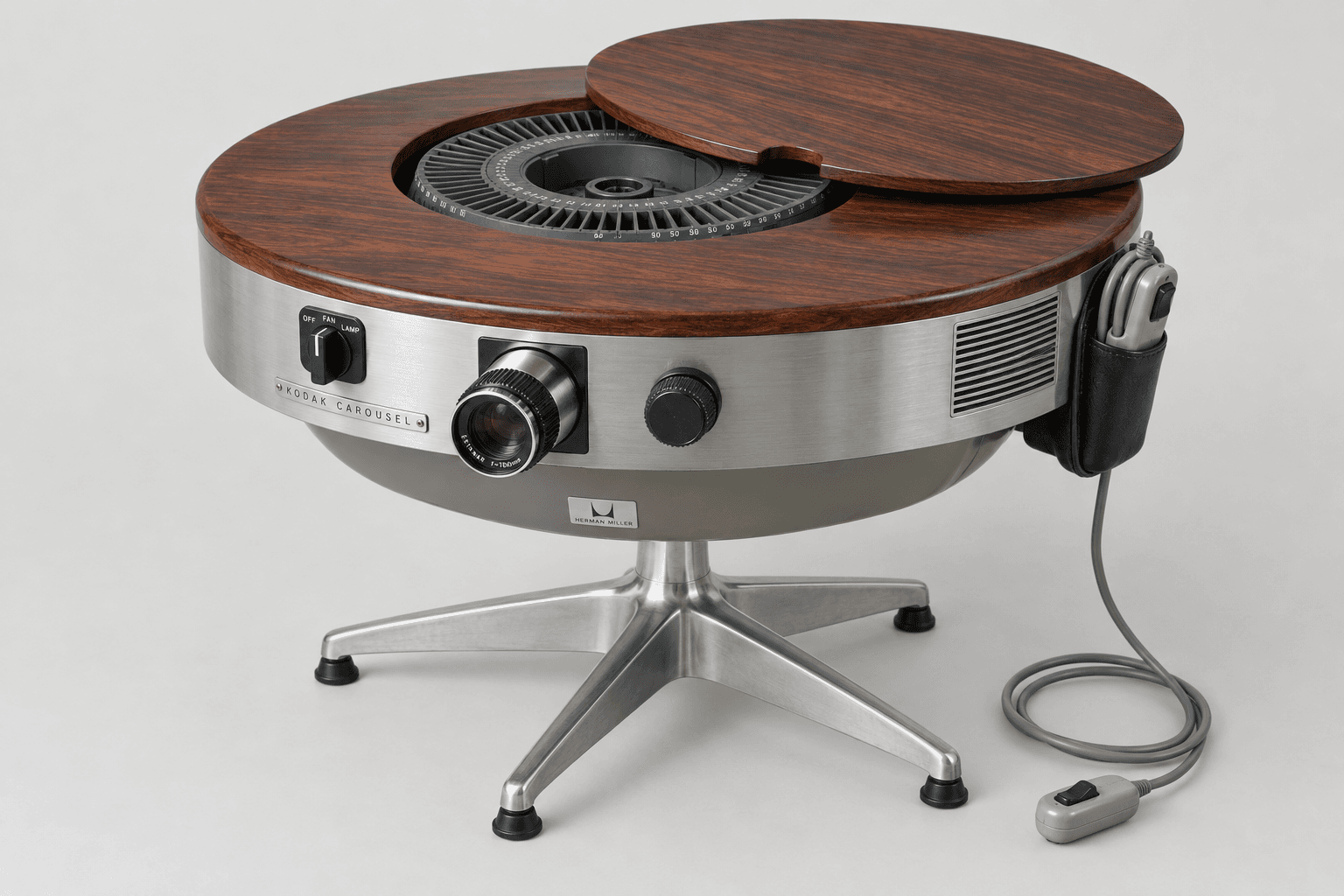
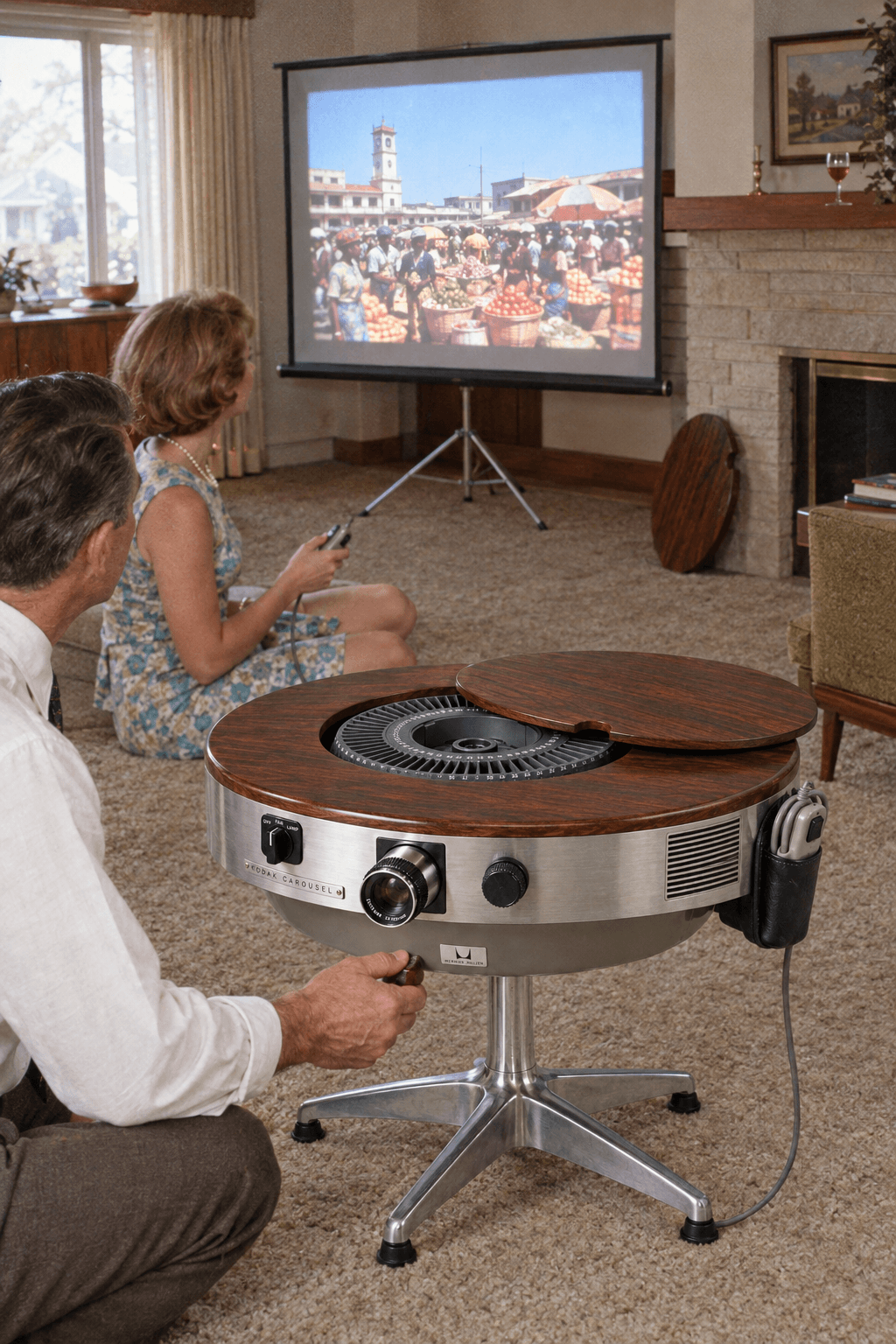
A rosewood side table whose aluminium apron is a Carousel projector, so the slide show starts where the lamp and the ashtray usually stand.
Announced June 17, 1963 at the Herman Miller showroom in the Merchandise Mart, Chicago, the EPT-1 came out of a complaint Charles Eames had been making for years: that the slide show was the most important domestic medium of the age and was always staged on a card table between two dining chairs. Hugh De Pree, president of Herman Miller since the previous year, agreed to fund a prototype if Kodak would supply the mechanism. Rochester sent David E. Hansen, who had invented the Carousel two years earlier.
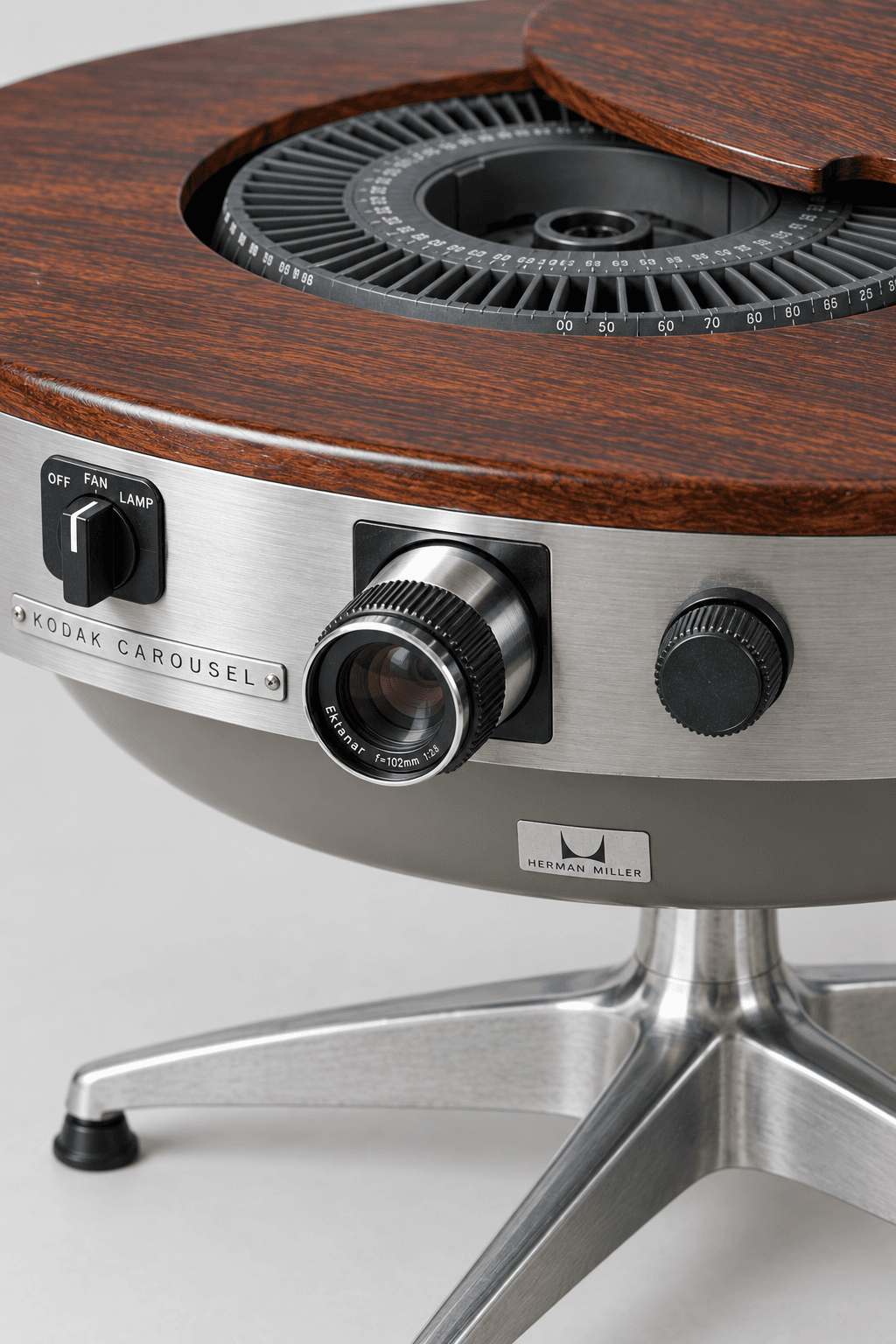
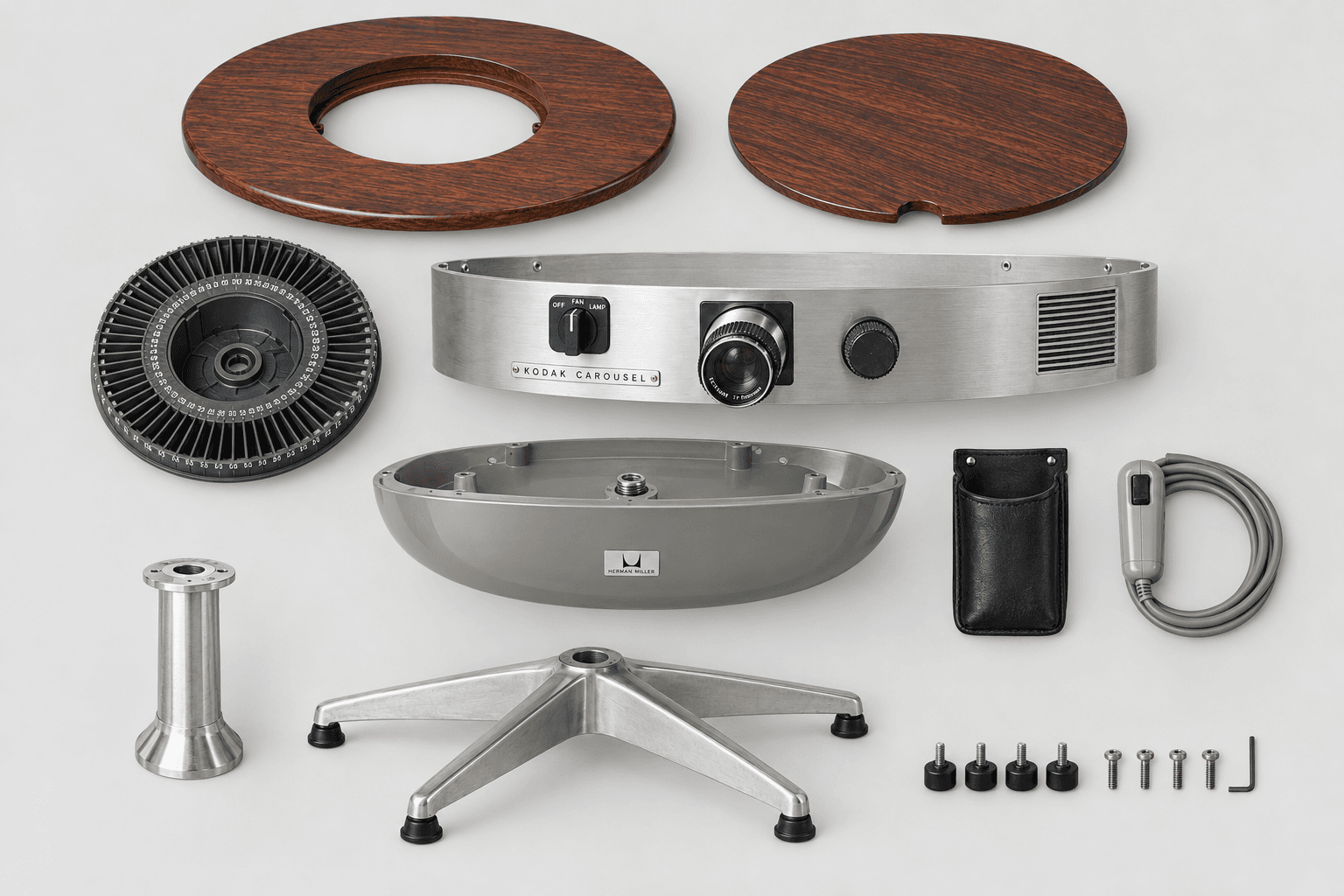
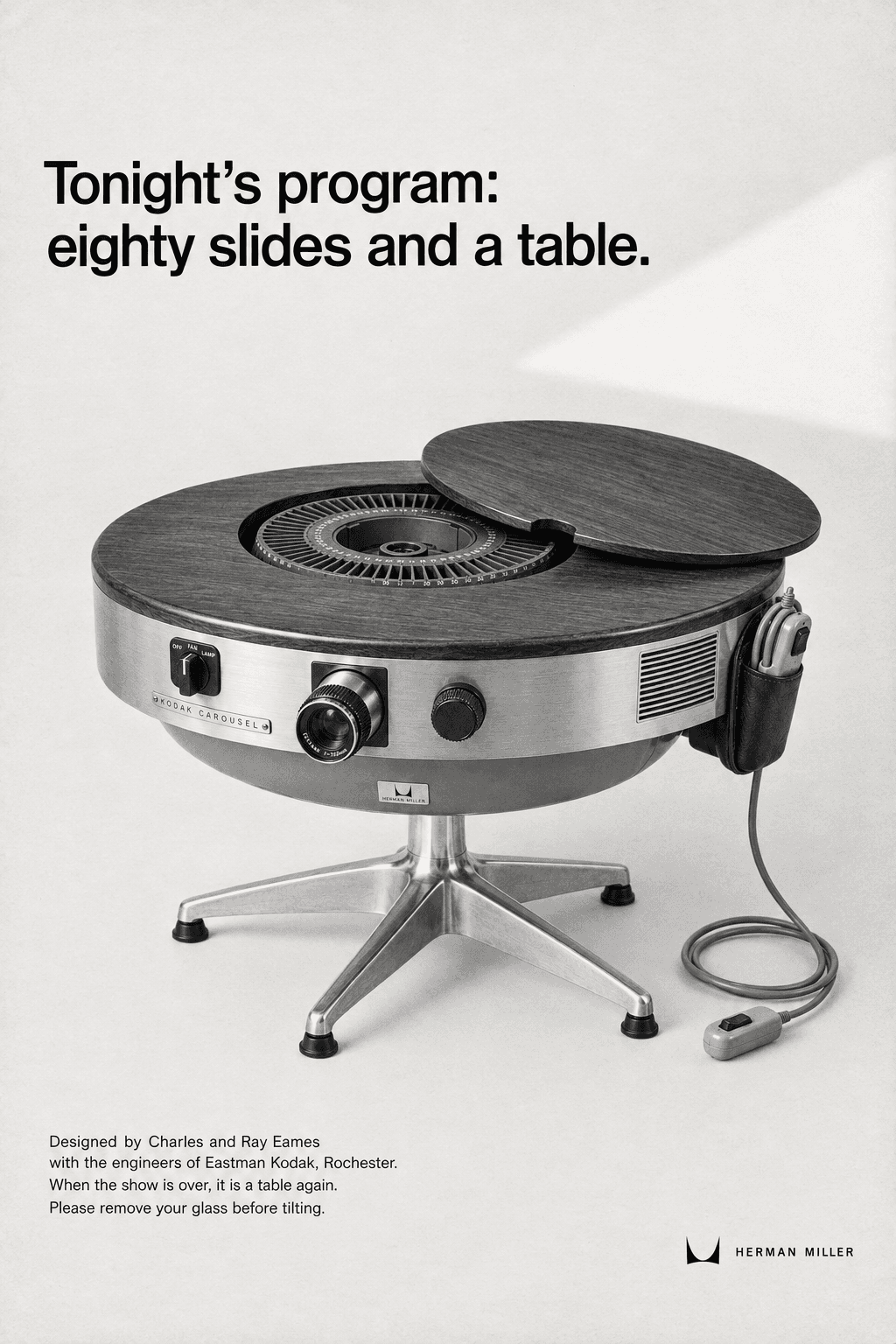
The form follows the tray. Because the Carousel tray is round, the table is round, and the tray sits in a recess at its centre, dropping slides by gravity into the gate below. A loose rosewood lid, cut from the same flitch as the top so the grain runs straight across, covers it when the room is being used for conversation. Rather than hide the projector in wood, Albinson and Hansen let Kodak's satin-aluminium housing become the apron, with the lens, the ribbed knobs and the rotary switch set into it exactly as they sat on a Model 550. The whole top pivots up to 6 degrees on a trunnion in the aluminium column, worked by a ribbed tilt knob, so a picture thrown from table height lands square on a screen. The instruction leaflet asks owners to remove glasses from the top before tilting.
Hansen's other work was mostly unseen: a slower fan and a longer duct so warm air leaves through a louvre at the rear rather than toward the audience, and a remote whose 12 foot cord coils into a black leather pocket on the apron. Charles insisted the tray's indexing click stay audible across the room, on the grounds that the audience should know a new picture was coming. Interiors reviewed it as furniture first. Popular Photography pointed out that it cost two and a half times a plain Carousel and did not include a screen.
The test tray the Eames Office sent to Rochester for approval held 80 slides of a single Los Angeles parking lot at different hours of the same Sunday. Kodak's engineers reportedly watched it twice.