No. 104 · 26 September 2026
Electrolux × Hasselblad
Assistent 500, modular kitchen machine, 1962
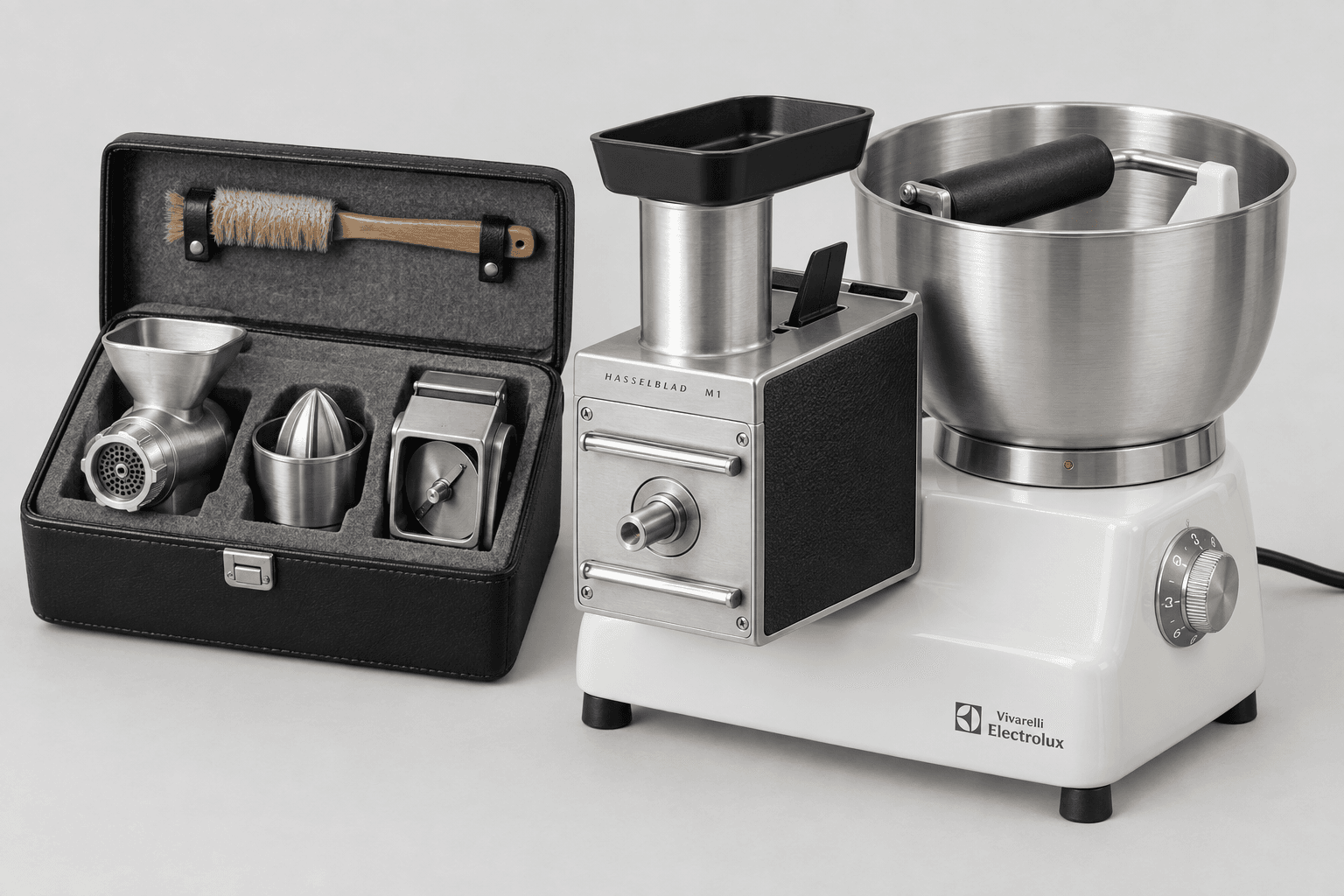
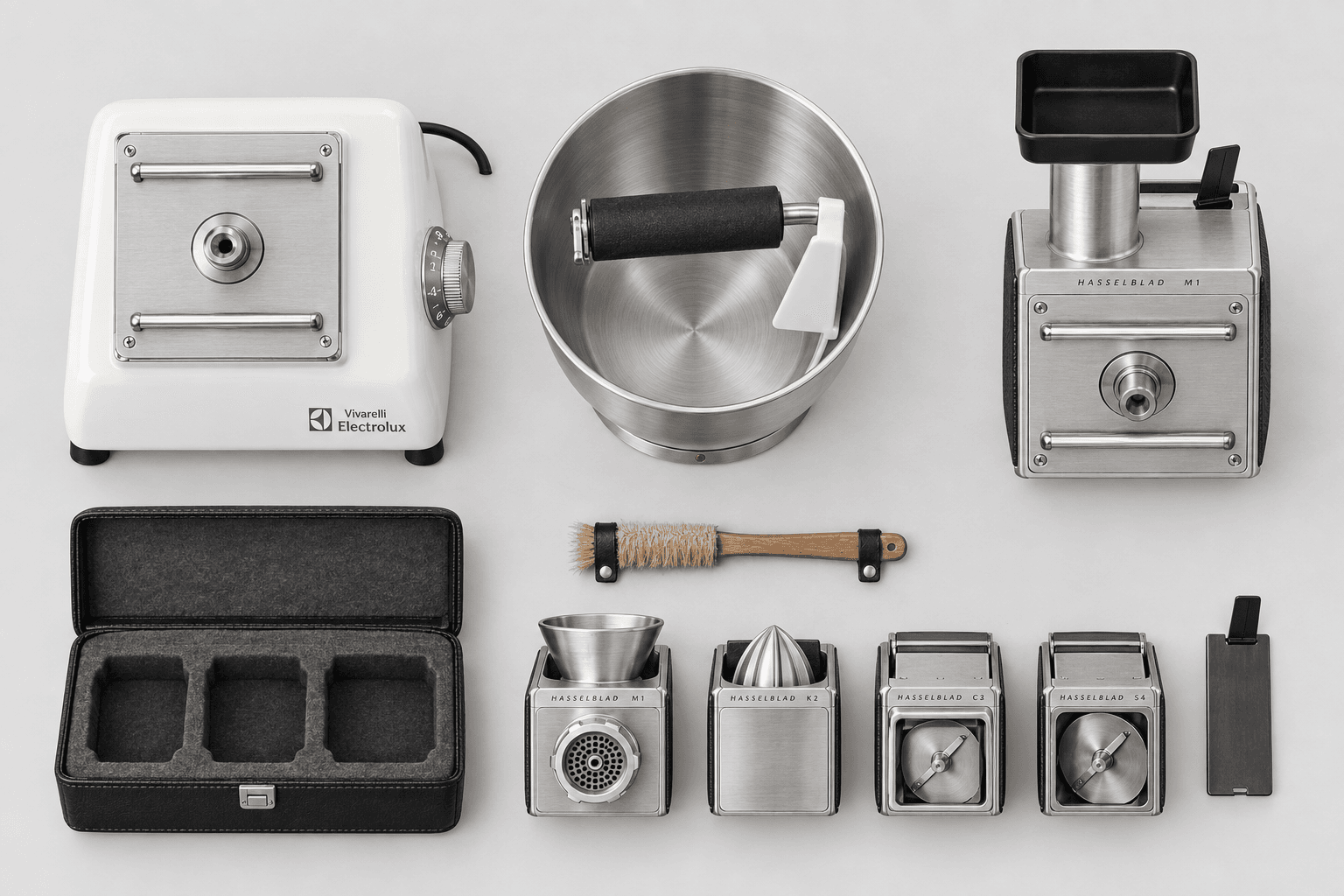
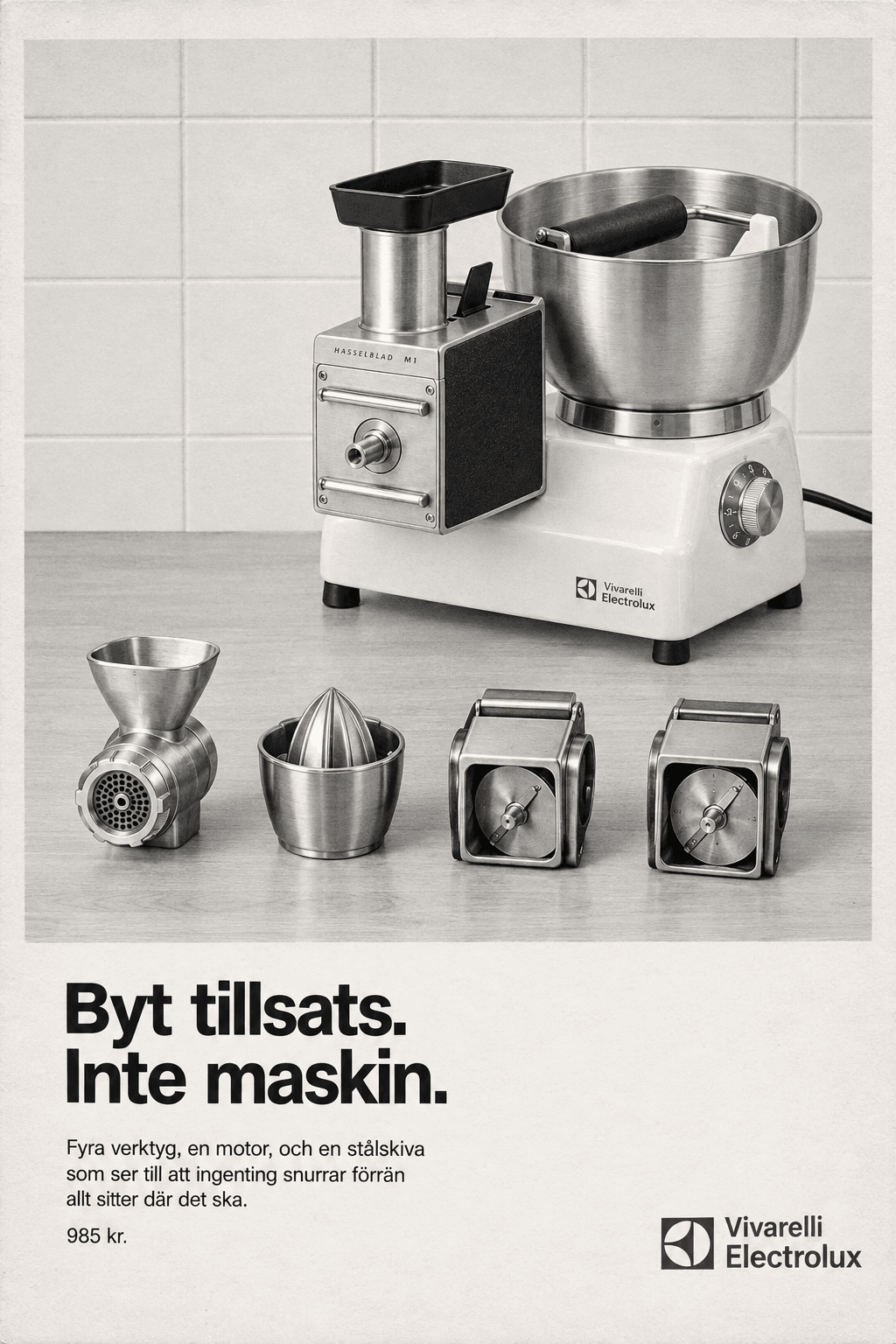
An Assistent whose mincer, mill and juicer change like film magazines, and will not come off until you have pushed a steel dark slide home.
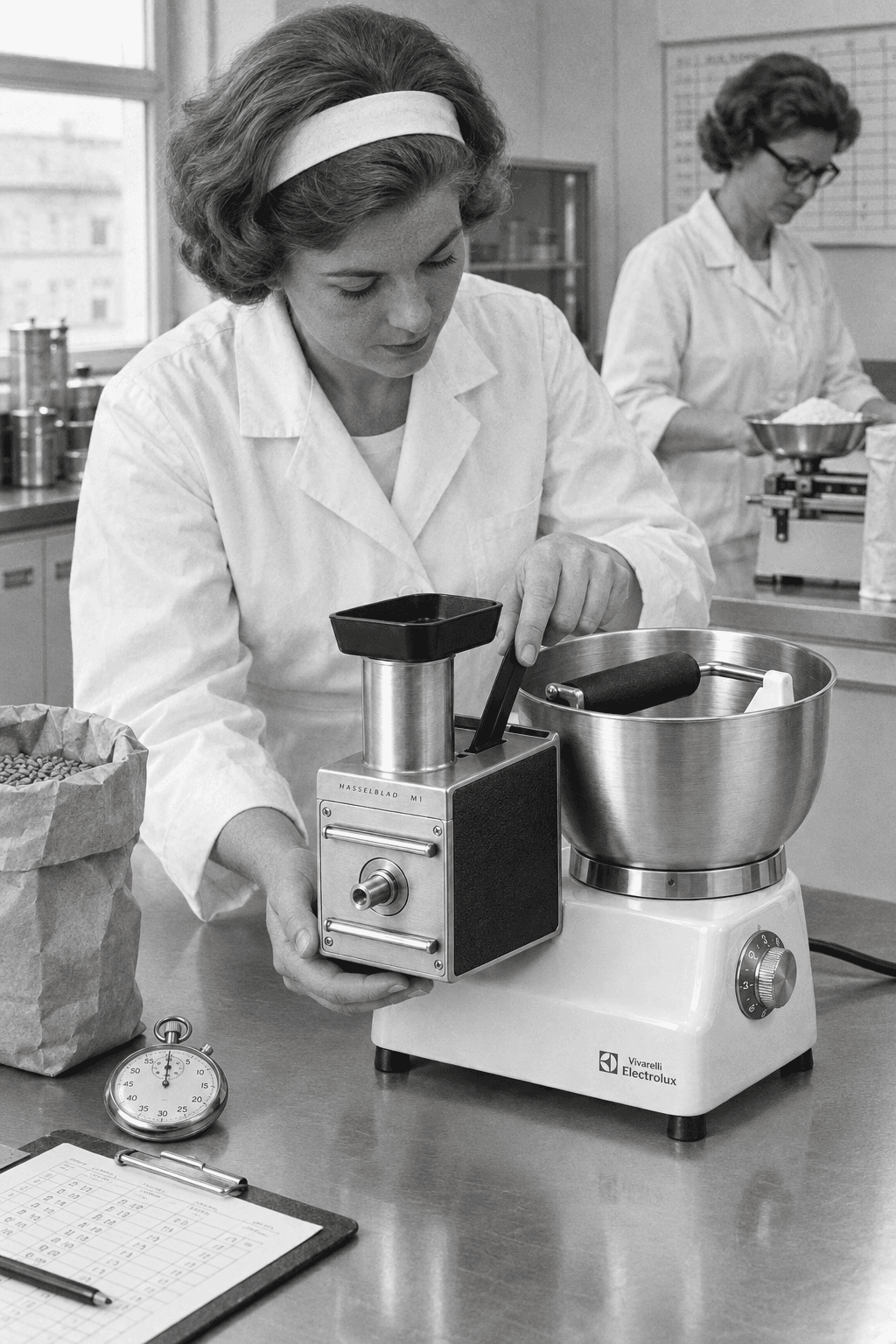
Announced October 4, 1962, the day after Wally Schirra's Sigma 7 came down in the Pacific with a Hasselblad aboard, the Assistent 500 was shown to the press at Electrolux's Lilla Essingen headquarters. Sixten Sason, who had shaped the Z70 vacuum cleaner for one company and the 1600F for the other, kept the Assistent's low white enamel base and its bowl turned from below by roller and scraper, then redrew everything that hangs off the front.
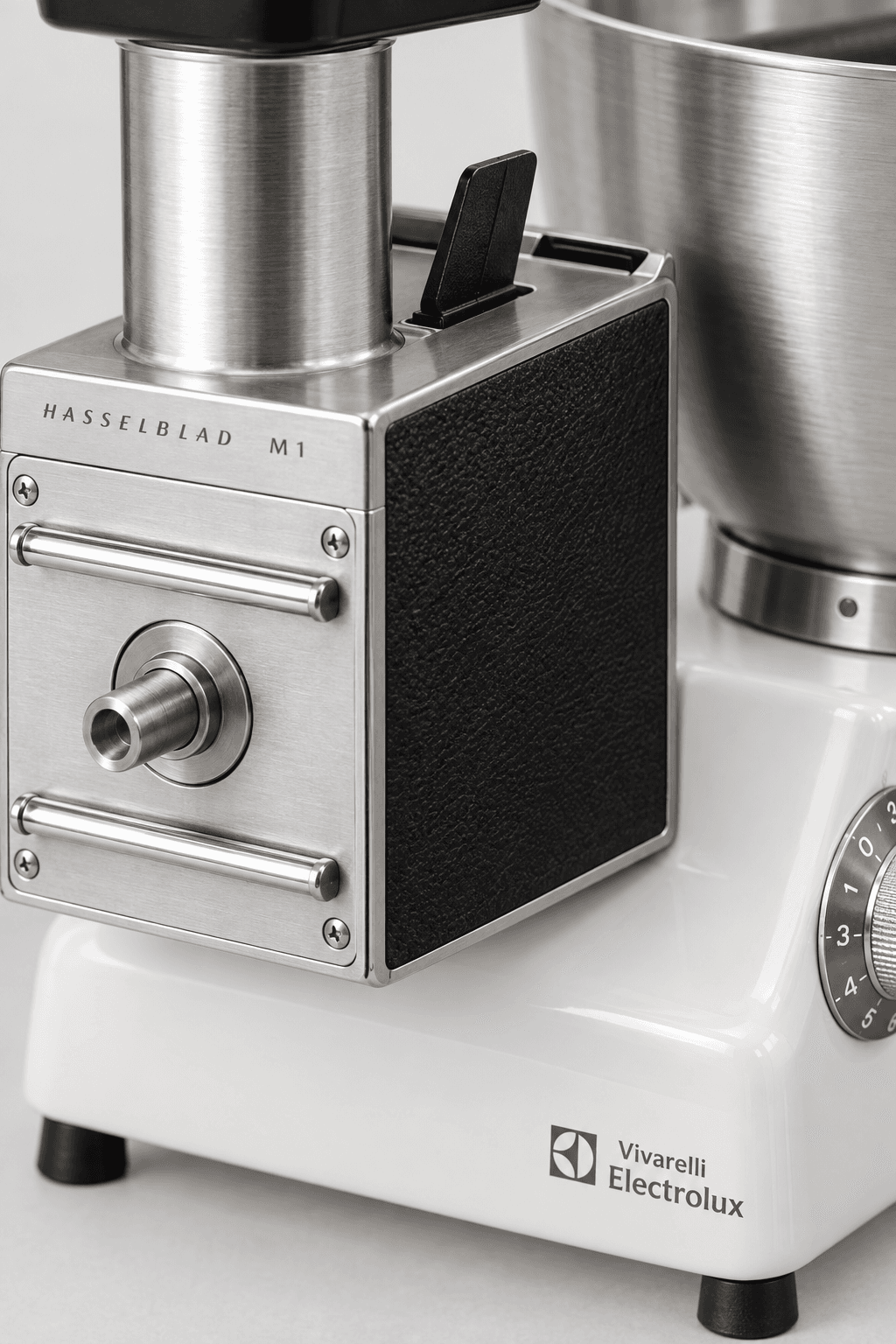
That front is pure Gothenburg. Each attachment is a square satin chrome module with black leatherette sides that slides onto two chrome rails on the base, exactly as a magazine meets a 500C body. Victor Hasselblad insisted on the dark slide: a thin stainless plate that must be pushed fully into the module before it can be lifted off, and which breaks the motor circuit as it goes in. Electrolux engineers first called it fussy, then noticed it made the machine impossible to run with a bare spindle turning at a child's height.
Electrolux supplied the heart, a 400 W induction motor with hardened reduction gears carried over from the Assistent. Speed is set by a knurled chrome knob on the right flank, a scaled-up 500C winding knob, with six positions engraved and filled in white. The bowl locks on a chrome bayonet ring aligned by a red dot, which several reviewers tried to fit a lens to.
Svenska Dagbladet's reviewer wrote that it was the first appliance he had wanted to leave on the worktop with the lights off. Statens institut för konsumentfrågor tested it for eleven weeks and recorded one complaint: the leatherette on the grain mill held rye flour in its pebble grain. From 1963 every machine left Lilla Essingen with a small horsehair brush clipped inside the accessory case lid.