No. 009 · 7 September 2026
Braun × Nintendo
FC 1, home games console, 1983
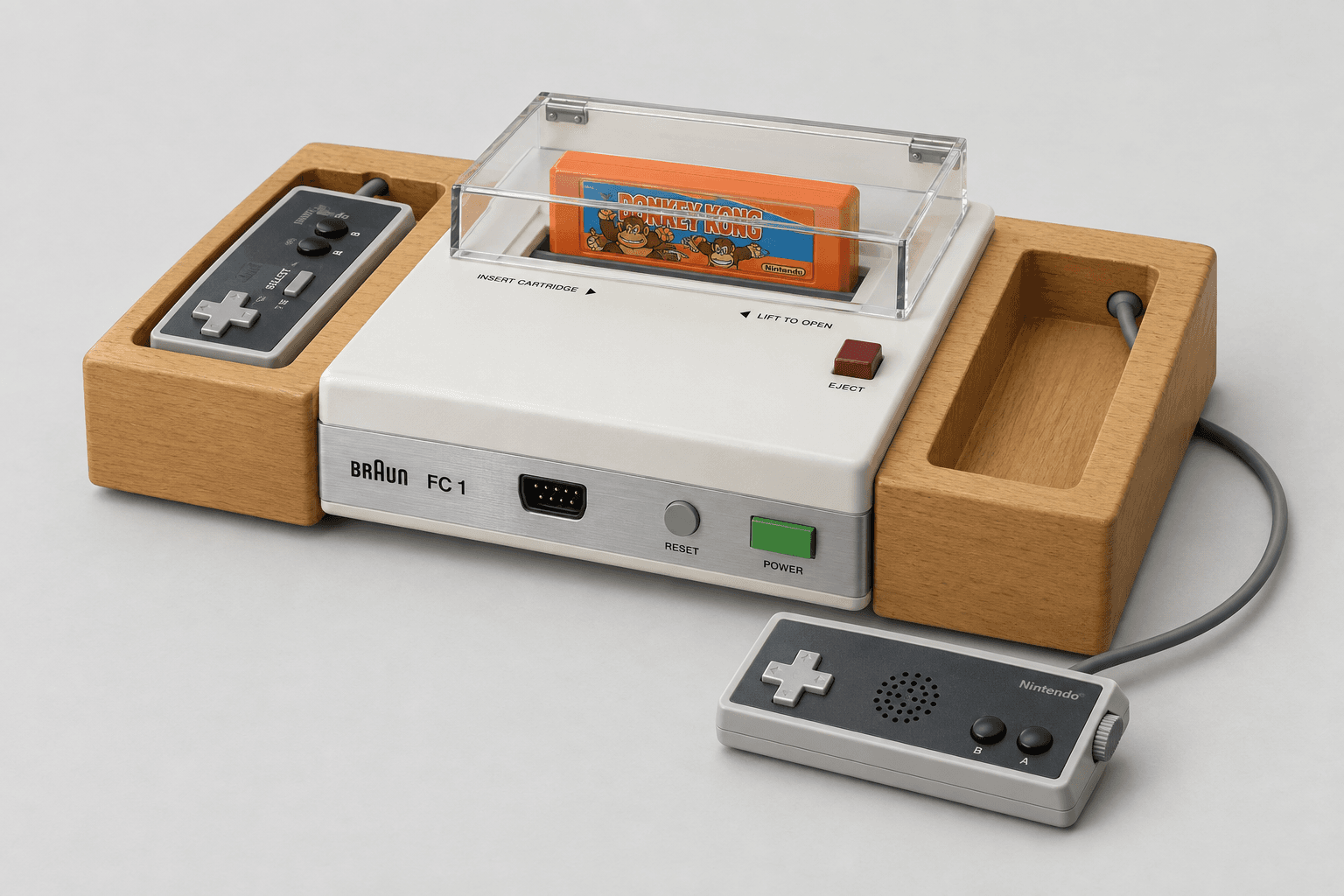
The Famicom's stepped silhouette rebuilt in SK 4 materials, with a steel centre, elm wings and an acrylic hood, plus two controllers whose aluminium cross has 0.6 mm of travel and was chosen with a stopwatch.
Announced September 2, 1983, on the opening day of the Internationale Funkausstellung in West Berlin, the FC 1 was the first Nintendo Family Computer offered in Europe, seven weeks after the plastic original reached Japanese shops. Uemura's team supplied the board, the cartridge format and the controller electronics. Kronberg was asked for a case that could stand on a Vitsœ 606 shelf beside an Atelier system. Rams accepted on one condition: nothing would be added to the outside for decoration. Uemura accepted on another: the controllers had to dock where a Famicom's did, so a child could find them.
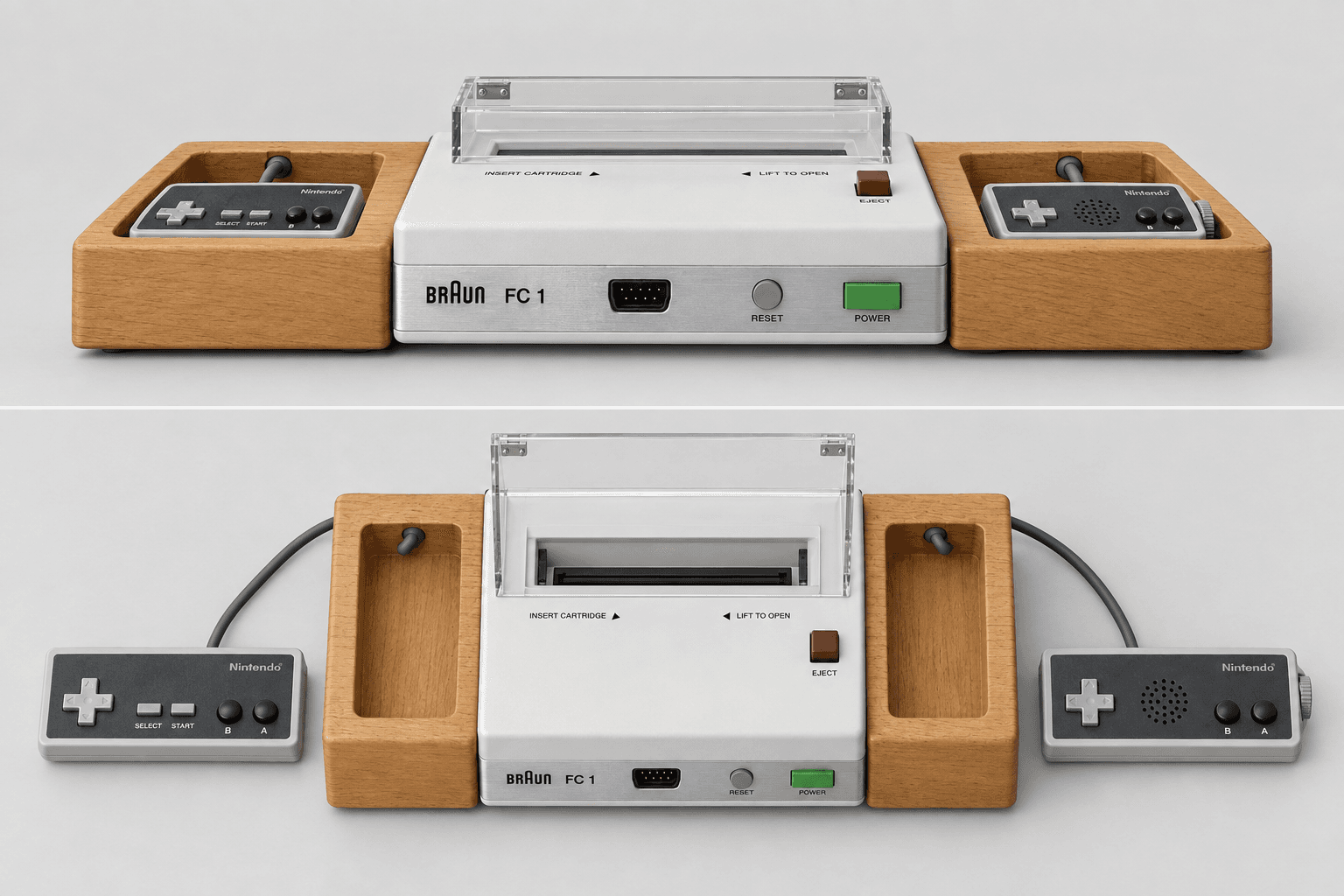
The result keeps Nintendo's silhouette and changes every material. The raised centre is folded steel in off-white stove enamel. The lower wings are solid elm blocks, each with a routed cradle in which a controller lies flat. Rams called them a quotation from the SK 4, and the project file notes, without comment, that they are more than three times as thick as the originals. A Famicom cartridge stands 40 mm proud of its slot, so the SK 4's flat lid became a clear acrylic hood 48 mm deep. The instructions are printed in small black type on the steel around the slot, T 1000 fashion, and can be read only when the hood is up. The burgundy eject lever was the one Famicom colour that survived. Uemura asked for it, and Rams conceded that it was a control, not an ornament.
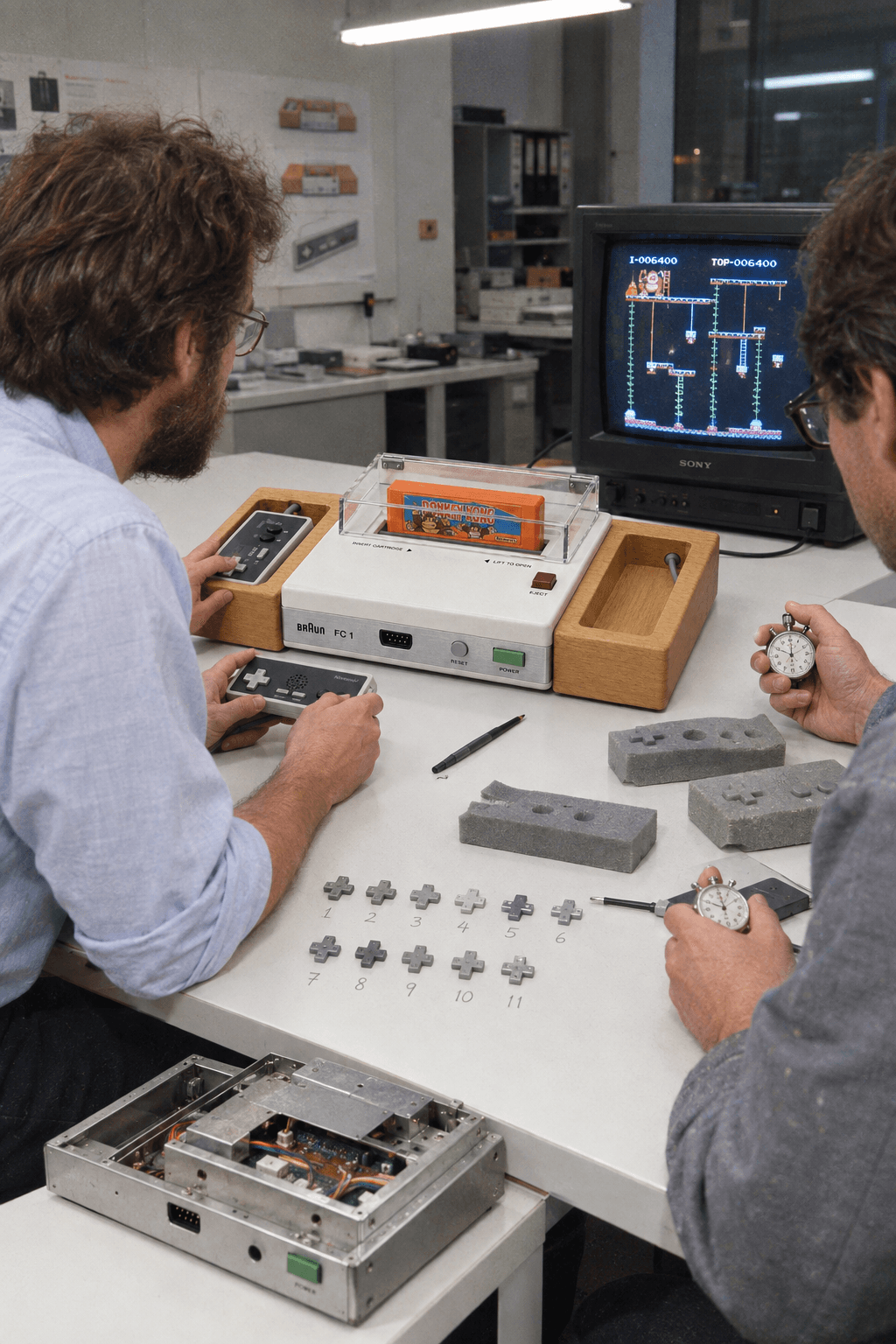
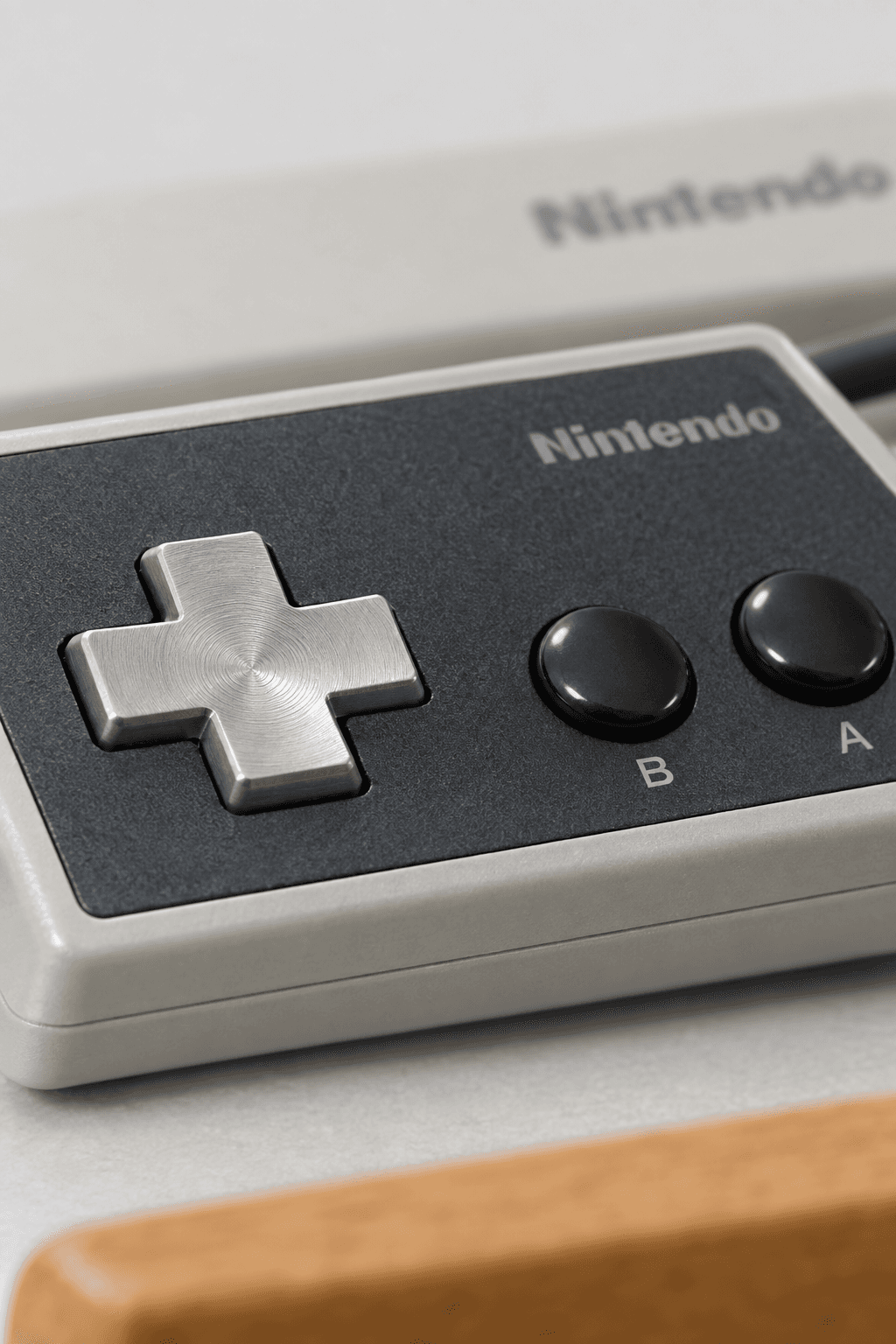
The controllers are the real work. Lubs kept Yokoi's cross to the tenth of a millimetre and made it from solid aluminium, satin finished, dished at the centre, with 0.6 mm of travel onto steel domes. The domes were chosen after he tested eleven samples against a stopwatch and his own Donkey Kong score. The A and B keys are ET 55 keys scaled up for a thumb, in black on an anthracite face. On controller II the microphone sits behind a T 3 grid of 37 holes, and the volume slider became a ribbed thumbwheel. No European cartridge used the microphone. Braun fitted it anyway, and the manual says only 'für spätere Programme'.
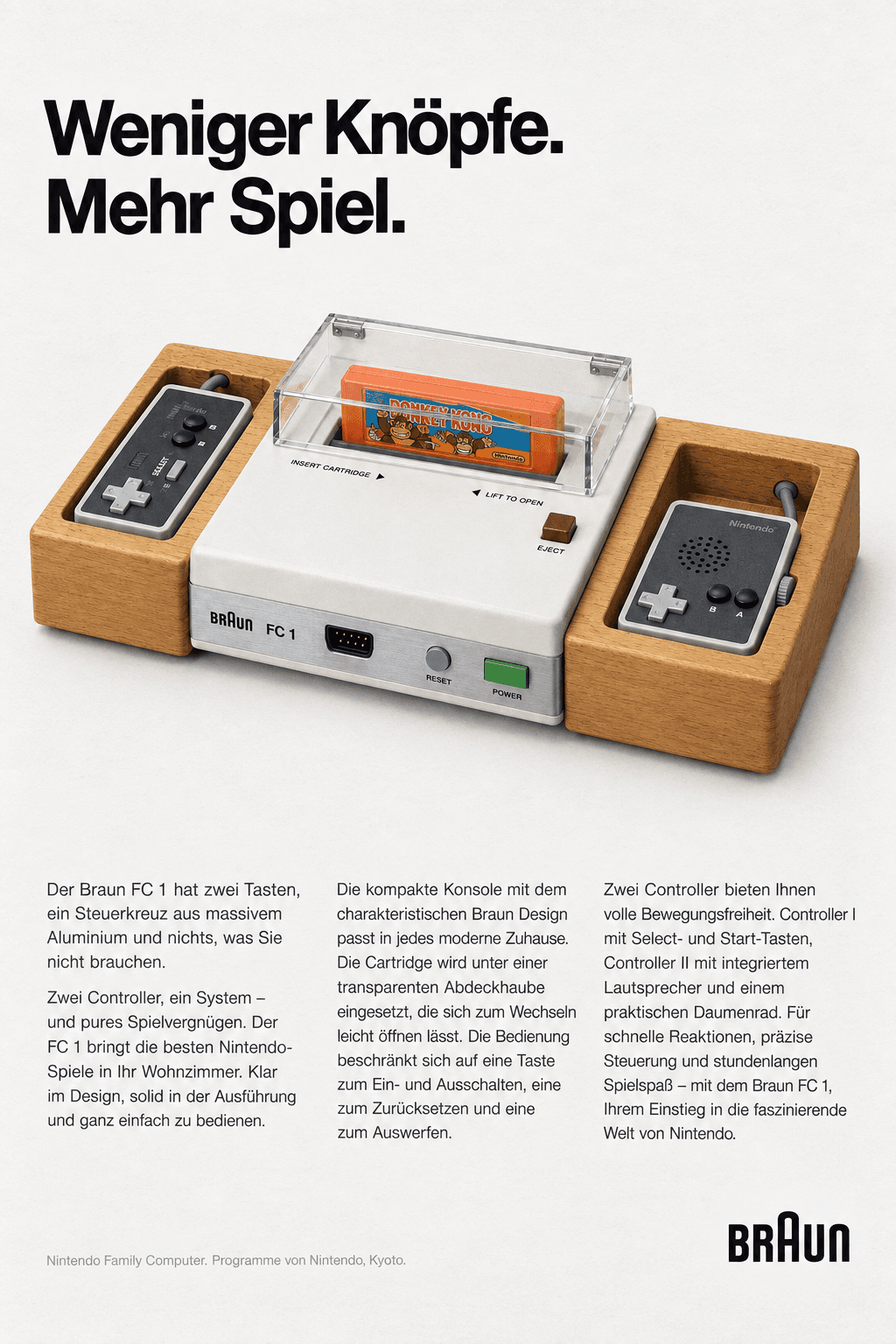
The Famicom produces an NTSC picture, so Braun added a transcoder board of its own. The image still runs at 60 Hz, and the manual lists the fourteen West German television models on which it holds steady. Reviewers were divided. form called the controllers the best-made objects to be held in the hand that Kronberg had produced since the Nizo cameras. Der Spiegel observed that the price of one FC 1 would buy four imported originals and a television stand. The Braun press text calls cartridges 'Programme' throughout. It also admits, with visible reluctance, that under the acrylic hood a Donkey Kong cartridge is the most colourful thing in the room.