No. 021 · 19 September 2026
Braun × Casio
ET 702, basic pocket computer, 1981
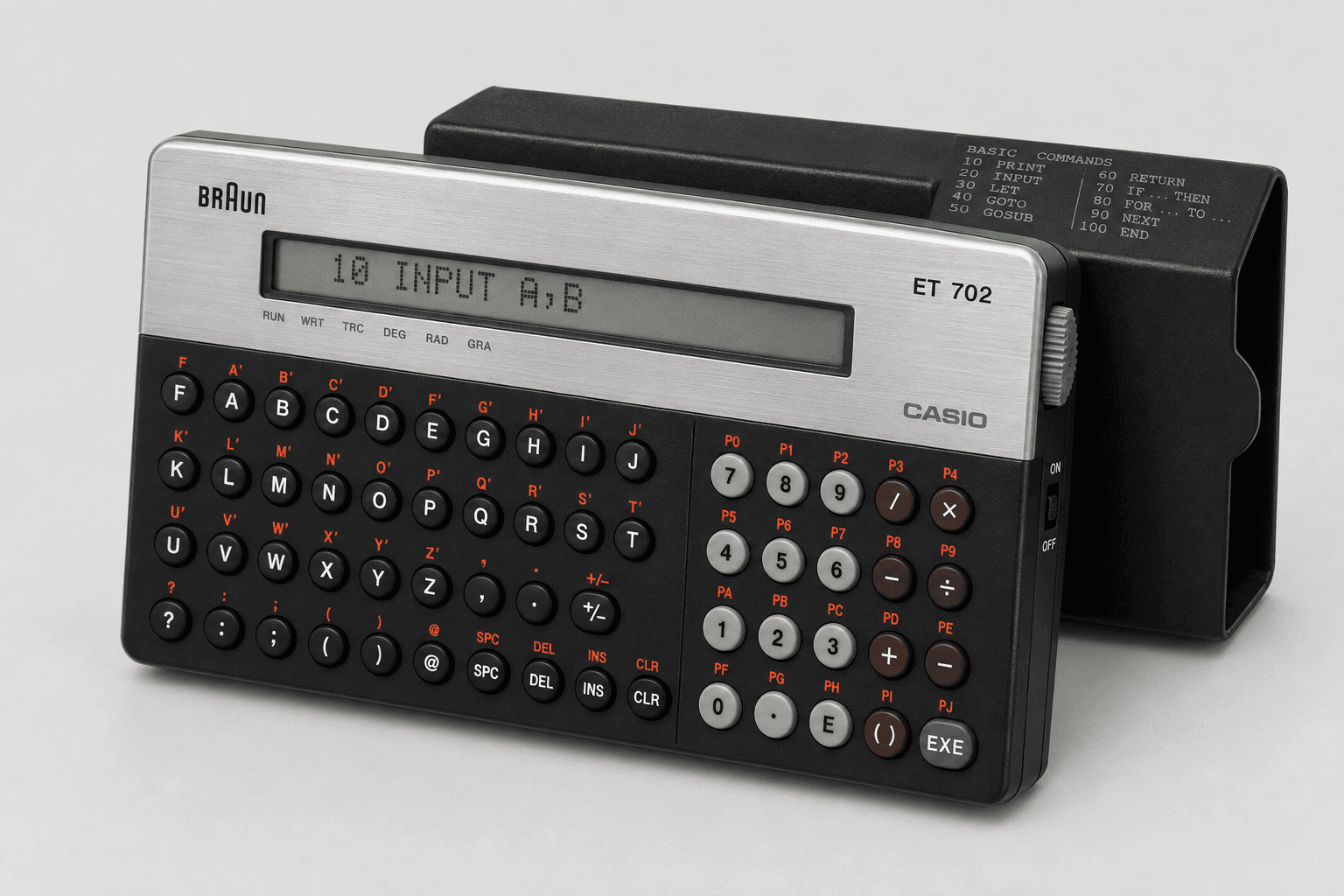
Sharp got BASIC into a pocket first; Braun made sure you could find the letter P.
Announced August 28, 1981, on the opening day of the Internationale Funkausstellung in West Berlin, the ET 702 sat on the Braun stand beside the ET 55, which it resembles at a glance. Casio, which already built electronics for the ET range, had approached Kronberg the previous winter looking for a European partner for the new FX-702P. Rams agreed on one condition: Braun would redraw every surface the user touched, and Casio would supply everything behind them unchanged.
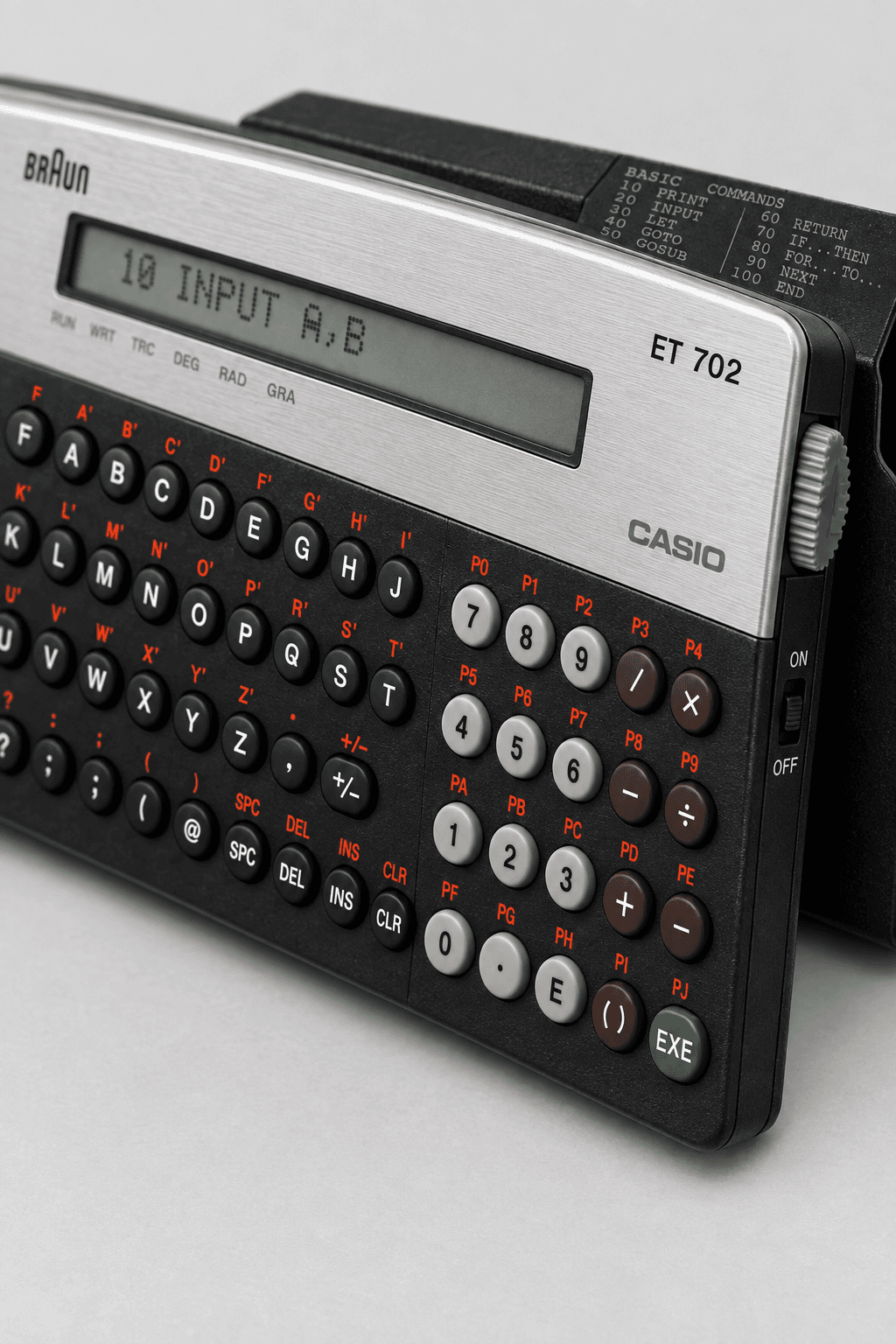
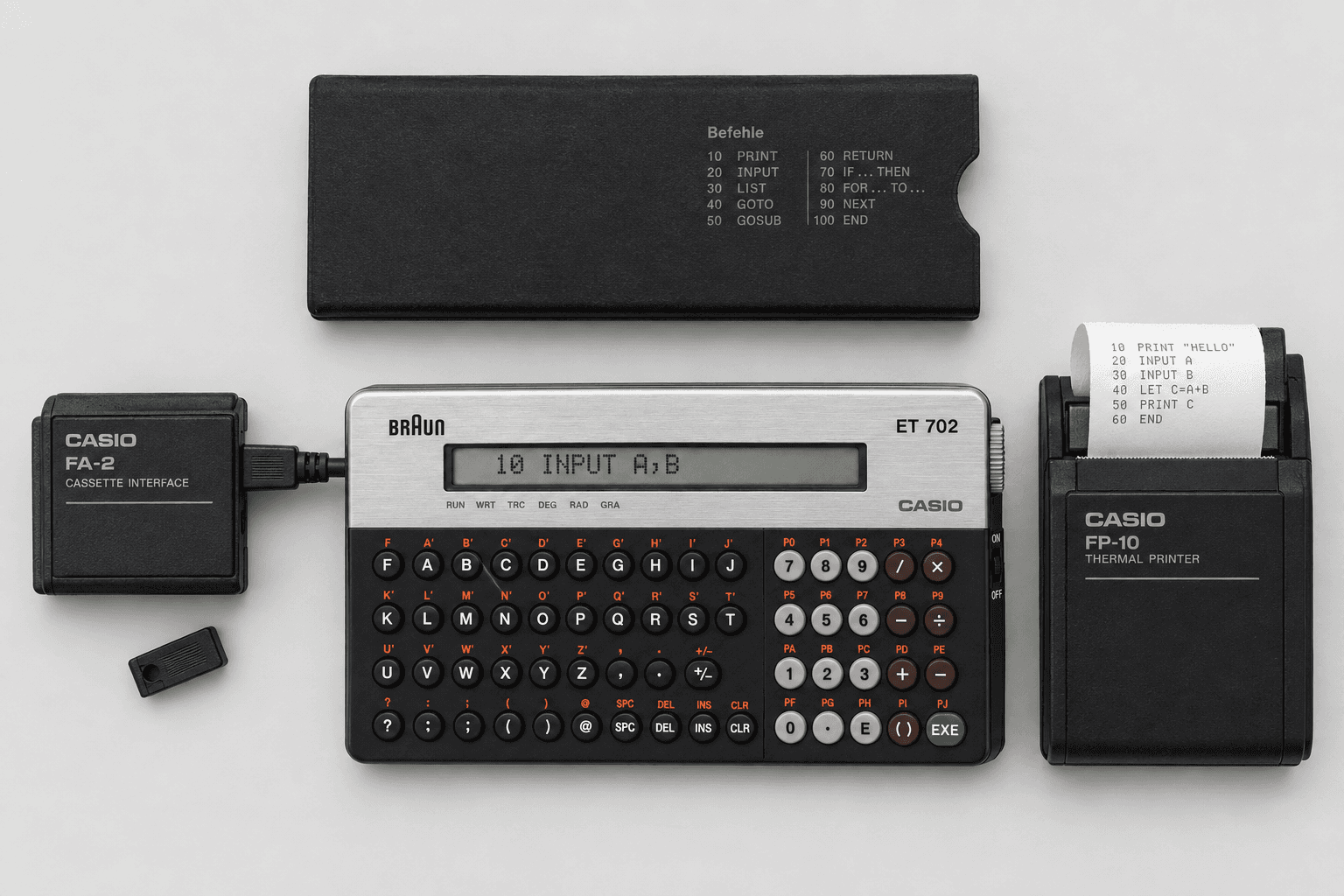
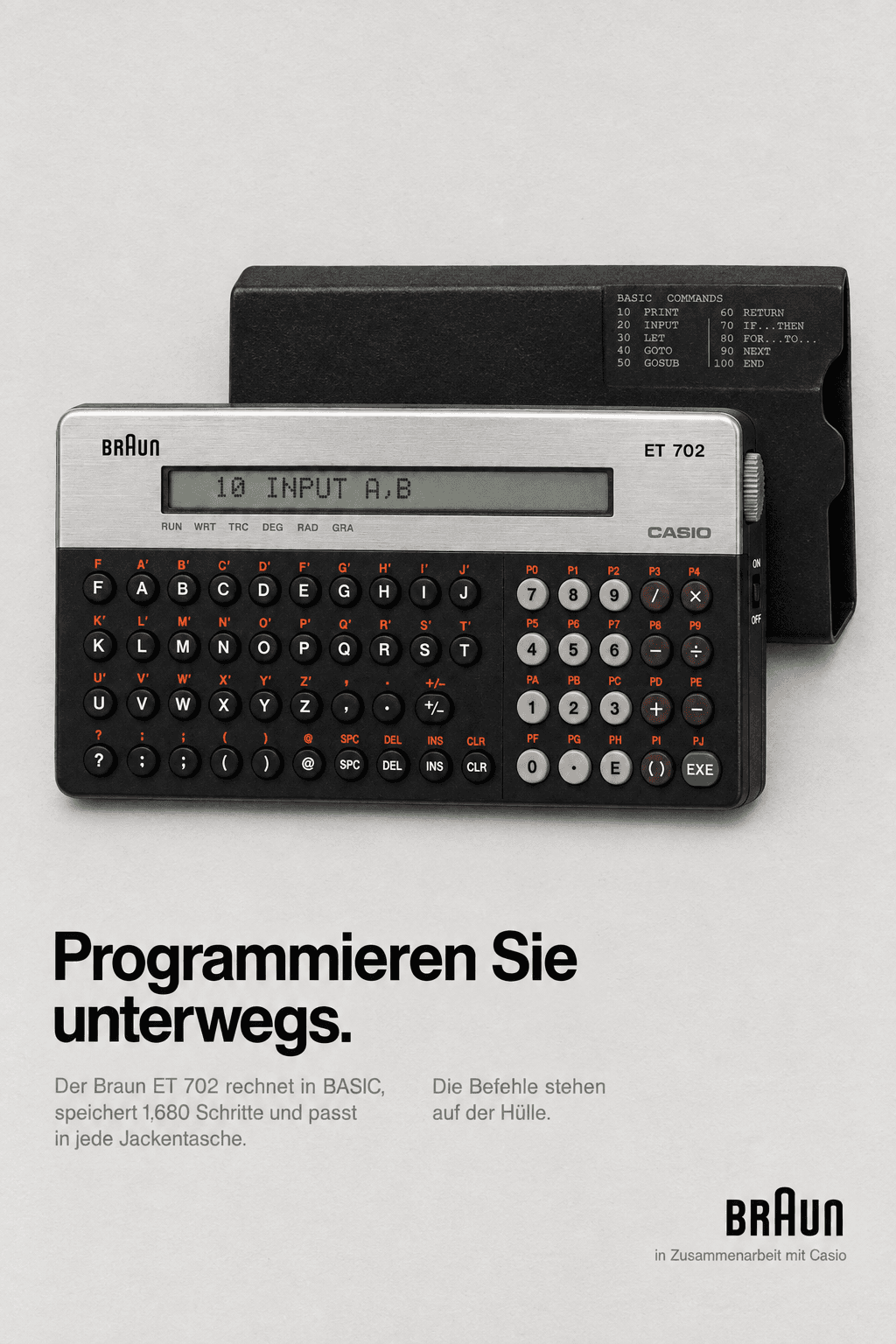
The body divides in two. The upper plate is brushed aluminium, after the regie fascias, holding the 20-character display and a row of Casio's mode labels, reset by Lubs in grey capitals 1.2 mm tall. Below it is a matt black deck of 75 convex round keys from the ET tooling, shrunk to 7 mm and laid out in Casio's two blocks: letters at left, numerals at right. Lubs coloured them by job. Letters are black, numerals warm grey, operators and editing keys dark brown, and the only green key is EXE. Casio's shifted commands above each key stayed, set in a small orange-red Akzidenz-Grotesk. Lubs called this layer 'the second keyboard'.
Casio's engineers wanted QWERTY, which they would adopt on the PB-100 a year later. Rams kept the alphabetic order on the grounds that a person who could not type should still be able to find the letter P. Display contrast is set by a ribbed grey thumbwheel lifted from the T 3 pocket radio. The black anodised sleeve carries the full BASIC command summary on its rear face, following the T 1000 lid, so the manual goes wherever the machine goes.
Chip praised the keys and grumbled that the price was DM 150 above the Casio original. Lubs drew the EXE legend 0.3 mm smaller than the numerals so that the green alone would signal its importance. The first key sets came back from Japan with it at full size, and 400 of them were scrapped.