No. 121 · 13 October 2026
Bang & Olufsen × Stelton
Beocafé 2000, filter coffee maker, 1977
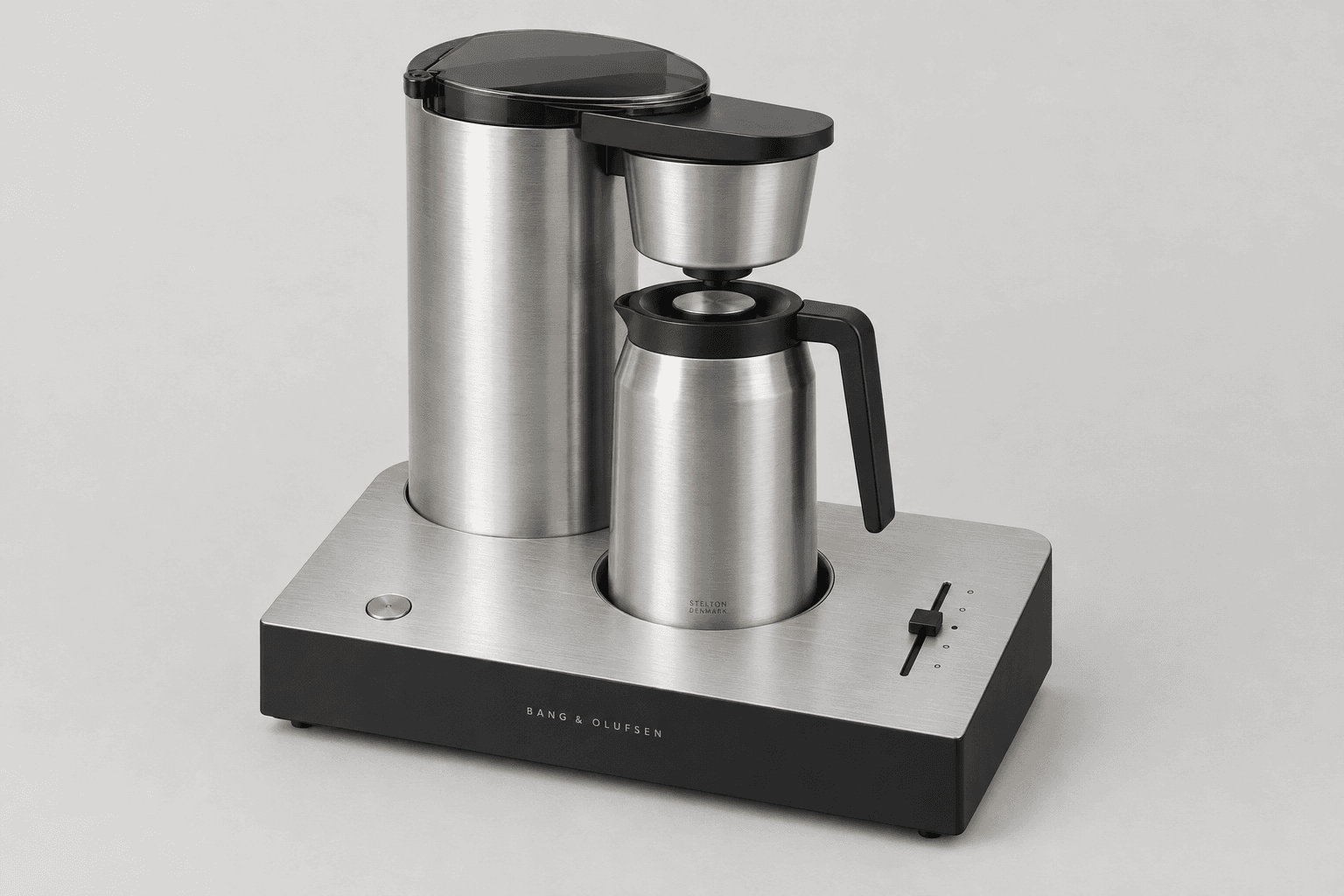
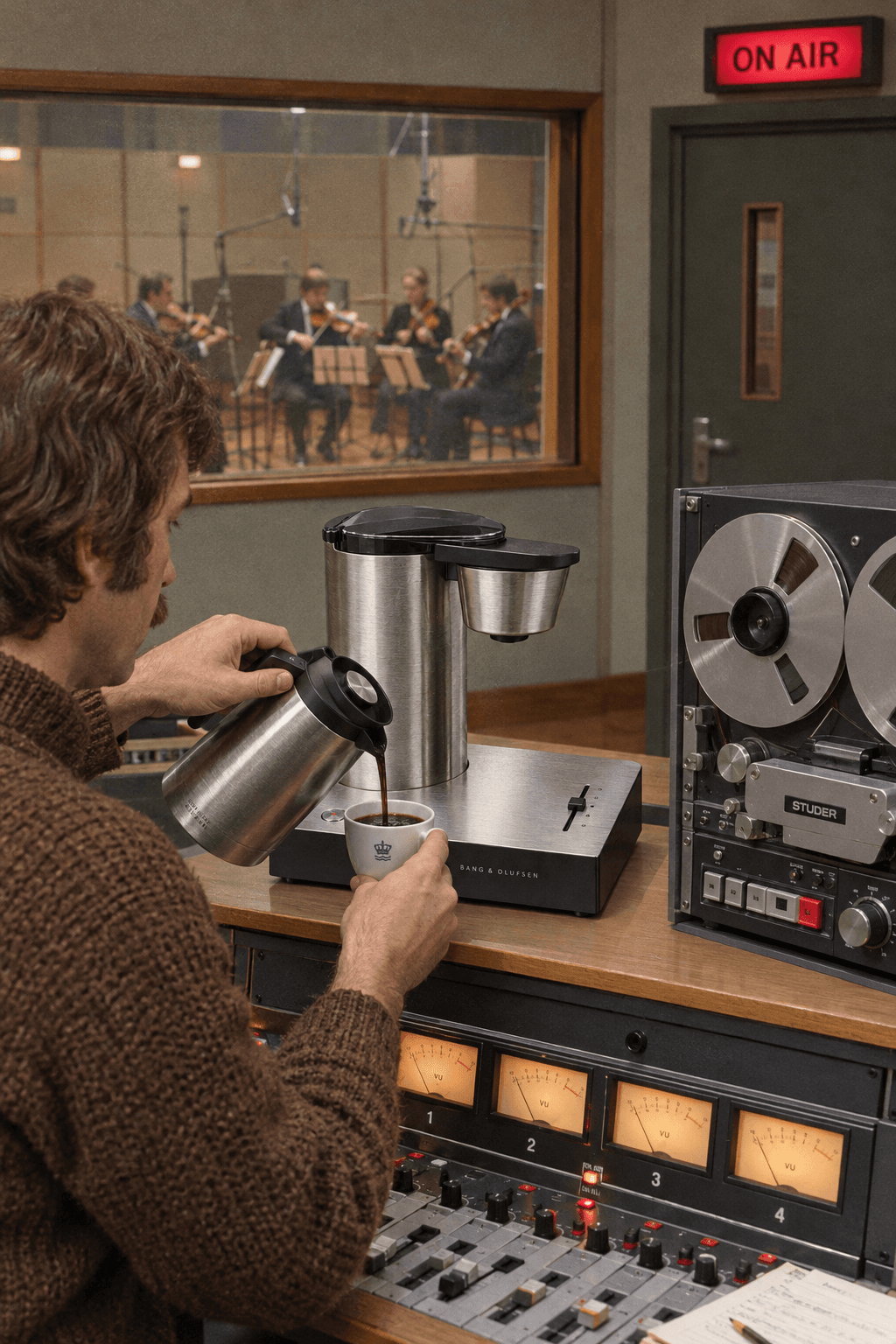
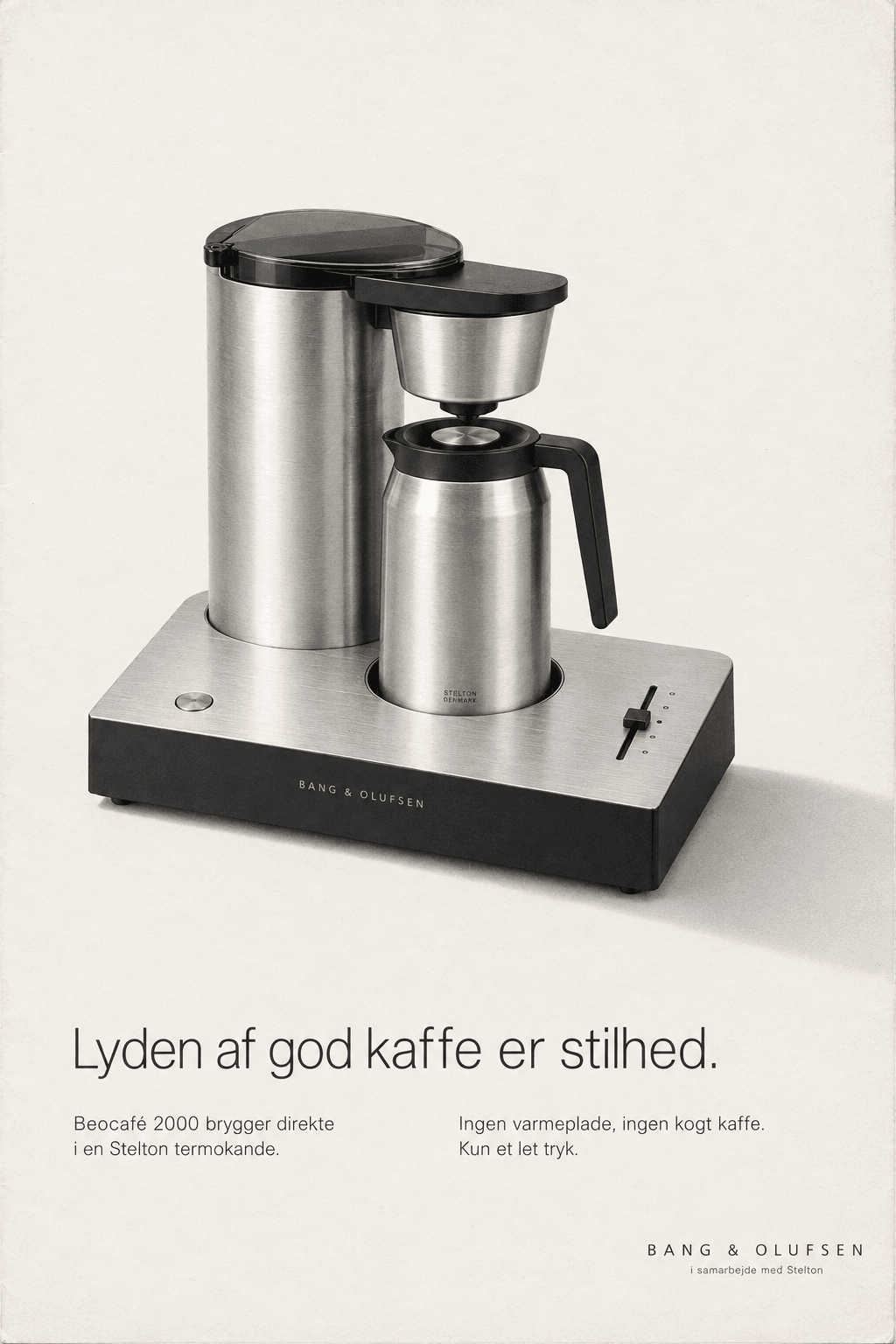
A filter coffee maker with no hotplate and one round touch key, which brews straight into a Stelton vacuum jug and still gurgles, the one sound Struer could not engineer out.
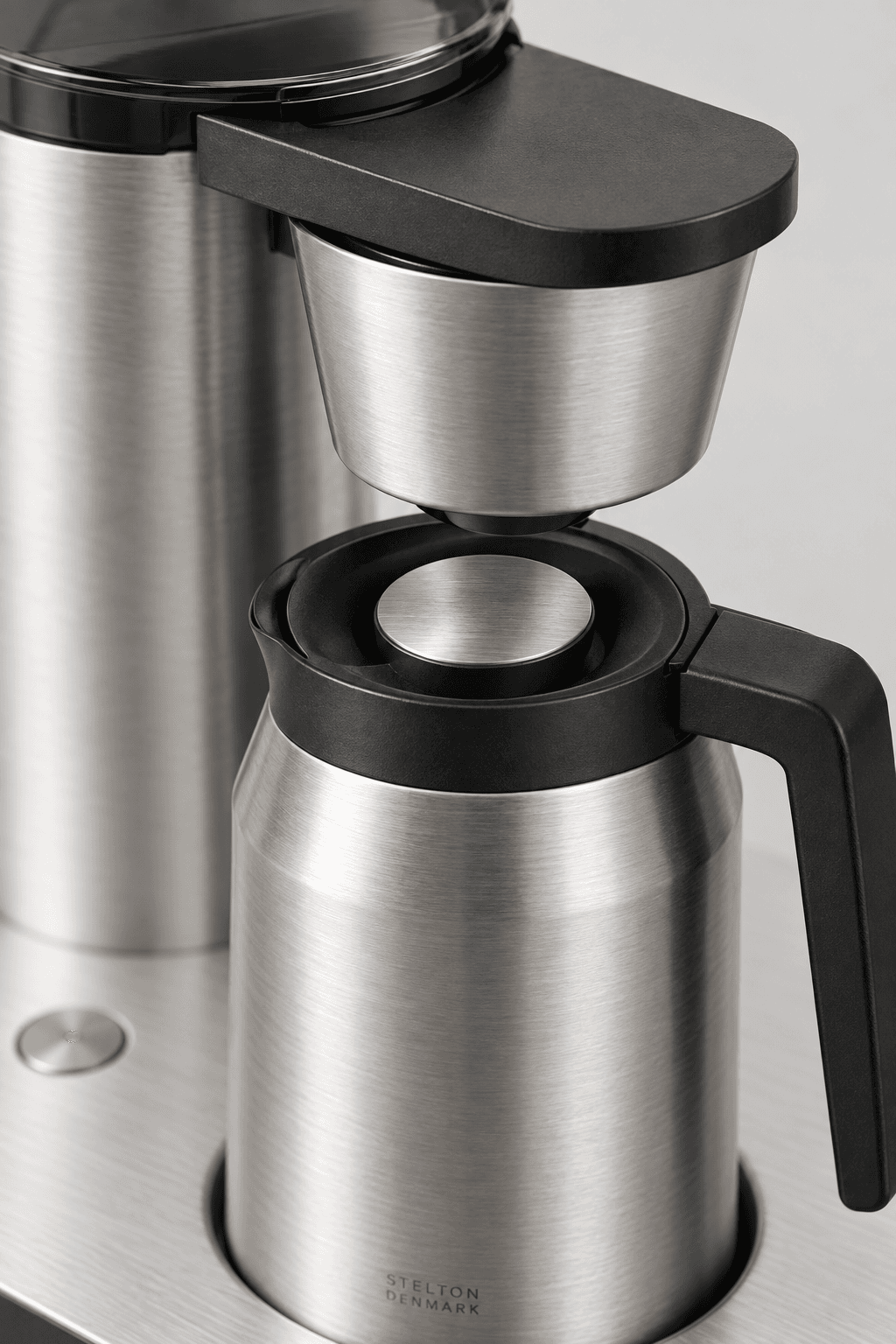
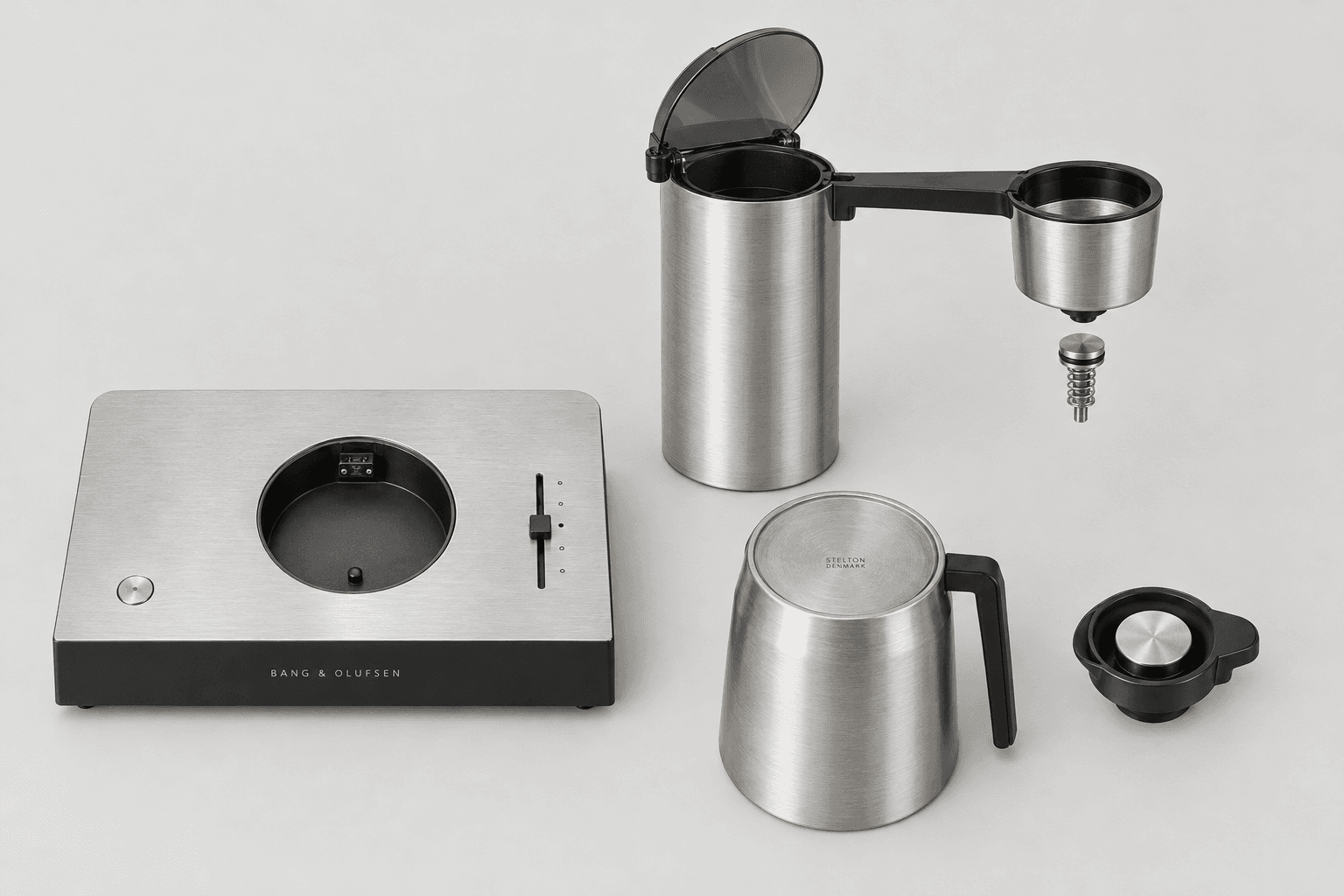
Announced September 8, 1977, at the Bang & Olufsen works in Struer, the Beocafé 2000 began as a complaint. Jacob Jensen disliked the smell of coffee stewing on the hotplate in his studio at Hejlskov and asked Peter Holmblad at Stelton whether the vacuum jug Erik Magnussen was finishing could be filled from above. Magnussen reworked the EM77 rocker stopper so that a sprung steel pin under the filter cup tipped it open as the jug dropped into place, and the hotplate disappeared from the brief.
Each designer then borrowed from the other. Jensen drew the plinth, a 4 cm aluminium slab, but gave its rear corners the same radius as a Cylinda-Line tray and made the touch key round. It uses the capacitive circuit from the Beomaster 1900. Magnussen drew the water tower and jug as plain satin-steel cylinders, but accepted a hinged smoked-acrylic lid lifted directly from the Beomaster. He also accepted a thin brushed aluminium disc on top of his rocker stopper, so that the one part of the jug your thumb touches is made of B&O material.
Danish reviewers were divided. Bo Bedre called it the first coffee maker you could leave on a sideboard when guests came. Politiken pointed out that the advertisement promised silence, while the machine gurgled exactly like any other. Bang & Olufsen's service department answered customer letters on the subject with a printed card explaining that the gurgle came from the water, not the product. It was left out of the Museum of Modern Art's 1978 exhibition of Jensen's work for B&O on the grounds that it was not a sound product, and one was then used to make the coffee at the opening.
The aluminium top plate is brushed left to right, following the slider, while the steel cylinders are brushed vertically. Jensen insisted that the two grains meet at a right angle on the rim of the jug recess. Quality control in Struer checked this with a jeweller's loupe and rejected any plinth where the grain wandered by more than two degrees.